


Most patients describe ozone therapy as comfortable, not painful. The only consistent moment of mild discomfort is the initial IV placement – the same brief pinch you would feel with a routine blood draw. Once the IV is in place, the infusion itself is generally not felt at all. Some patients notice a subtle warming or pressure sensation as ozonated blood is returned to the body, but this is sensory rather than painful.
The rest of this guide covers what to expect step by step, how we keep the session comfortable, side effects to watch for, and the rare situations when something might feel off.
What patients actually feel during ozone therapy
Ozone therapy involves drawing a small volume of blood, mixing it with medical-grade ozone in a closed sterile system, and reinfusing it through the same IV line. Throughout the session, here is what patients commonly describe:
| Phase of the session | What patients commonly feel | Approximate duration |
|---|---|---|
| IV placement | A brief pinch when the needle enters the vein, usually in the inner arm. The most physically noticeable moment of the session. | 2-5 seconds |
| Blood draw | Same sensation as a routine blood draw. Most patients feel nothing once the IV is settled. | 2-3 minutes |
| Ozonation in the system | No sensation. The patient rests while the blood is mixed with ozone in the closed sterile system. | 5-10 minutes |
| Reinfusion | Some patients describe a subtle warming or pressure feeling moving up the arm. Others feel nothing unusual. No burning or sharp pain. | 10-15 minutes per pass |
| Post-session | A brief rest, then the patient leaves under their own power. Sensations vary – some feel mildly tired, others feel more alert. | 5-10 minutes |
For patients with smaller or harder-to-find veins, an experienced clinician can use a warm compress or a smaller-gauge needle to make placement easier.
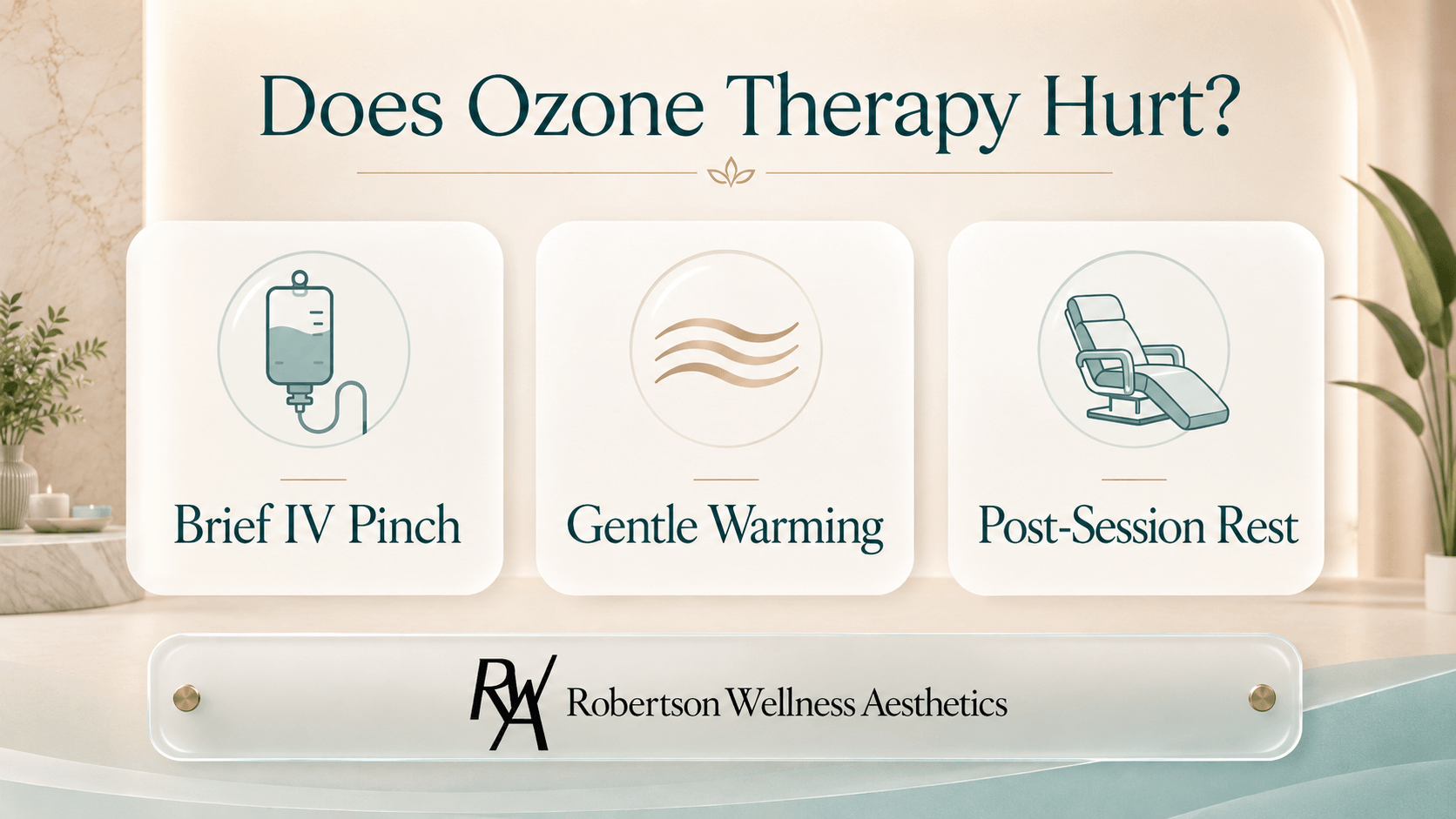
The three moments most patients notice
Moment 1: The first needle pinch
Roughly comparable to a standard blood draw. Most patients rate it between 1 and 3 on a 10-point pain scale – noticeable for a second, then it passes. If you tend to feel anxious about needles, mention this during your intake and the clinician can talk you through the process, slow down, and check in throughout.
Moment 2: The warming or pressure feeling during infusion
When ozonated blood returns to the body, some patients feel a soft warming sensation that moves up the arm. A small subset feel a momentary chest tightness if the infusion rate is too fast. This is a known and easily managed response – the clinician simply slows the rate and the sensation resolves. It is not painful and not dangerous when monitored.
Moment 3: Post-session sensations
Within the hour after the session, some patients feel mild fatigue, a flushed face, or a slight headache. Others feel sharp clarity and increased energy. Both responses are within the normal range. Drinking water and eating a light meal before the appointment usually helps minimize the lighter side effects.
If at any point during or after the session something feels significantly off – sharp pain, breathing changes, lightheadedness that does not resolve – the protocol is paused and the symptom is evaluated. This is a standard safety practice for all IV-based therapies, not specific to ozone.
How RWA makes the session more comfortable
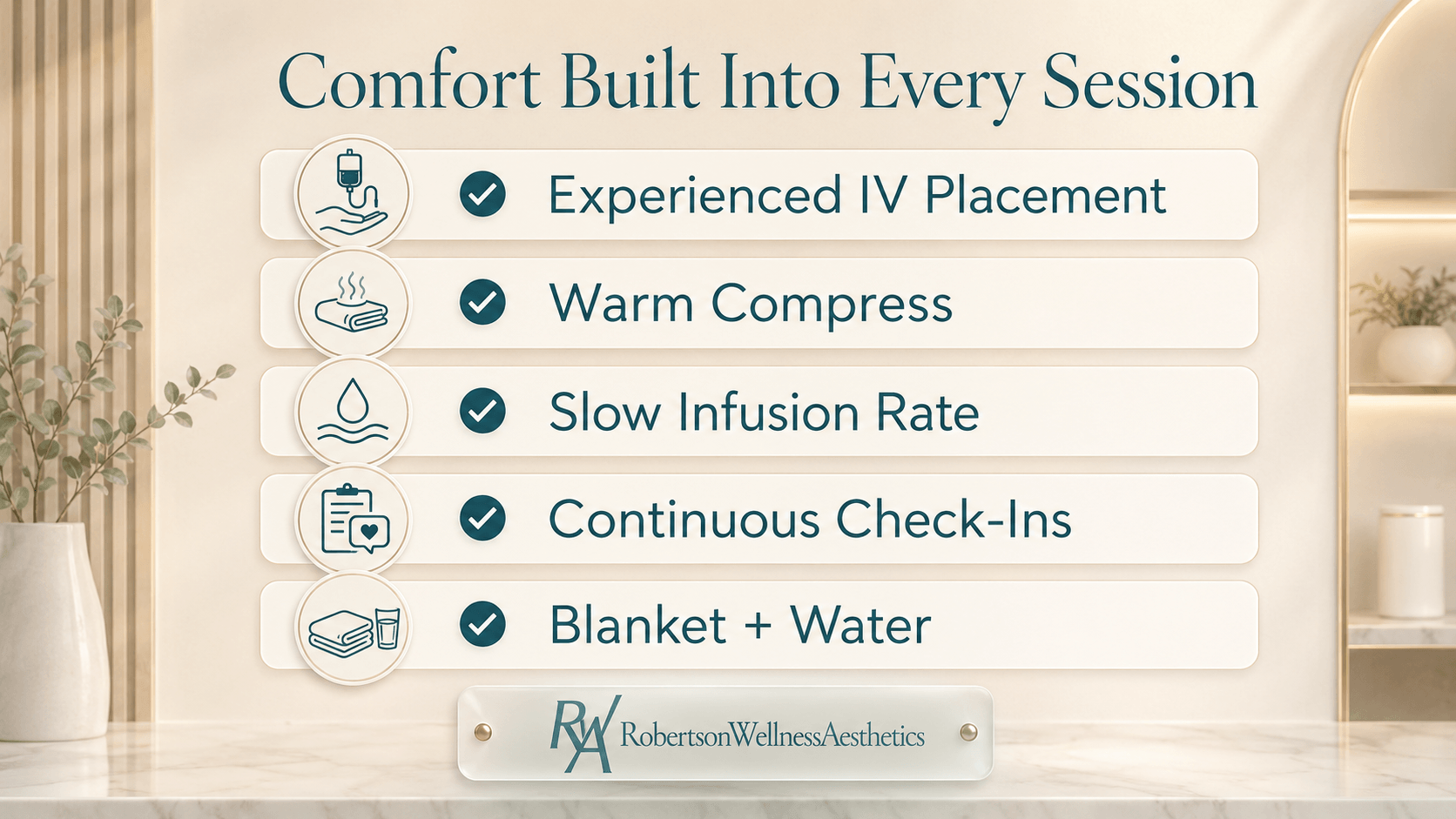
Comfort during the session is not accidental – it is built into how the protocol is set up. At RWA Center in Beverly Hills, we use several approaches to reduce discomfort:
- Experienced IV placement: our clinicians place dozens of IVs per week, which reduces the chance of a second stick or a missed vein.
- Warm compress before placement: warming the arm makes veins easier to access and reduces the pinch.
- Slow infusion rate: the rate is deliberately set to keep the warming sensation gentle. We slow it further if a patient signals discomfort.
- Continuous check-ins: the clinician stays in the room and asks how the patient is feeling at multiple points.
- Reclining chair, blanket, water: small comforts that matter over a 60-90 minute session.
- Honest pre-session intake: patients are walked through what to expect, including the moments that are typically noticeable. Knowing what to expect is one of the single best anxiety reducers.
For first-time patients, we keep the first session slightly shorter when possible, so any sensory response can be observed and the protocol adjusted before scaling up.
Curious but nervous about ozone therapy?
Most patients find ozone therapy comfortable – the only real sensation is the initial IV placement. Our Beverly Hills team walks you through every step under physician supervision.
These statements have not been evaluated by the FDA. Not intended to diagnose, treat, cure or prevent any disease. Ozone therapy is provided only after medical consultation by a licensed provider.
Side effects: what is normal vs. what to mention
Most patients complete a full course of ozone therapy without significant side effects. The clinical protocol, screening, and physician oversight are designed to keep the risk profile in the low range. That said, no medical procedure is without risk, and patients should report anything unusual rather than wait.
| Common, mild, expected | Less common – managed during the session | Mention to your provider promptly |
|---|---|---|
|
|
|
This is one reason G6PD screening is required before higher-dose ozone protocols. Patients with G6PD deficiency are not candidates for high-pass ozone therapy.
Anxiety, needles, and first-time patient concerns
It is reasonable to feel hesitant about any procedure that involves blood and an IV. Many of our patients describe a low-grade nervousness before their first ozone session – especially if they have had bad blood draw experiences in the past or are generally needle-averse. A few things that consistently help:
| Approach | Why it helps |
|---|---|
| Tell the clinician at intake | No judgment, and the entire session pace can be adjusted to match what feels manageable. |
| Eat a light meal and hydrate beforehand | Low blood sugar and dehydration make any IV procedure feel worse. A small snack and water in the hour before the appointment helps. |
| Bring headphones, a book, or something for distraction | Most patients spend much of the session reading, listening to music, or resting with closed eyes. |
| Look away during placement | Looking at the needle is a known anxiety amplifier; looking at the opposite wall works for most patients. |
| Slow your breathing | Slow exhales (longer than the inhale) reduce the body’s stress response in the moment. |
By the second or third session, most patients no longer experience the same anticipatory anxiety. The unknown is usually scarier than the actual experience.

Who should not receive ozone therapy
Some patients should not receive ozone therapy or should be evaluated carefully before starting. Candidacy is established during the consultation. Ozone therapy is typically not appropriate for:
- Patients with G6PD deficiency (screened before higher-dose protocols)
- Patients with uncontrolled hyperthyroidism
- Pregnant patients (precautionary)
- Patients with severe cardiovascular instability
- Patients with a known history of severe ozone sensitivity
- Patients on certain medications that interact with oxidative therapies
If any of the above apply, that does not always mean ozone is off the table – it means the consultation will involve additional screening and possibly coordination with your primary provider before a protocol is offered.
Frequently asked questions
How long does the discomfort last during ozone therapy?
The most physically noticeable moment is the initial needle pinch, which lasts roughly one second. Any warming or pressure sensation during the infusion is mild and continuous rather than painful. Most patients report no lingering discomfort after the IV is removed.
Will my arm hurt the next day?
A small percentage of patients have mild soreness or a small bruise at the IV site for one to two days. Applying a warm compress after the session and avoiding heavy lifting on the treated arm for a few hours helps.
Can I take pain medication before the session?
Most patients do not need pre-medication. If you have significant anxiety or have had difficult IV placements in the past, mention this during scheduling – the team can discuss options with you in advance.
What if I feel something unusual during the infusion?
Tell the clinician immediately. The protocol can be paused or slowed at any point. Most sensations that feel unusual at first are minor and resolve quickly once the rate is adjusted.
Is ozone therapy more painful than an IV vitamin infusion?
For most patients, no – the IV placement itself is the same, and the rest of the session feels similar to other IV infusions. The only ozone-specific sensation is the mild warming during reinfusion, which most patients tolerate without difficulty.
Ready to book or have more questions?
Ozone therapy at RWA Center in Beverly Hills is conducted under physician supervision, with full intake and screening before the first session. If you have specific concerns about comfort, sensitivity, or your medical history, our team will walk through them during the consultation.
For current pricing and session packages, see our guide to ozone therapy cost in Beverly Hills. For an overview of the procedure itself, visit the IV ozone therapy service page. To book a consultation, call (310) 407-0542 or request an appointment online.
Book ozone therapy in Beverly Hills
Talk to our team about what to expect – and whether ozone therapy is right for you.
These statements have not been evaluated by the FDA. Not intended to diagnose, treat, cure or prevent any disease. Ozone therapy is provided only after medical consultation by a licensed provider.


