


Most patients booking NAD+ IV therapy at Robertson Wellness and Aesthetics have the same set of questions in the days before their first infusion. What does it actually feel like? Is the chest pressure people mention on forums something to worry about? How long am I going to be in the chair? Can I drive home afterward?
This guide answers the most common patient questions about the NAD+ IV experience itself – what to expect before, during, and after a session. It is based on what our clinical team sees day to day at our Beverly Hills clinic, paired with the current published research on NAD+ tolerability. For questions about what NAD+ is or how it works at the cellular level, our Quick Guide to Peptides and NAD covers that ground. For dosage specifics, see our NAD+ Dosage Guide.
This article is for educational purposes only and is not a substitute for personalized medical advice. Please consult our providers before beginning any NAD+ protocol.
Before your first NAD+ IV session
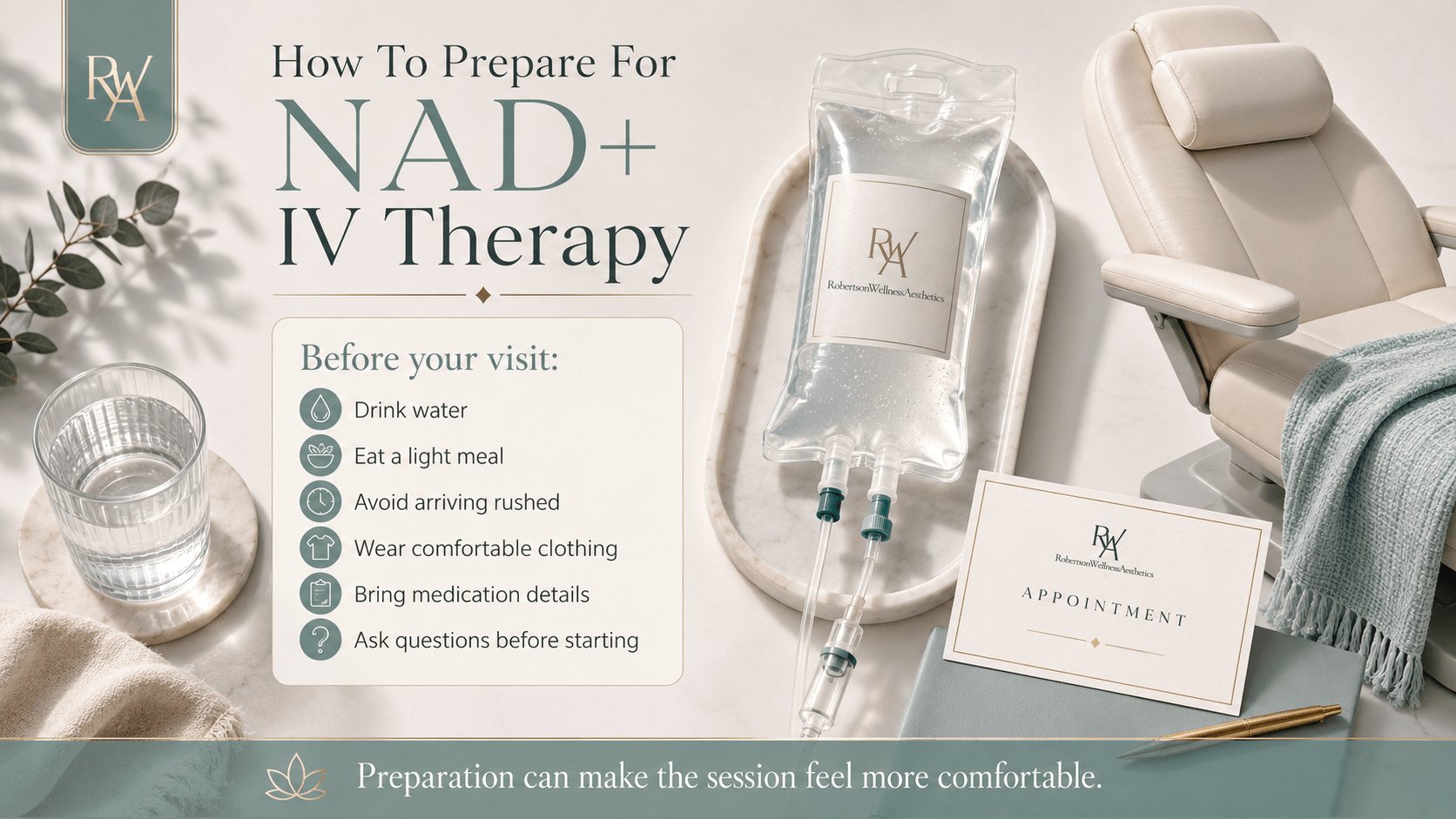
Most patients tolerate the infusion best when they arrive well hydrated and after a light meal. We typically recommend drinking 16 to 24 ounces of water in the two hours before your appointment, eating a small snack or light meal 60 to 90 minutes prior, and avoiding alcohol or caffeine the morning of your session. Wear comfortable layered clothing – sessions can run two to four hours and body temperature may fluctuate during the infusion.
Do I need to fast before a NAD+ IV?
Not strictly. Some clinics suggest a brief fast to reduce nausea, but in our practice most patients do better with a light meal an hour or so before the session. What matters more is avoiding a large or heavy meal right before the infusion, which can worsen gastrointestinal symptoms if they occur.
Should I take my regular medications and supplements?
Continue prescription medications as normal unless your physician has advised otherwise. Mention every supplement and over-the-counter medication you take during your consultation. Certain blood pressure medications, blood thinners, and high-dose antioxidant supplements can interact with the NAD+ infusion experience, and your provider may suggest timing adjustments.
How long is my first NAD+ IV appointment?
Plan for three to four hours total from arrival to discharge for a first session. The infusion itself typically runs two to three hours for a standard wellness dose (around 250 mg to 500 mg). First-time patients usually receive a slower drip rate to assess tolerance, which can extend the session slightly. Your check-in, vitals, IV placement, and brief post-infusion observation add the remaining time.
During the NAD+ IV infusion
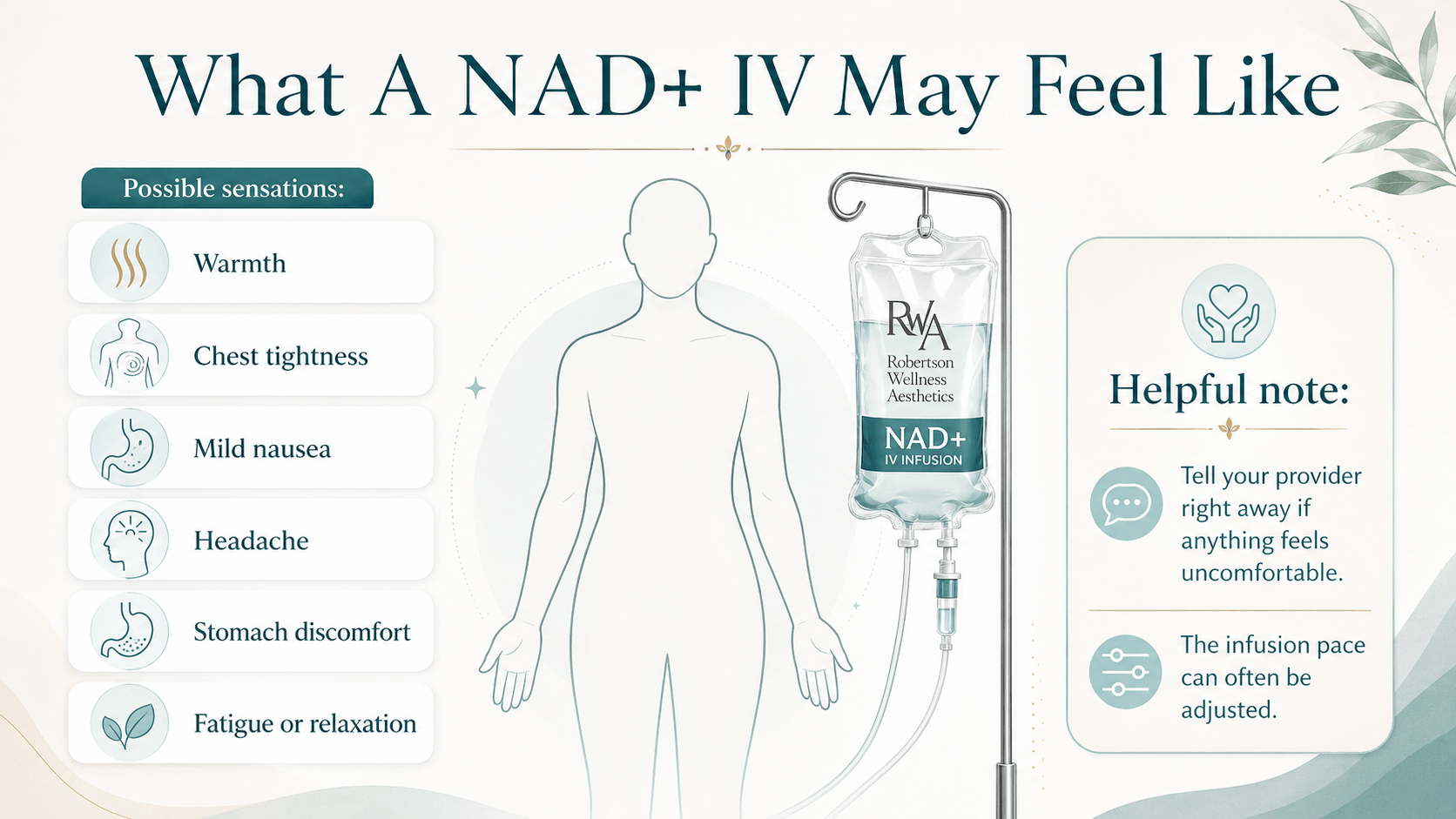
For most patients, the infusion itself is uneventful. You will feel the brief pinch of the IV placement, then settle into a reclining chair. Some patients describe feeling a warming sensation, mild pressure in the chest, or a light flush in the face during the session, especially if the drip rate is too fast. These sensations typically resolve when the nurse slows the infusion. Many patients read, work on a laptop, watch a movie, or rest during their session.
Why do some people feel chest pressure during NAD+ IV?
Transient chest tightness is one of the more talked-about NAD+ IV sensations. Current understanding is that it relates to how quickly the body processes a large dose of NAD+, which can cause temporary vasodilation (widening of blood vessels) and shifts in cellular metabolism. The sensation is not a cardiac event and is not considered dangerous in healthy patients, but it can feel uncomfortable. Slowing the infusion rate almost always resolves it within minutes. Always tell your nurse if you experience any chest discomfort so they can adjust your drip rate.
Will I feel flushed or warm during the infusion?
Flushing – a warm, sometimes red sensation in the face, neck, or chest – is one of the most common sensations reported during NAD+ IV. It happens because NAD+ can briefly cause blood vessels near the skin to widen, increasing blood flow. It is harmless and usually passes within a few minutes, especially when the drip rate is slowed.
Can I get nauseous during a NAD+ IV?
Some patients experience mild nausea or stomach discomfort during the infusion, particularly at higher doses or faster drip rates. Slowing the infusion typically resolves it. Arriving well hydrated and with a light meal in your system reduces the likelihood. If nausea is persistent, your provider may pre-medicate with an anti-nausea agent for subsequent sessions.
Can I get up and walk around during the infusion?
Bathroom breaks are fine – the IV line is portable and we can pause briefly. Otherwise we ask patients to remain seated or reclined during the infusion. Walking around with an active IV is generally avoided for safety.
What if I do not feel well during the infusion?
Tell your nurse immediately. We can slow the drip rate, pause the infusion, or address symptoms directly. Most sensations – flushing, nausea, chest tightness, mild headache – resolve quickly with a slower drip rate. Your comfort is the priority, and adjustments during the session are routine and expected.
Still have questions about NAD+ IV?
Our Beverly Hills providers answer your questions and design a NAD+ protocol that fits your goals – after a quick medical consultation.
These statements have not been evaluated by the FDA. Not intended to diagnose, treat, cure or prevent any disease. NAD+ therapy is provided only after medical consultation by a licensed provider.
After your NAD+ IV session
Will I be able to drive home after a NAD+ IV?
Most patients drive themselves home without issue. We do ask patients to rest in the chair for 10 to 15 minutes after the infusion ends so we can monitor for any lingering lightheadedness. If you felt particularly fatigued or dizzy during the session, we recommend having someone drive you home as a precaution for that visit.
How quickly will I feel results from NAD+ IV therapy?
Patient experience varies. Some patients report feeling more mentally clear and energetic within 24 to 48 hours of their first session. Others notice a more gradual shift after their third or fourth session, particularly when NAD+ is part of a loading protocol. A small number of patients feel temporarily fatigued immediately after the session as the body processes the infusion, with the energy benefits emerging a day or two later. None of these patterns predicts long-term response – some of our most enthusiastic patients felt little after session one.
How long do the effects of a NAD+ IV last?
This depends heavily on dose, frequency, baseline NAD+ levels, age, lifestyle, and individual metabolism. Many patients on a maintenance protocol report sustained benefits between sessions when receiving NAD+ IV every two to four weeks. For loading protocols, multiple sessions in a shorter window are common to raise baseline levels before transitioning to maintenance frequency.
What activities should I avoid after my session?
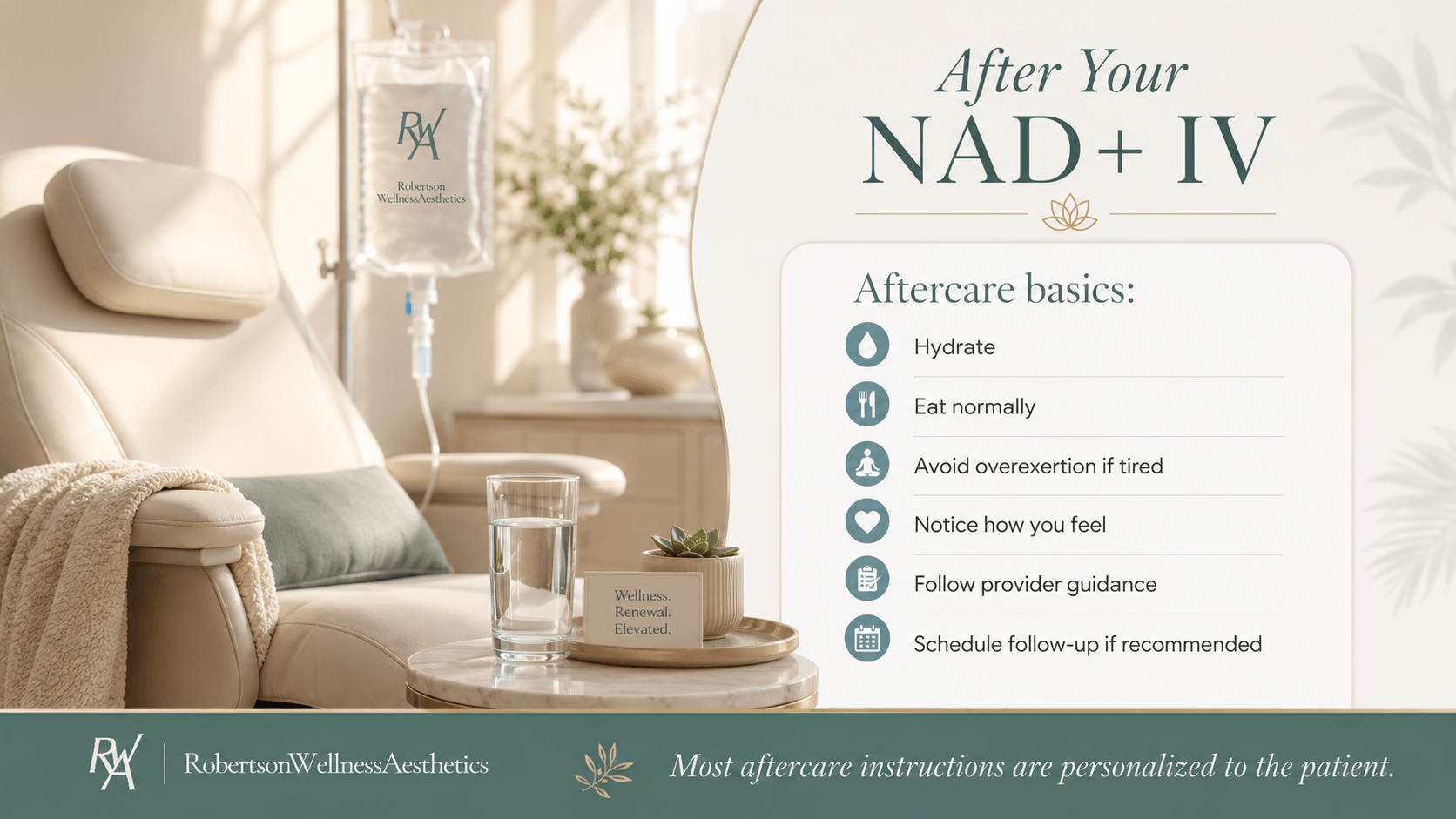
There is no formal recovery period. Most patients resume normal activities the same day. We do recommend avoiding intense exercise, alcohol, and saunas for 24 hours after your first session, simply because the body is processing a substantial dose of NAD+. Stay well hydrated and listen to your body.
Are there any delayed side effects I should watch for?
The vast majority of NAD+ IV side effects resolve before you leave the clinic. A small number of patients report mild headache, fatigue, or unusually vivid dreams in the 24 hours following a session. These typically resolve on their own. Contact us if you experience any persistent or unusual symptoms.
Safety, frequency, and who NAD+ IV is for
Is NAD+ IV therapy safe?
NAD+ IV therapy is considered well tolerated by most healthy adults when administered slowly by a qualified clinical team. Reported side effects are typically mild and transient: flushing, mild nausea, chest pressure, headache, or fatigue, almost all of which resolve when the drip rate is slowed. Serious adverse events are uncommon and have generally been associated with rapid infusion or self-administration outside a clinical setting. At RWA Center, every NAD+ IV is administered under physician oversight with vitals monitored throughout.
What are the most common side effects of NAD+ IV therapy?
The most frequently reported side effects during or shortly after a NAD+ IV are flushing, transient chest pressure, mild nausea, headache, lightheadedness, and short-term fatigue. The common thread is that almost all of these are tied to infusion speed and resolve when the drip rate is reduced. This is why a slower, longer infusion (two to four hours) is the clinical standard rather than a rapid push.
Who should not get NAD+ IV therapy?
NAD+ IV therapy is not appropriate for everyone. Patients who are pregnant or breastfeeding, have active cancer, certain cardiovascular conditions, severe liver or kidney impairment, or known allergies to NAD+ formulation components should not pursue NAD+ IV without direct physician evaluation. Our intake includes a full medical history review specifically to identify contraindications before any infusion is scheduled.
How often can I get NAD+ IV therapy?
Frequency depends on your goals and your provider’s recommendation. A common loading protocol involves a series of sessions over two to four weeks to raise baseline NAD+ levels, followed by maintenance sessions every two to eight weeks. Patients using NAD+ for general wellness often settle into a monthly or bi-monthly maintenance rhythm. For more specific protocols, see our NAD+ Dosage Guide.
Can I combine NAD+ IV with other treatments?
Yes, with provider guidance. Many of our patients pair NAD+ IV with peptide therapy, hormone optimization protocols, or other IV therapies. The clinical team coordinates timing to minimize interactions and maximize benefit. Always disclose all current therapies during your consultation.
NAD+ IV or NAD+ injection – which is better for me?
Both routes deliver NAD+ effectively, with different practical trade-offs. IV infusions deliver a larger dose over a longer session and may be preferred for loading protocols. Injections are faster (typically a few minutes), can often be continued at home under supervision, and make consistent dosing more practical for busy patients. Many patients use both – IV for loading, injections for maintenance. See our NAD+ Injections Guide for a deeper comparison.
Cost, scheduling, and what to expect at RWA Center
How much does NAD+ IV therapy cost at RWA Center?
NAD+ IV pricing depends on dose and protocol. Single sessions, multi-session packages, and membership pricing are available. For current pricing details, please see our guide to NAD+ therapy costs or call our office at (310) 407-0542.
How do I book my first NAD+ IV appointment?
The first step is a brief medical consultation to review your goals, medical history, and current medications. Our team uses that consultation to recommend an appropriate starting dose and protocol. Call (310) 407-0542 or use the booking form on our NAD+ IV Therapy page to schedule.
Do you offer concierge NAD+ IV at home or in a hotel?
Yes. Robertson Wellness and Aesthetics offers concierge IV services for patients who prefer treatment at home, in a hotel, or at their office within our service area. Concierge availability and pricing differ from in-clinic sessions – please call (310) 407-0542 to discuss options.
FDA disclaimer: These statements have not been evaluated by the Food and Drug Administration. NAD+ IV therapy is not intended to diagnose, treat, cure, or prevent any disease. Individual results vary. NAD+ IV therapy should only be administered by qualified medical professionals after a thorough patient evaluation.
Sources:
National Center for Biotechnology Information. NAD+ in cellular metabolism and aging. https://pmc.ncbi.nlm.nih.gov/articles/PMC8033522/
Grant R et al. A pilot study investigating changes in the human plasma and urine NAD+ metabolome during a 6 hour intravenous infusion of NAD+. Frontiers in Aging Neuroscience. https://pmc.ncbi.nlm.nih.gov/articles/PMC6779819/
Reviewed by the clinical team at Robertson Wellness and Aesthetics.
Book your NAD+ consultation
Get personalized answers and the right NAD+ dose, route and cadence for you.
These statements have not been evaluated by the FDA. Not intended to diagnose, treat, cure or prevent any disease. NAD+ therapy is provided only after medical consultation by a licensed provider.


