


When people think about taking care of their skin, hair, and nails, they usually think about topical products, salon treatments, or oral supplements. Beauty IV drip therapy offers a different approach: delivering a blend of vitamins, antioxidants, and amino acids directly into the bloodstream through an intravenous infusion.
This guide explains what typically goes into a beauty IV drip, what each ingredient is being studied for, what patients can realistically expect, and how this category of wellness therapy fits into a broader routine. Whether you are curious about trying your first infusion or simply want to understand what clinics in Los Angeles and Beverly Hills are offering, the sections below walk through the fundamentals in plain language.
What is a beauty IV drip?
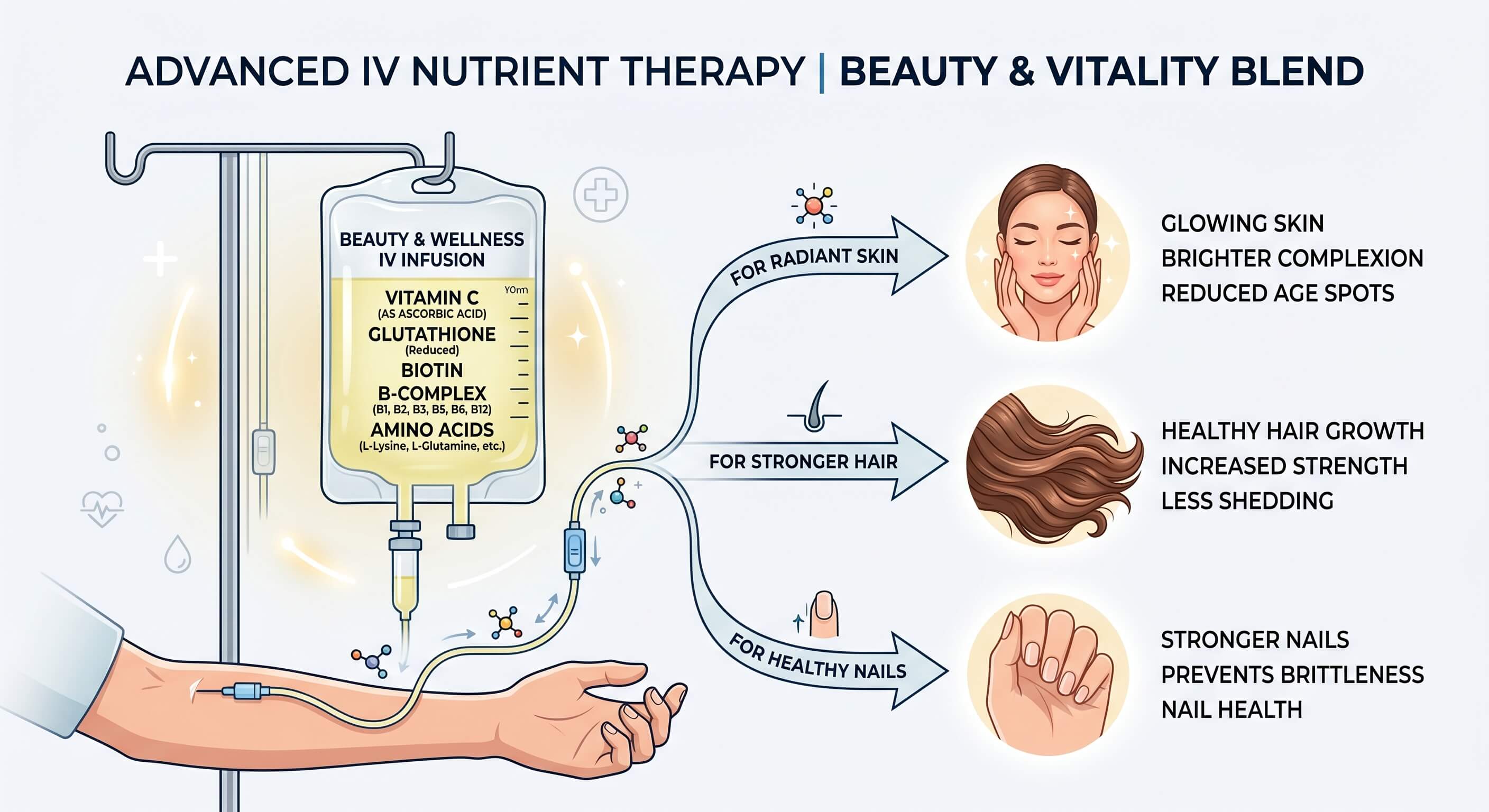
A beauty IV drip is an intravenous infusion that combines select vitamins, antioxidants, and other nutrients in a saline base, delivered through a small catheter placed in a vein. Sessions typically last between 30 and 60 minutes, and patients remain comfortably seated throughout.
The rationale behind this delivery route is straightforward. When you take a vitamin by mouth, your digestive tract determines how much actually reaches your bloodstream. Factors like gut health, timing of meals, age, and individual biochemistry all affect absorption. Intravenous delivery bypasses this regulatory step, allowing nutrients to reach circulation at higher concentrations than are generally achievable through oral supplementation.
At RWA Center in Beverly Hills, our beauty IV drip therapy is formulated specifically to support skin, hair, and nail wellness from the inside out, with every session overseen by a licensed medical professional.
It is important to understand that beauty IV formulations are not standardized across clinics. Ingredients, dosing, and additives vary based on the medical director’s protocol and the patient’s individual goals.
How skin, hair, and nails reflect what’s happening internally
Your skin, hair, and nails are downstream of your overall nutritional and metabolic status. When the body is well-hydrated, well-nourished, and producing collagen efficiently, these tissues tend to reflect that. When the body is under oxidative stress, dehydrated, or nutritionally depleted, the effects often show up on the surface.
Several factors play a role in how skin, hair, and nails appear over time:
Hydration status: Skin cells rely on adequate intracellular and extracellular water to maintain elasticity and barrier function.
Collagen synthesis: The body produces collagen continuously, and this process requires specific vitamins and minerals as cofactors.
Oxidative balance: Free radicals from sun exposure, pollution, and metabolic activity can damage cellular structures, including those in the skin.
Protein and amino acid availability: Hair, nails, and the structural proteins in skin are all built from amino acids.
Micronutrient sufficiency: Certain vitamins and minerals are involved in skin renewal, pigmentation regulation, and hair follicle function.
A beauty IV drip addresses several of these factors simultaneously by delivering supportive nutrients in a single session.
What’s typically in a beauty IV drip
Beauty IV formulations vary, but most include a combination of the following core ingredients. The table below summarizes common components and their associated roles.
| Ingredient | What it is | Commonly associated with |
|---|---|---|
| Vitamin C (ascorbic acid) | Water-soluble antioxidant vitamin | Collagen synthesis, antioxidant defense |
| Glutathione | Naturally occurring tripeptide antioxidant | Oxidative stress support, being studied for skin tone |
| Biotin (vitamin B7) | Water-soluble B vitamin | Hair, skin, and nail wellness |
| B-complex vitamins | Group of B1, B2, B3, B5, B6, B12 | Energy metabolism, cellular function |
| Saline and electrolytes | Isotonic fluid base | Hydration support |
| Amino acids | Building blocks of proteins (sometimes added) | Protein synthesis support |
| Zinc (sometimes added) | Essential trace mineral | Skin renewal, wound healing |
Each of these components has a specific rationale for being included in a beauty-focused formulation.
Vitamin C and its role in skin wellness
Vitamin C is one of the most well-studied nutrients in dermatology research. It plays a role in collagen synthesis, acts as an antioxidant, and is involved in the cellular processes that support skin repair and renewal.
Collagen is the structural protein that gives skin its firmness and elasticity. The body produces collagen continuously, but this production requires vitamin C as a cofactor for specific enzymes. When vitamin C is in short supply, collagen synthesis can be affected.
Vitamin C also participates in antioxidant defense by neutralizing free radicals. Free radicals are unstable molecules that can damage cellular structures, and ongoing oxidative stress has been implicated in visible signs of aging.
Intravenous vitamin C produces higher plasma concentrations than oral administration, which is part of why it is included in beauty IV formulations. Patients with a condition called G6PD deficiency should be screened before receiving higher-dose vitamin C infusions, as they may experience adverse reactions.
Glutathione: what the research says
Glutathione is a naturally occurring tripeptide, meaning it is made up of three amino acids: glutamate, cysteine, and glycine. It is produced by the body and functions as one of the primary intracellular antioxidants.
Glutathione is being studied for several potential roles in skin wellness, including its effects on pigmentation, oxidative stress, and general skin appearance. Some patients report a brighter or more even skin tone after a series of infusions, though individual results vary considerably.
The clinical evidence requires honest discussion. A 2017 placebo-controlled study by Zubair and colleagues examined IV glutathione at 1,200 mg twice weekly for six weeks. The study reported temporary skin-lightening effects in about 37.5 percent of participants, but also noted that 32 percent experienced adverse events. A 2025 systematic review in the International Journal of Dermatology concluded that topical and oral glutathione showed some benefit for pigmentation concerns, but evidence supporting IV glutathione specifically for skin lightening remained limited.
The Philippine FDA and several other regulatory bodies have issued warnings about unregulated IV glutathione use. This is part of why it matters to receive any glutathione infusion from a licensed medical provider in a clinical setting, at dosages appropriate to individual circumstances, rather than from unregulated sources.
For patients interested in glutathione as part of a broader wellness approach, it is commonly discussed as an antioxidant support rather than as a guaranteed skin-lightening treatment. The FDA has not approved IV glutathione for the diagnosis, treatment, cure, or prevention of any skin condition, and claims of guaranteed cosmetic results should be viewed cautiously.
Biotin and the “hair, skin, and nails” connection
Biotin, also known as vitamin B7, has become widely associated with hair, skin, and nail wellness. It plays a role in the metabolism of fats, carbohydrates, and proteins, and it is involved in the function of enzymes needed for keratin production.
Keratin is the structural protein that makes up hair and nails. Because biotin participates in keratin-related metabolic pathways, it is commonly included in beauty-focused supplements and IV formulations.
The evidence base is more mixed than marketing often suggests. Biotin supplementation has shown clear benefit in individuals with documented biotin deficiency, which is relatively uncommon in healthy adults eating a varied diet. In people without deficiency, the evidence that additional biotin produces visible improvements in hair or nail quality is limited.
One practical note: high doses of biotin can interfere with certain laboratory tests, including thyroid function panels and cardiac troponin assays. If you are receiving biotin through IV or oral supplementation and have lab work scheduled, let your clinician know.
B-complex vitamins and cellular support
The B vitamin family, including B1 (thiamine), B2 (riboflavin), B3 (niacinamide), B5 (pantothenic acid), B6 (pyridoxine), and B12 (cobalamin), participates throughout energy production pathways at the cellular level.
Several B vitamins have roles relevant to skin wellness. Niacinamide, for example, has been studied for its role in skin barrier function and is a common ingredient in topical skincare products. Pantothenic acid is involved in the synthesis of fatty acids that contribute to skin lipid barrier integrity.
B vitamins are water-soluble, meaning excess amounts are generally excreted through the kidneys. That said, very high doses of certain B vitamins carry their own risks, and IV administration should always be guided by a qualified medical provider.
Hydration: often underappreciated
Saline forms the base of most IV drips, including beauty formulations. The volume of fluid delivered during a session contributes to systemic hydration, which has its own effects on how skin looks and feels.
Chronic low-grade dehydration is common, particularly in busy professionals, frequent travelers, and individuals who consume caffeine or alcohol regularly. Many patients report that the simple experience of being fully hydrated contributes to a fresher appearance in the days following an infusion.
For patients whose primary concern is dehydration, a dedicated IV hydration therapy session may be a more focused option.
What a beauty IV drip session feels like
Most patients are curious about what to expect the first time. Here is a realistic walkthrough.
Before the session: You will complete an intake form covering medical history, medications, allergies, and current goals. A qualified provider reviews the information. If you have kidney disease, heart failure, certain cardiac rhythm issues, or take medications that interact with specific IV components, the provider may modify or decline the infusion.
Setup: A licensed medical professional will check your vital signs, examine your veins, and place a small IV catheter, usually in the forearm or hand. Placement feels like a brief pinch.
During the infusion: The beauty IV is typically delivered over 30 to 60 minutes, depending on volume and protocol. Most patients use the time to rest, read, or scroll their phone. Some feel a sensation of warmth or a mild vitamin-like taste during the infusion, which is common and temporary.
After the infusion: The catheter is removed and a small bandage applied. Most patients resume normal activities immediately. Some report feeling refreshed and well-hydrated the same day, with skin-related effects typically observed over days to weeks with repeated sessions. Individual results vary.
Want that lit-from-within glow?
Our Beauty IV delivers glutathione, biotin, vitamin C and hydration to support skin, hair and nails – under physician supervision in Beverly Hills.
IV therapy is provided under medical supervision. These statements have not been evaluated by the FDA and are not intended to diagnose, treat, cure or prevent any disease.
Comparison with other common IV drips
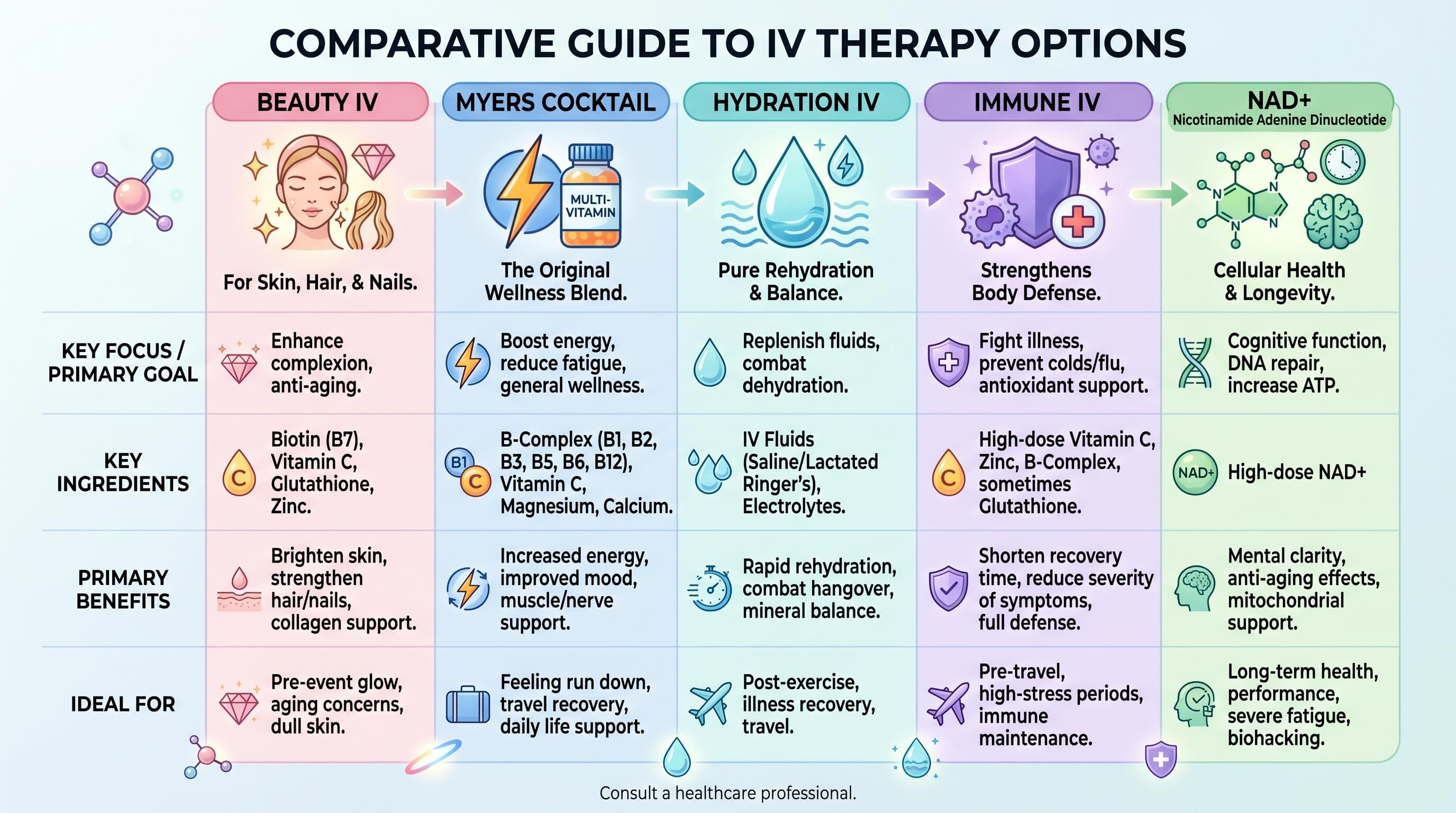
Clinics typically offer multiple IV formulations targeting different wellness goals. The table below outlines how a beauty IV fits into a broader menu.
| IV formulation | Typical composition | Commonly associated with |
|---|---|---|
| Beauty IV drip | Vitamin C, glutathione, biotin, B-complex, saline | Skin, hair, and nail wellness support |
| Myers cocktail | Magnesium, calcium, B-complex, B12, vitamin C | General wellness, fatigue, migraine-related complaints |
| Hangover IV | Saline, anti-nausea medication, B-complex, electrolytes | Rehydration after alcohol consumption |
| Immune boost IV | Higher-dose vitamin C, zinc, B-complex | Seasonal immune support |
| Energy boost IV | B-complex, amino acids, taurine | Energy and endurance support |
| NAD+ infusion | Nicotinamide adenine dinucleotide | Being studied for cellular health and longevity applications |
| All-inclusive IV | Full-spectrum vitamins, minerals, amino acids, glutathione | Comprehensive wellness support |
Each of these serves a different purpose. The right choice depends on your goals, your medical history, and your provider’s recommendation.
Who may be a candidate for beauty IV therapy
Qualified medical providers typically review your situation before recommending an IV infusion. Populations who often explore beauty IV therapy include:
Adults preparing for a specific event, such as a wedding or photoshoot, and seeking general wellness support in the days prior
Frequent travelers who want to support hydration and recovery after long flights
Individuals whose routines include high levels of stress, inconsistent sleep, or limited time for structured self-care
Patients already incorporating other wellness therapies who want a targeted, beauty-focused addition
Individuals dealing with dull-feeling skin or brittle nails who have ruled out underlying medical causes
Groups that should exercise particular caution and consult their physician before any infusion include:
Individuals with kidney disease, since the kidneys regulate fluid and excrete excess water-soluble nutrients
Patients with heart failure or fluid-sensitive cardiac conditions
Pregnant or breastfeeding women, for whom safety data on many IV cosmetic formulations is limited
Individuals with G6PD deficiency, particularly when higher-dose vitamin C is being considered
Anyone with liver disease, particularly relevant for glutathione-containing formulations
Anyone with known allergies to any component in the formulation
This list is not exhaustive, and a thorough consultation is the appropriate way to determine suitability.
How often do patients typically receive beauty IV sessions?
Frequency varies based on individual goals and provider recommendations. Common patterns include:
| Usage pattern | Typical frequency | Typical context |
|---|---|---|
| Event-focused | Single session, 24 to 72 hours before the event | Weddings, photoshoots, important social events |
| Short course | Weekly for 4 to 6 weeks | Initial skin or hair wellness protocols |
| Maintenance | Every 2 to 4 weeks | Ongoing wellness support after an initial course |
| Seasonal | During specific periods | High-stress periods, post-travel recovery |
There is no universal dosing schedule. A qualified provider should personalize the cadence based on your response and overall health picture.
Realistic expectations: what beauty IV therapy can and cannot do
Honest communication matters in this category, partly because the wellness industry has a history of overpromising results. A few points worth keeping in mind:
It is supportive, not transformative on its own: Beauty IV therapy is best understood as one part of a broader wellness routine. It does not replace sun protection, a balanced diet, quality sleep, or consistent topical skincare.
Effects develop over time with repeated sessions: Patients who report the most noticeable changes typically receive a series of infusions over several weeks rather than a single session.
Individual results vary: Factors like baseline hydration, diet, sleep, genetics, skincare routine, and sun exposure all influence outcomes. Two patients receiving the same protocol may experience different results.
It is not a treatment for specific skin conditions: If you have acne, eczema, melasma, rosacea, or other medical skin conditions, these require evaluation and treatment by a dermatologist. IV therapy is a wellness support, not a medical treatment for skin disease.
The FDA has not approved beauty IV formulations for specific cosmetic outcomes: Any provider claiming guaranteed skin lightening, guaranteed hair regrowth, or similar outcomes is making claims not supported by regulatory approval.
Potential side effects and safety considerations
When administered by a qualified medical professional using proper sterile technique, beauty IV therapy has a reasonable safety profile. That said, no infusion is entirely without risk. Reported side effects include:
A warming or flushing sensation during administration
A metallic or vitamin-like taste during the infusion
Bruising, mild bleeding, or tenderness at the IV site
Lightheadedness, typically if the infusion is delivered too quickly
Rarely, allergic or hypersensitivity reactions to specific ingredients
Rarely, more serious complications, including infection if sterile technique is not followed
Glutathione-specific considerations: Higher-dose IV glutathione has been associated in published reports with allergic reactions, skin rash, and in rare cases, more serious complications. This is another reason why receiving infusions from a licensed clinic with physician oversight matters.
Always confirm that the clinic you choose uses licensed medical providers, follows current sterile technique standards, and has a physician medical director overseeing protocols.
Beauty IV therapy in the context of a broader wellness routine
A beauty IV drip is one tool within a broader landscape of wellness therapies. Many patients use it alongside other approaches such as aesthetic treatments, peptide therapy, IV ozone therapy, or lifestyle optimization involving nutrition, sleep, hydration, and sun protection.
The foundations of skin and hair wellness remain the same evidence-based basics that dermatologists have emphasized for decades: daily broad-spectrum sunscreen, adequate protein intake, omega-3 fatty acids, quality sleep, stress regulation, and avoidance of smoking. IV nutrient therapy may complement these, but should not substitute for them.
Frequently asked questions
How long does a beauty IV session take? Typically 30 to 60 minutes for the infusion itself, plus additional time for intake, vein access, and post-infusion observation. Plan for about an hour total for a first visit.
When will I see results? Some patients report feeling refreshed and well-hydrated the same day. Skin-related changes typically develop gradually over a series of sessions. Individual results vary.
How often should I get a beauty IV drip? This depends on your goals. For event preparation, a single session may be appropriate. For ongoing support, many patients space sessions every 2 to 4 weeks. Your provider will recommend a cadence based on your consultation.
Can I combine beauty IV with other treatments? Many patients combine beauty IV therapy with aesthetic or wellness treatments. Your provider should be aware of everything you are doing to ensure appropriate timing and safety.
Does insurance cover beauty IV therapy? Most insurance plans view beauty and wellness IV infusions as elective cosmetic care and do not cover them.
Is beauty IV therapy FDA-approved? The individual vitamins and minerals used are available as approved pharmaceutical products, but beauty IV formulations, as compounded preparations, are not FDA-approved for the diagnosis, treatment, cure, or prevention of any skin, hair, or nail condition. They are offered as wellness therapies.
Can I drive after a session? Most patients can drive after a beauty IV session. If you have never received an infusion before or felt lightheaded during the session, rest briefly before driving.
Ready to learn whether beauty IV drip therapy is right for you?
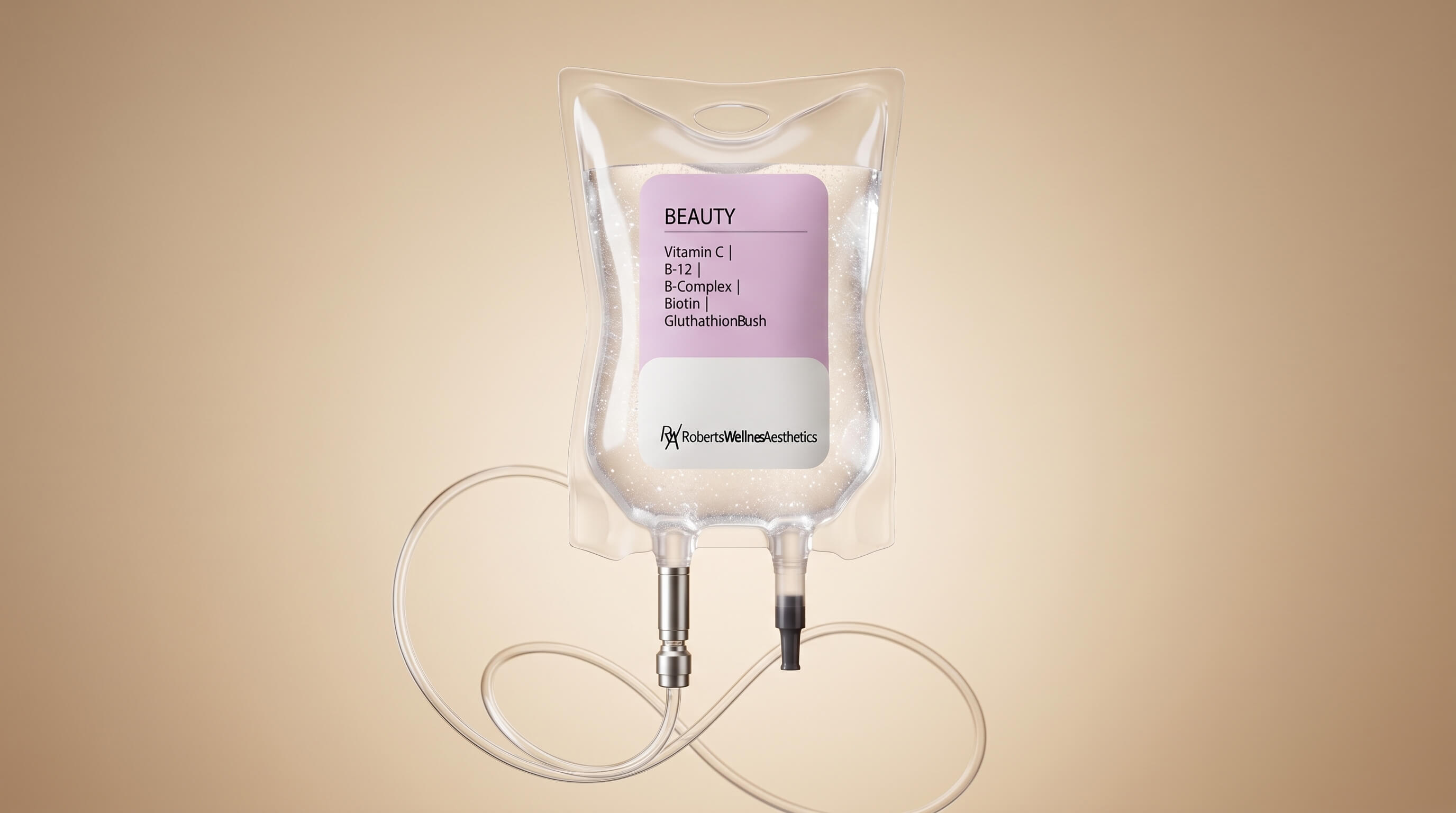
At RWA Center in Beverly Hills, our medical team offers beauty IV drip therapy as part of a broader menu of IV treatments, with every session overseen by licensed medical professionals. Each protocol is personalized based on a consultation covering your medical history, current goals, and overall wellness picture.
If you are exploring beauty IV therapy for the first time or considering how it might complement your existing skincare and wellness routine, we invite you to contact our team to discuss whether this approach is appropriate for your situation.
The information provided is for educational purposes only and is not intended as medical advice. Certain therapies discussed may be investigational and are not approved by the FDA for the diagnosis, treatment, cure, or prevention of disease. Always consult with a qualified healthcare professional before beginning any new wellness protocol.
Book your Beauty IV in Beverly Hills
A supervised infusion to support radiant skin, stronger hair and healthier nails.
IV therapy is provided under medical supervision. These statements have not been evaluated by the FDA and are not intended to diagnose, treat, cure or prevent any disease.


