


If you have been feeling persistently tired, watching the scale climb despite the same routine, or noticing a quiet shift in your drive and focus, you are not alone, and the cause may not be “just getting older.” For a meaningful number of men in their 30s, 40s, and 50s, those changes track back to a measurable drop in testosterone, the primary male hormone that supports energy, muscle mass, mood, libido, and cardiovascular health.
Testosterone replacement therapy, often called TRT, is a clinician-supervised treatment that restores hormone levels to an optimal range using bioidentical testosterone. In a market like Beverly Hills, where “men’s health” subscription clinics are easy to find online, the difference between a protocol that simply raises a number on a lab report and one that actually changes how a man feels often comes down to three things: a comprehensive blood panel, direct clinician oversight, and ongoing dose adjustments based on follow-up data.
This guide walks through how testosterone changes with age, the symptoms that should prompt a workup, what TRT actually involves, who is and is not a candidate, and what to look for in a Beverly Hills hormone clinic.
Medical disclaimer: This article is for educational purposes only and is not medical advice. Testosterone replacement therapy is a prescription treatment that requires evaluation by a licensed clinician. Statements about TRT have not been evaluated by the FDA. Treatment is not intended to diagnose, treat, cure, or prevent any disease.
Why Testosterone Matters at Every Age
Testosterone is more than a sex hormone. Receptors for testosterone exist throughout the body, in muscle tissue, bone, the brain, and the cardiovascular system. That is why hormone shifts can produce symptoms that, on the surface, do not seem hormonal at all: brain fog at work, plateaus at the gym, irritability at home, weight that creeps up around the midsection.
Healthy testosterone supports lean muscle and strength, bone density, healthy red blood cell production, mood and motivation, libido and erectile function, and metabolic health. After age 30, testosterone levels typically decline by roughly 1 percent per year. By a man’s 40s and 50s, that gradual drop can move him from “feeling sharp” to “feeling off,” without a single dramatic moment.
According to peer-reviewed research, late-onset hypogonadism is characterized by both a measurable drop in testosterone and clinical symptoms, with sexual symptoms and fatigue often being the earliest and most common signs.
Signs You May Have Low Testosterone
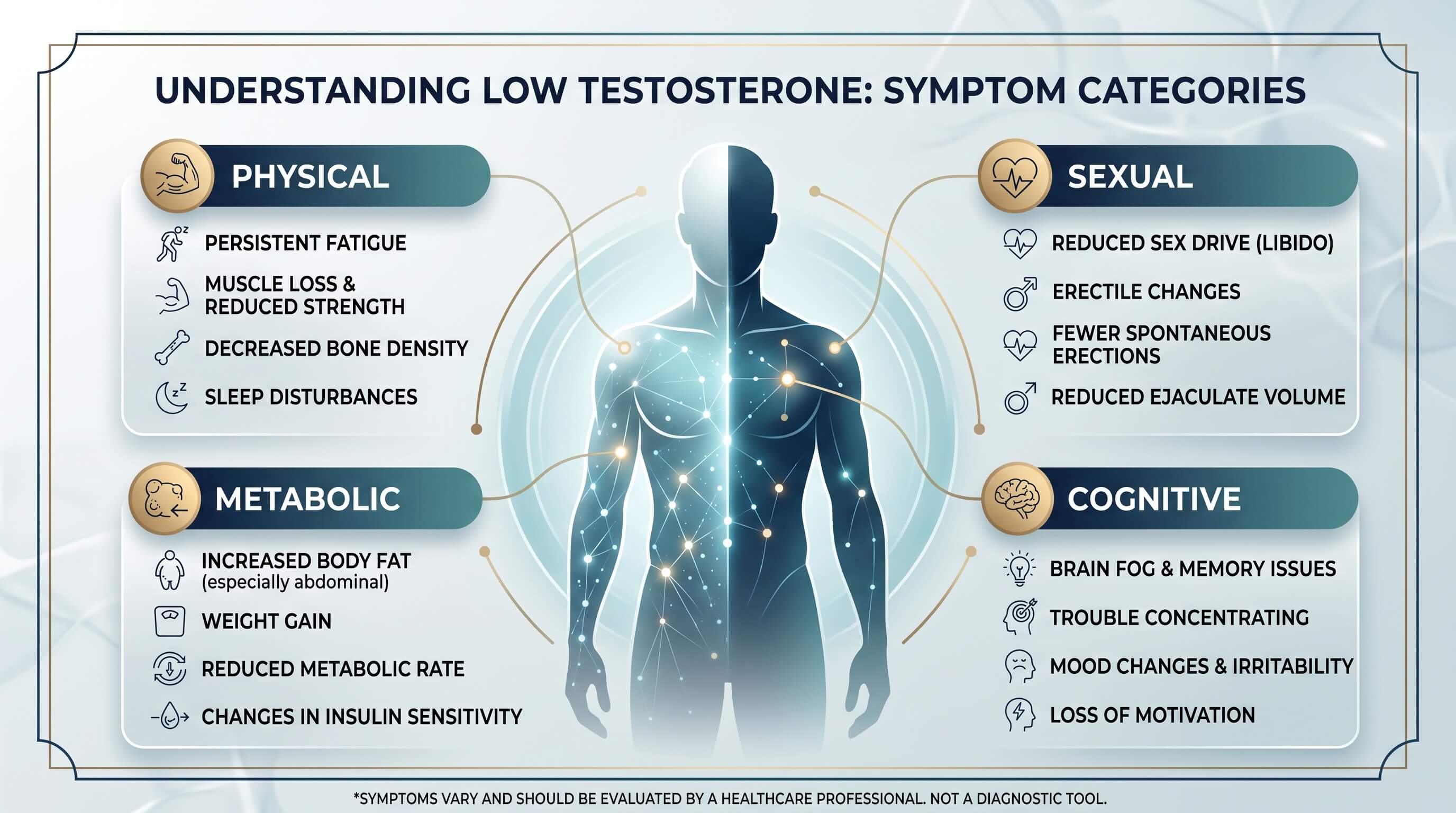
Symptoms of low testosterone are non-specific, which is one reason “low T” is underdiagnosed. The same complaints, fatigue, low mood, weight gain, can come from poor sleep, undertreated thyroid disease, depression, or chronic stress. That is why a TRT workup starts with a careful history and lab work, not a guess.
The most commonly reported symptoms cluster into a few patterns:
| Category | Common Signs of Low Testosterone |
|---|---|
| Physical | Persistent fatigue, increased body fat (especially abdominal), loss of muscle mass and strength, decreased bone density, reduced exercise tolerance |
| Sexual | Reduced libido, fewer morning erections, erectile difficulties, decreased sense of vitality |
| Cognitive and mood | Brain fog, poor concentration, low motivation, irritability, depressed mood, sleep disturbances |
| Metabolic | Insulin resistance, slower metabolism, weight gain that is hard to lose with diet and exercise alone |
If three or more of these symptoms have been present for at least several months, especially after age 30, a hormone evaluation is reasonable. Endocrine guidelines published through the National Institutes of Health emphasize that TRT should be considered only when both lab evidence and clinical symptoms are present, not on labs alone and not on symptoms alone.
How TRT Works: Mechanism in Plain English
Testosterone replacement therapy delivers bioidentical testosterone, a hormone with the same molecular structure as the testosterone the body produces, in a controlled dose. The goal is to bring serum testosterone back into a healthy reference range and, more importantly, to relieve the symptoms that prompted the workup in the first place.
Most well-designed TRT programs share three pillars:
- Comprehensive baseline labs. Total and free testosterone, estradiol, sex hormone-binding globulin (SHBG), luteinizing hormone (LH), follicle-stimulating hormone (FSH), hematocrit, PSA, lipids, and a metabolic panel.
- A delivery method matched to the patient. Most often weekly intramuscular or subcutaneous injections, sometimes daily topical gels or longer-acting pellets.
- Follow-up labs and dose adjustment. Repeat labs at defined intervals to confirm levels are in range, watch markers like hematocrit and PSA, and refine the dose.
Without all three of these, what is being offered is closer to a hormone refill service than true hormone optimization.
What a Real TRT Lab Workup Looks Like
A common shortcut at quick-access clinics is to draw only total testosterone, then prescribe based on a single number. That approach misses important context. A clinically rigorous evaluation includes the markers below.
| Lab marker | Why it matters in a TRT workup |
|---|---|
| Total testosterone | The starting point for diagnosis. Drawn between 7 and 11 a.m., when levels peak. |
| Free testosterone | The biologically active fraction, often more clinically meaningful than total testosterone alone. |
| Estradiol (E2) | Some testosterone naturally converts to estrogen. Monitoring estradiol helps balance the protocol. |
| SHBG | Sex hormone-binding globulin influences how much testosterone is free vs. bound. |
| LH and FSH | Help distinguish primary vs. secondary hypogonadism. |
| Hematocrit | Testosterone can increase red blood cell production. Tracked at baseline and follow-up. |
| PSA | Prostate-specific antigen, monitored in men age 40 and older on testosterone therapy. |
| Lipids and metabolic panel | A clearer picture of cardiovascular and metabolic health alongside hormone status. |
This kind of workup is the foundation of every TRT program at Robertson Wellness. The initial assessment includes a comprehensive consultation and a full hormone blood panel; specialized testing is available if the clinical picture calls for it.
How Testosterone Can Be Delivered
There is no single “best” form of TRT. The right delivery method depends on lifestyle, comfort with self-administration, budget, and how stable the patient’s levels need to be.
| Delivery method | Frequency | Pros | Considerations |
|---|---|---|---|
| Self-administered injections | Weekly at home | Convenient, lower cost, steady levels | Requires comfort with self-injection |
| In-office injections | Weekly at the clinic | Hands-off, clinician-administered, in-person check-ins | Requires weekly clinic visits |
| Topical gels and creams | Daily | Needle-free, easy to start | Risk of skin transfer, daily routine, absorption variability |
| Pellets | Every 3 to 6 months | Long-acting, no daily routine | Minor in-office procedure, less flexibility to adjust |
At Robertson Wellness, the two most common formats are weekly self-administered injections at home and weekly clinician-administered injections in the Beverly Hills clinic. Both keep levels stable and allow the dose to be adjusted as follow-up labs evolve.
Who Is, and Is Not, a Candidate for TRT?
TRT is appropriate for men with both lab-confirmed low testosterone and clinical symptoms, after a thorough evaluation rules out other causes. It is not a quick fix, a performance enhancer, or a substitute for sleep, training, and nutrition.
Men who may be good candidates
- Adult men with persistent symptoms of low testosterone for several months or more
- Men whose blood work shows low total or free testosterone on more than one morning draw
- Men in whom other causes (thyroid disease, sleep apnea, depression, medication side effects) have been considered
- Men ready to commit to follow-up labs and dose monitoring
Men who should think twice or wait
- Men actively trying to conceive (TRT can suppress sperm production; alternative protocols exist)
- Men with active or untreated prostate or breast cancer
- Men with severe untreated sleep apnea
- Men with elevated hematocrit or other contraindications flagged at baseline
The right decision is made in a one-on-one conversation with a clinician, with lab data on the table. That is exactly what an Initial Assessment at Robertson Wellness is designed to provide.
Low energy, low drive – is it low T?
Our Beverly Hills physicians review your labs and symptoms, then build a supervised testosterone plan only if it is right for you.
TRT is prescribed by a licensed physician after evaluation. These statements have not been evaluated by the FDA and are not intended to diagnose, treat, cure or prevent any disease.
Side Effects and Safety: What to Monitor
Like any medical therapy, TRT has a risk profile that needs to be respected. Most men do well, but every patient on testosterone should be monitored, not simply prescribed.
Possible side effects include:
- Increased red blood cell count (elevated hematocrit), which is why hematocrit is checked regularly
- Acne or oily skin, especially in the first few months
- Mild fluid retention
- Estradiol shifts, which can cause symptoms if levels rise too far above range
- Suppression of natural testosterone production while on therapy
- Reduced fertility while on therapy
Cardiovascular safety is the most actively studied area. Recent peer-reviewed evidence is reassuring for properly selected men under medical supervision, but it underscores why clinician oversight, not subscription auto-refills, matters.
Choosing a TRT Clinic in Beverly Hills
Beverly Hills has a dense market for hormone optimization, ranging from concierge medical practices on Wilshire and Rodeo to nationwide telehealth subscription brands. They are not all the same. The differences that matter are clinical, not cosmetic.
| What to look for | Why it matters | Robertson Wellness approach |
|---|---|---|
| Comprehensive lab panel | Total testosterone alone is rarely enough to design a protocol. | Initial panel covers free T, estradiol, SHBG, hematocrit, PSA, and more |
| Direct clinician oversight | Hormone optimization is a YMYL medical decision, not a subscription product. | Providers experienced in longevity medicine review every plan |
| Personalized protocol | Two men with the same total testosterone may need different protocols. | Plans built on lab data, symptoms, and goals |
| Follow-up and dose adjustment | Levels and side-effect risk shift over time. | Repeat labs and dose tuning included in monthly programs |
| No long-term contracts | Patients should not feel locked in. | Programs billed every 4 weeks with no long-term contract |
Robertson Wellness sits in the concierge medical category: a Beverly Hills clinic with in-person care, comprehensive labs, and clinician oversight, paired with the option of in-home and concierge services for patients who prefer privacy or have demanding schedules.
If you are weighing testosterone replacement therapy, our clinical team can review your labs, symptoms, and goals to determine whether treatment may be appropriate for you. Learn more about TRT at our Beverly Hills clinic and book a physician consultation.
What a TRT Program at Robertson Wellness Looks Like
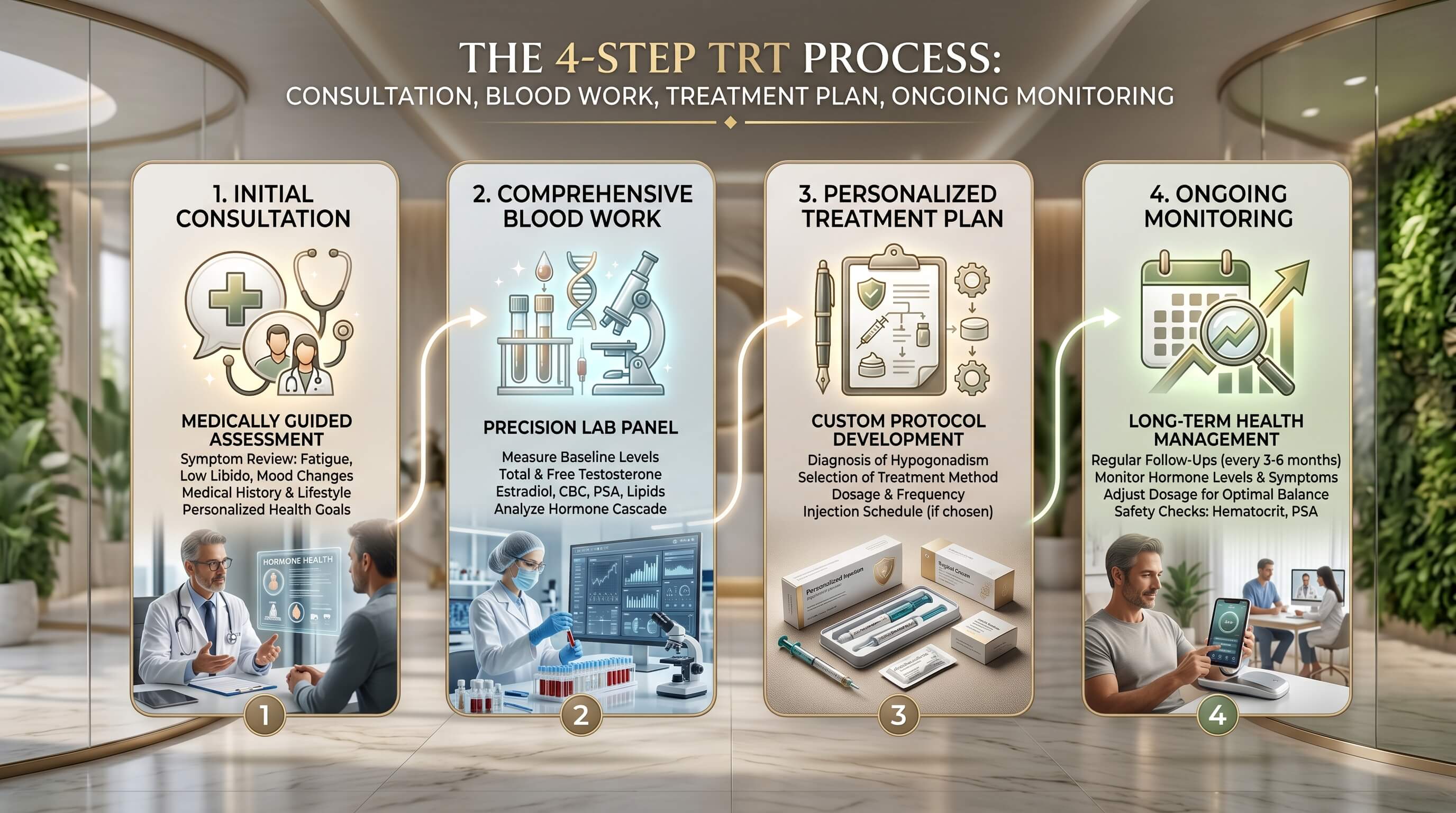
Every program starts the same way, with information.
Step 1: Consultation
A one-on-one conversation about symptoms, health history, and goals. Blood work is ordered to measure hormone levels and the supporting markers above.
Step 2: Lab review and treatment plan
The provider reviews lab results with the patient and builds a personalized plan based on the data, not a template. The plan covers dose, delivery method, and monitoring schedule.
Step 3: Begin treatment
Patients begin therapy with either at-home self-injections or weekly in-office visits in Beverly Hills.
Step 4: Ongoing monitoring
Regular follow-up blood tests track progress. The provider adjusts the dose as needed to keep levels and symptoms optimized.
This step-by-step structure is described in detail on the Robertson Wellness men’s health page, with current pricing and program options.
Beverly Hills TRT Pricing at Robertson Wellness
Transparency on cost matters. Programs are billed every 4 weeks with no long-term contract, so patients are never locked in.
| Program | What is included | Investment |
|---|---|---|
| Initial Assessment | Comprehensive consultation with full hormone blood panel; specialized testing available if needed | $299 (one-time) |
| Self-Administered Injections | Testosterone, syringes, and medical supplies for at-home weekly injections; follow-up blood tests included | $199 / month |
| In-Office Weekly Injections | Weekly clinician-administered injections in Beverly Hills; testosterone, supplies, and follow-up labs included | $249 / month |
Each monthly program includes follow-up blood tests, so monitoring is built into the price rather than billed as an add-on.
Frequently Asked Questions About TRT in Beverly Hills
How long does it take to feel results from TRT?
Many men notice improvements in energy and sleep within the first 1 to 2 weeks. More substantial changes in mood, mental clarity, libido, and body composition usually develop over 4 to 12 weeks as levels stabilize. Strength and muscle changes follow training and time.
Is TRT a lifelong commitment?
Not necessarily. Some men stay on therapy long-term; others use it for a defined period. Discontinuation should be done under medical supervision because the body’s natural production is suppressed during therapy.
Will TRT affect fertility?
Testosterone therapy can reduce sperm production. Men who plan to conceive should discuss alternatives with their provider before starting. Different protocols exist that aim to support testosterone while preserving fertility.
How is TRT different from “low T” subscription clinics?
The shortest answer: scope of evaluation. Subscription clinics often draw a single hormone, then ship medication. A clinician-led Beverly Hills program looks at a comprehensive panel, screens for contraindications, monitors safety markers like hematocrit and PSA, and adjusts the dose based on data over time.
Does Robertson Wellness offer concierge TRT services?
Yes. For patients who prefer privacy or have demanding schedules, Robertson Wellness offers concierge services in addition to in-clinic appointments.
Related Services Worth Knowing About
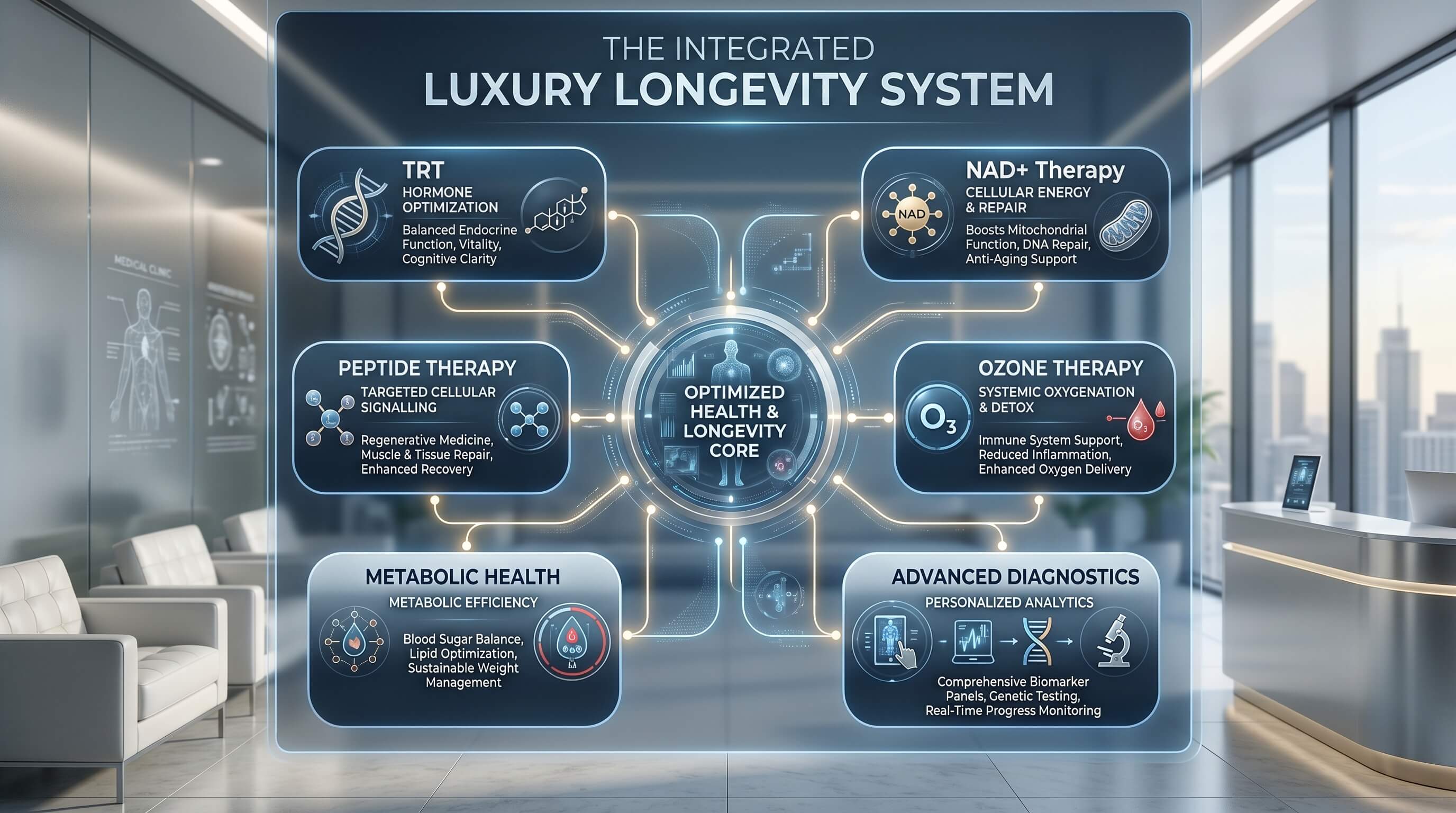
Hormone health rarely exists in isolation. Many men exploring TRT also benefit from related wellness services that support energy, recovery, and longevity:
- If energy and cognition are top of mind: NAD+ IV therapy supports cellular energy production and is widely studied for its role in mitochondrial health.
- If body composition is a priority: the Weight Management Program pairs nicely with a hormone protocol for men working on metabolic health.
- For inflammation, recovery, and immune support: ozone therapy and EBOO + UV Light are advanced options.
- For longevity and cellular repair: peptide therapy is one of the more discussed adjuncts in modern men’s health protocols.
- To establish a real baseline: a full blood testing panel is the starting point for any optimization plan.
Take the First Step
Persistent fatigue, low drive, and slow recovery are not just “part of getting older.” They are signals worth investigating, with real lab data and a clinician who has time to look at the whole picture.
Book a consultation through the Robertson Wellness Men’s Health page or call (310) 407-0542 to start a comprehensive assessment in Beverly Hills.
Robertson Wellness and Aesthetics, 8920 Wilshire Blvd, Suite 320, Beverly Hills, CA 90211.
These statements have not been evaluated by the Food and Drug Administration. TRT is a prescription treatment that requires medical evaluation. Treatment is not intended to diagnose, treat, cure, or prevent any disease. Individual results vary. Always consult a licensed clinician about your specific situation.
References
- Surampudi PN, Wang C, Swerdloff R. Hypogonadism in the Aging Male: Diagnosis, Potential Benefits, and Risks of Testosterone Replacement Therapy. NIH/NCBI: PMC3312212
- The Optimal Indication for Testosterone Replacement Therapy in Late Onset Hypogonadism. NIH/NCBI: PMC6406807
- Testosterone Replacement Therapy for Male Hypogonadism. PubMed: 38905552
Start your TRT evaluation in Beverly Hills
Talk to a physician about testosterone testing and whether TRT – or another option – fits your goals.
TRT is prescribed by a licensed physician after evaluation. These statements have not been evaluated by the FDA and are not intended to diagnose, treat, cure or prevent any disease.


