


First developed in the 1970s by Dr. John Myers, a Baltimore-based physician, the Myers cocktail has become one of the most recognizable formulations in intravenous nutrient therapy. Today, it is widely discussed in the context of longevity, cellular health, and general wellness therapy, with clinics across Los Angeles and Beverly Hills offering it as part of broader IV treatment menus.
This guide explains what the original formulation contained, how modern protocols have evolved, what the research says, and what patients can realistically expect during a session. Whether you are new to IV nutrient therapy or simply want a clearer picture of the science, the following sections walk through the fundamentals in plain language.
What is the Myers Cocktail?
The Myers cocktail is a slow-push intravenous infusion containing a combination of water-soluble vitamins and essential minerals. The formulation is delivered directly into the bloodstream through a small catheter placed in a vein, typically in the arm. Because the nutrients bypass the digestive tract, they reach circulation at higher concentrations than are generally achievable through oral supplementation.
Dr. Myers originally administered the infusion to patients dealing with fatigue, migraines, fibromyalgia-type symptoms, and a range of chronic complaints. After he died in 1984, Dr. Alan Gaby continued refining the protocol and later documented clinical observations in a widely cited 2002 review published in Alternative Medicine Review. That paper remains one of the most referenced sources on the topic, though Gaby himself noted that the evidence base was largely observational rather than derived from large controlled trials.
It is important to understand that the Myers cocktail is not a single, standardized product. Clinics modify the recipe based on their medical director’s judgment, the patient’s clinical picture, and regional compounding practices. The version you receive at one clinic may differ from another in dosing, additives, or dilution. At RWA Center in Beverly Hills, our Myers IV cocktail protocol follows the classical formulation with adjustments based on each patient’s consultation.
The original Dr. John Myers formulation
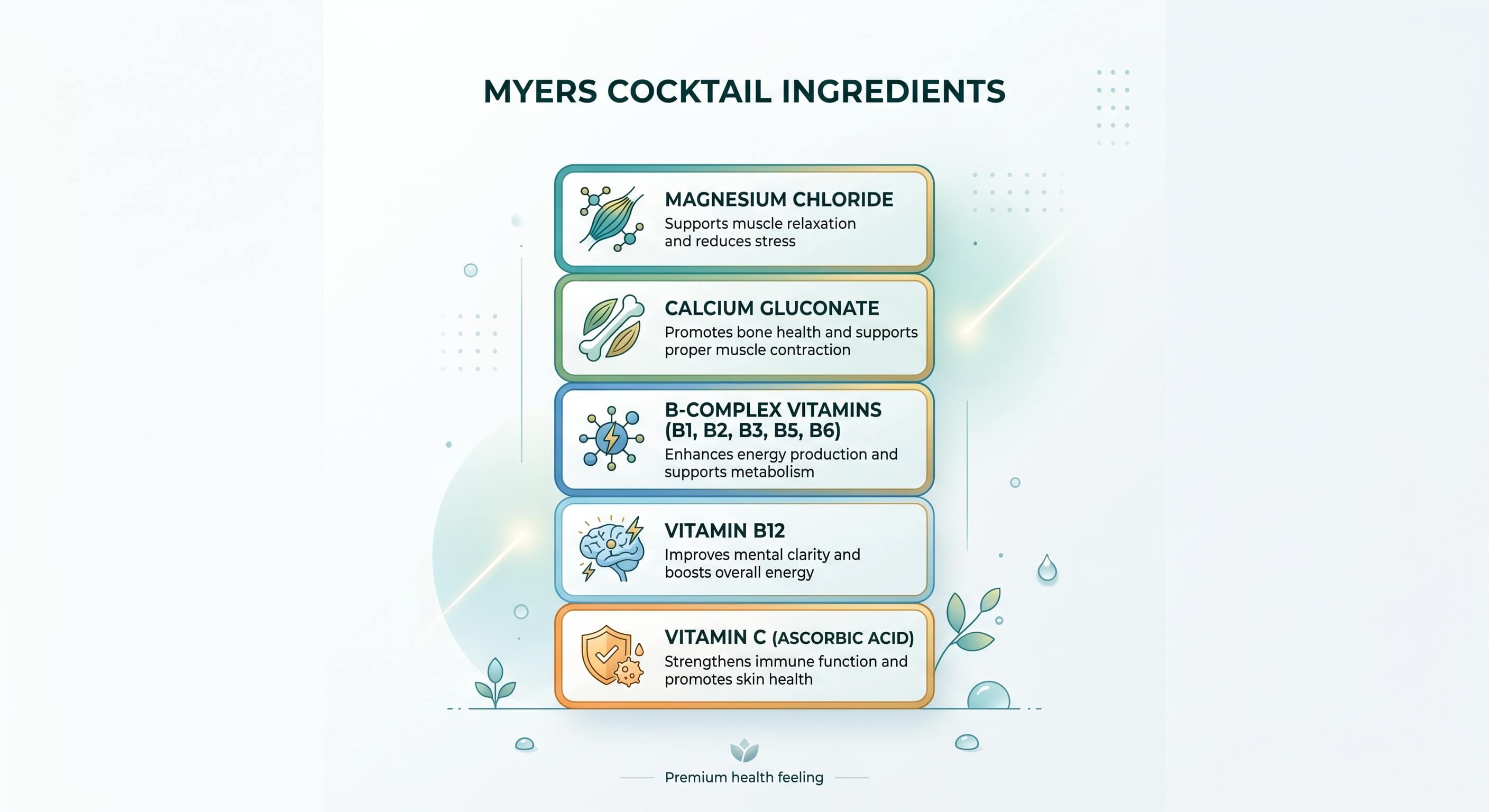
The classical Myers cocktail, as described by Gaby, combines five core components. These are typically combined in sterile water and administered over 15 to 30 minutes.
Component | Typical amount (Gaby protocol) | Primary role in the body |
|---|---|---|
Magnesium chloride (20%) | 2 to 5 mL | Plays a role in muscle relaxation, nerve signaling, and cardiovascular function |
Calcium gluconate (10%) | 1 to 3 mL | Supports bone metabolism, muscle contraction, and cellular messaging |
Hydroxocobalamin (vitamin B12) | 1 mL (1,000 mcg) | Involved in red blood cell formation and neurological function |
B-complex (pyridoxine, dexpanthenol, thiamine, riboflavin, niacinamide) | 1 mL combined | Supports energy metabolism and nervous system health |
Vitamin C (ascorbic acid) | 4 to 20 mL | Participates in antioxidant defense and collagen synthesis |
Many modern practitioners adjust these ratios. Some formulations add glutathione as a separate push after the main infusion, while others incorporate zinc, selenium, or additional B vitamins based on the patient’s goals. Any customized formulation should be developed by a licensed medical provider with access to the patient’s medical history.
How intravenous delivery differs from oral supplementation
The body regulates oral nutrient absorption carefully. When you take a vitamin by mouth, the gastrointestinal tract determines how much actually enters your bloodstream, and this varies based on the nutrient, gut health, timing of meals, and individual biochemistry.
Intravenous delivery bypasses this regulatory step. This has two main implications:
Higher peak serum levels: Research suggests that IV administration can produce plasma concentrations several times higher than oral dosing of the same nutrient. Whether those higher peaks translate into measurably better clinical outcomes in people without a deficiency is an area still being studied.
Faster onset for rehydration and replenishment: Because the fluid and nutrients enter circulation directly, effects related to hydration may be felt more quickly than with oral fluids. Some patients report noticing a difference during the infusion itself. This is why IV hydration therapy is often the starting point for patients recovering from dehydration or illness.
It is worth emphasizing that for most healthy adults with balanced diets, oral vitamins are sufficient to meet daily needs. IV nutrient therapy is most commonly used as a supportive wellness therapy rather than a replacement for nutrition, sleep, or exercise.
Conditions and goals for which the Myers cocktail is being studied
The Myers cocktail is being studied for its potential role in several areas. It is important to note that the FDA has not approved this infusion to diagnose, treat, cure, or prevent any specific disease, and much of the evidence remains preliminary.
Areas of interest in the published literature and clinical practice include:
Fatigue and low energy states: Some patients report improvements in perceived energy after a session, though the placebo response in IV therapy research is known to be substantial. A 2009 randomized controlled trial at Yale University examined the Myers cocktail in fibromyalgia patients and found that both the active treatment and the placebo group reported meaningful improvements, which complicates any firm conclusion about the active formulation. For patients whose primary goal is energy support, clinics sometimes recommend a dedicated energy boost IV formulation as an alternative.
Migraine-related complaints: Because intravenous magnesium has been studied in acute migraine research, the magnesium component of the Myers cocktail is often cited as the rationale for use in this population. Some clinics also offer a dedicated migraine IV cocktail for patients specifically focused on this concern. Results vary, and individual responses are highly variable.
Fibromyalgia-type symptoms: The 2009 Yale study examined this specifically. The pilot trial showed improvements in pain, tender point count, and quality of life in both treatment and placebo groups, without a statistically significant advantage for the active formulation. Researchers concluded that larger trials were needed.
Recovery and athletic contexts: Some patients report using IV nutrient therapy as part of a recovery protocol after intense training or dehydration. Evidence in this area is largely anecdotal.
Immune support during seasonal changes: Vitamin C and zinc are commonly discussed for their immune-related roles. Some patients report seeking infusions during cold and flu season, though clinical evidence that IV vitamin C prevents or shortens respiratory infections in otherwise healthy people is limited. For patients specifically focused on this use case, an immune IV boost is often a more targeted option.
General wellness and metabolic support: Many patients seek the Myers cocktail simply because they feel it supports their broader wellness routine. Individual results vary considerably.
What the clinical evidence actually shows
Honest discussion of the evidence matters, and this section is important to read carefully.
The best-known controlled study of the Myers cocktail is the 2009 Yale pilot trial by Ali and colleagues, published in the Journal of Alternative and Complementary Medicine. Researchers randomized 34 adults with fibromyalgia to weekly Myers cocktail infusions or a placebo (lactated Ringer’s solution) for eight weeks. Both groups showed meaningful improvements from baseline, but the difference between groups did not reach statistical significance for the primary outcome. This suggests a strong placebo response in the IV setting and highlights how much of the perceived benefit may come from the experience of the treatment itself, rather than the specific nutrients.
Dr. Gaby’s 2002 review described clinical observations across roughly 15,000 infusions over 11 years, reporting positive patient responses for fatigue, asthma, migraines, and other complaints. This type of observational data is valuable for generating hypotheses but cannot establish cause and effect the way a controlled trial can.
More recent reviews, including a 2023 analysis published in peer-reviewed integrative medicine literature and a 2025 overview of IV vitamin therapy, have echoed the same conclusion: the theoretical rationale is plausible, anecdotal reports are numerous, but rigorous large-scale evidence remains limited. The Mayo Clinic and Merck Manual both note that the strongest evidence for IV vitamin infusions exists in patients with documented deficiencies or malabsorption, not in healthy individuals seeking wellness enhancement.
The honest takeaway: some patients report meaningful symptom relief, the infusion appears generally safe when administered by qualified medical professionals, and more research is needed to clarify who benefits most.
The ingredients, explained in detail
Magnesium
Magnesium is often described as the workhorse of the Myers cocktail. It plays a role in hundreds of enzymatic reactions across energy metabolism, muscle function, and nervous system regulation. Patients who are magnesium-deficient, which is more common than many realize, may particularly benefit from direct replenishment. Some patients report a warming sensation or mild flushing as magnesium enters circulation, which typically resolves quickly.
Calcium
Calcium supports the electrical activity that underlies muscle contraction and cardiac rhythm. In the Myers cocktail, it is used in modest amounts and is often paired with magnesium to maintain electrolyte balance during the infusion.
Vitamin B12 (hydroxocobalamin or methylcobalamin)
B12 is essential for red blood cell production, neurological function, and energy metabolism. Some forms of B12 produce a temporary red tint to urine after administration, which is harmless and expected. Patients with documented B12 deficiency, pernicious anemia, or certain genetic variants may particularly appreciate this component.
B-complex vitamins
The B vitamin family (including B1, B2, B3, B5, and B6) participates throughout energy production pathways at the cellular level. They are water-soluble, meaning excess amounts are generally excreted through the kidneys, though very high doses of certain B vitamins carry their own risks.
Vitamin C (ascorbic acid)
Vitamin C is involved in collagen synthesis, antioxidant defense, and immune cell function. The Myers cocktail uses modest doses compared to high-dose vitamin C protocols, which use grams rather than milligrams. Patients with a condition called G6PD deficiency should be screened before receiving higher-dose vitamin C infusions, as they can have adverse reactions.
Want to try a Myers Cocktail IV?
The classic vitamin-and-mineral infusion – magnesium, calcium, B-vitamins and vitamin C – delivered under physician supervision at our Beverly Hills clinic.
IV therapy is provided under medical supervision. These statements have not been evaluated by the FDA and are not intended to diagnose, treat, cure or prevent any disease.
What a Myers cocktail session feels like
Most patients are curious about what to expect the first time. Here is a realistic walkthrough.
Before the session, you will complete an intake form covering medical history, medications, allergies, and current health goals. A qualified provider reviews this information. If you have kidney disease, heart failure, certain cardiac rhythm issues, or take medications that interact with electrolytes, the provider may modify or decline the infusion.
Setup: A registered nurse or other licensed medical professional will check your vital signs, examine your veins, and place a small IV catheter, usually in the forearm or hand. The catheter placement feels like a brief pinch.
During the infusion: The Myers cocktail is typically delivered over 15 to 45 minutes, depending on dilution and clinic protocol. Some patients feel a warmth spreading through the body as magnesium begins circulating. Others describe a metallic or vitamin-like taste during the infusion, which is common and temporary. Most people read, scroll their phone, or simply rest.
After the infusion, the catheter is removed and a small bandage applied. Most patients resume normal activities immediately. Some report feeling energized the same day, while others notice effects the following morning. A small subset notices no particular change, and this is also normal. Individual results vary.
Comparison with other common IV drips
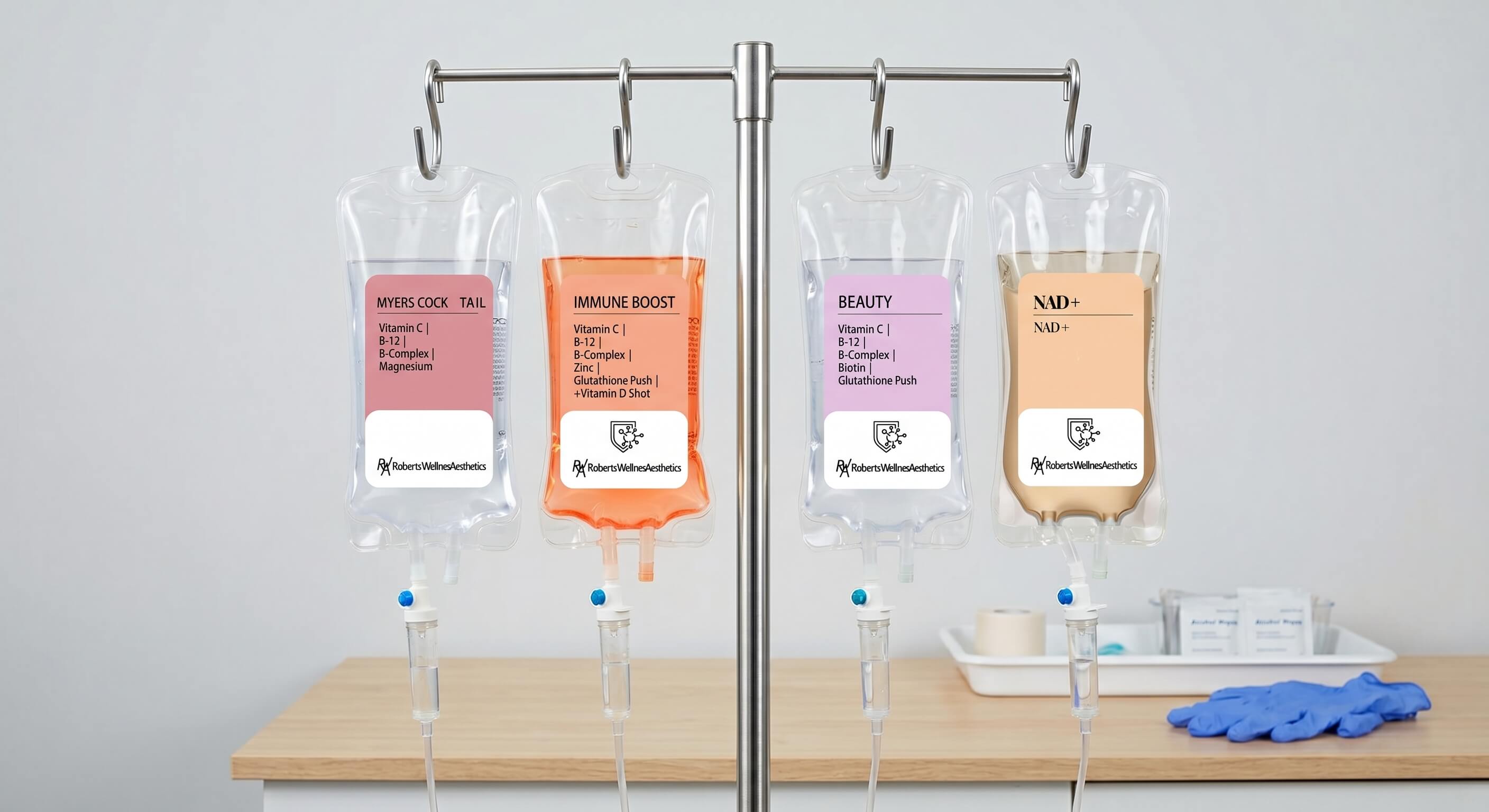
Clinics typically offer multiple IV formulations targeting different wellness goals. The table below outlines how the Myers cocktail fits into a broader menu.
IV formulation | Typical composition | Commonly associated with |
|---|---|---|
Magnesium, calcium, B-complex, B12, vitamin C | General wellness, fatigue, migraine-related complaints | |
Saline, anti-nausea medication, B-complex, electrolytes | Rehydration after alcohol consumption | |
Higher-dose vitamin C, zinc, and B-complex | Seasonal immune support | |
Biotin, glutathione, vitamin C, B-complex | Skin, hair, nail wellness | |
Nicotinamide adenine dinucleotide | Being studied for cellular health and longevity applications | |
B-complex, amino acids, taurine | Energy and endurance support | |
Saline, anti-nausea, B-complex, vitamin C | Recovery from gastrointestinal illness | |
Full-spectrum vitamins, minerals, amino acids, glutathione | Comprehensive wellness support |
Each of these serves a different purpose, and the right choice depends on your goals, your medical history, and your provider’s recommendation.
Who may be a candidate, and who should exercise caution
Qualified medical providers will typically review your situation before recommending IV nutrient therapy. Populations who often explore this category include:
- Adults dealing with persistent fatigue who have ruled out underlying medical causes
- Individuals with documented malabsorption from conditions such as Crohn’s disease or celiac disease
- Patients with recurring migraines are being managed in conjunction with a physician
- Individuals recovering from acute dehydration
- Patients are already being followed for nutritional deficiencies, including those receiving medication IV infusions such as iron therapy
Groups that should exercise particular caution and consult their physician before any infusion:
- Individuals with kidney disease, since the kidneys are responsible for excreting excess water-soluble nutrients
- Patients with heart failure or fluid-sensitive cardiac conditions
- Individuals taking medications that interact with minerals such as calcium or magnesium, including certain antibiotics and blood pressure medications
- Pregnant or breastfeeding women, for whom safety data is limited
- Individuals with G6PD deficiency, particularly if high-dose vitamin C is being considered
- Anyone with a known allergy to any component in the formulation
This list is not exhaustive. A thorough consultation is the appropriate way to determine suitability.
Potential side effects and safety considerations
When administered by a qualified medical professional using proper sterile technique, the Myers cocktail has a reasonable safety profile based on decades of clinical use. That said, no infusion is entirely without risk. Reported side effects include:
- A warming or flushing sensation during administration, often related to magnesium
- A metallic or vitamin-like taste during the infusion
- Bruising, mild bleeding, or tenderness at the IV site
- Lightheadedness, typically if the infusion is delivered too quickly
- Rarely, allergic or hypersensitivity reactions
- Very rarely, more serious complications, including infection if sterile technique is not followed
One important point: the FTC has previously taken action against IV therapy providers for making unsupported health claims. This is part of why reputable clinics are careful about language and emphasize that IV nutrient therapy is a supportive wellness therapy rather than a medical treatment for specific diseases.
Always confirm that the clinic you choose uses licensed medical providers, follows current sterile technique standards, and has a physician medical director overseeing protocols.
How often do patients typically receive infusions?
Frequency varies based on individual goals and provider recommendations. Common patterns include:
Usage pattern | Typical frequency | Typical context |
|---|---|---|
Acute or situational | Single session | Travel recovery, specific event preparation, and illness recovery |
Short course | Weekly for 4 to 8 weeks | Symptom-focused protocols are being monitored by a provider |
Maintenance | Every 2 to 4 weeks | Ongoing wellness support after an initial course |
Seasonal | During specific periods | Cold and flu season, high-stress periods |
There is no universal dosing schedule, and a qualified provider should personalize the cadence based on your response and overall health picture.
Myers cocktail IV therapy in the context of broader wellness
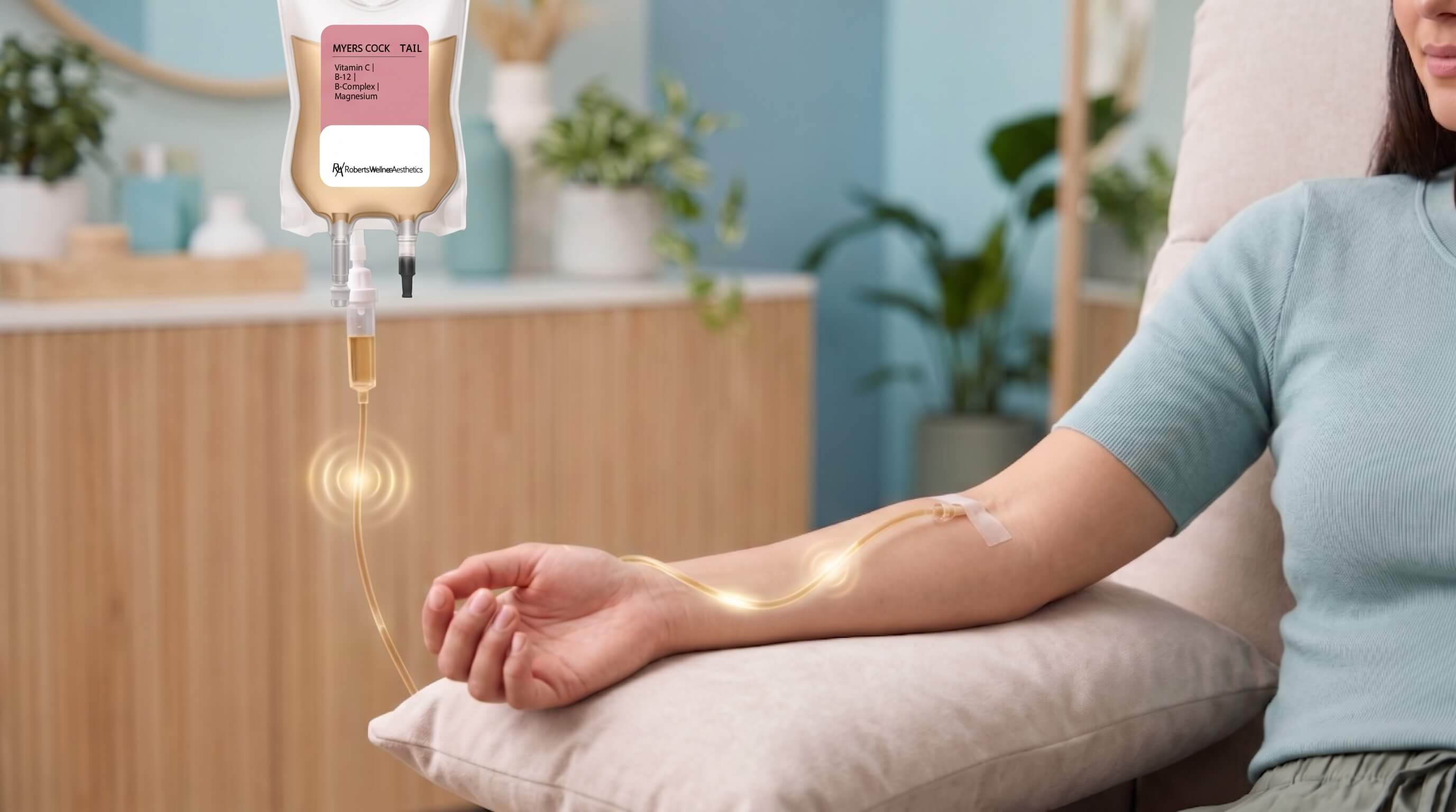
The Myers cocktail is one tool within a broader landscape of IV nutrient therapy and integrative wellness. Many patients use it alongside other approaches such as peptide therapy, IV ozone therapy, ultraviolet blood irradiation (UBI), or lifestyle optimization involving nutrition, sleep, and exercise.
It is worth emphasizing that no infusion replaces foundational health habits. The strongest evidence in the longevity and cellular health literature continues to support the basics: a whole-food diet, regular physical activity, quality sleep, stress regulation, and meaningful social connection. IV nutrient therapy may complement these, but should not substitute for them.
Frequently asked questions
How long does a Myers cocktail session take? Typically, 20 to 45 minutes for the infusion itself, plus additional time for intake, vein access, and post-infusion observation. Plan for about an hour total for a first visit.
Will I feel a difference right away? Some patients report noticing effects during or shortly after the infusion. Others notice changes the following day. Some notice no particular change. Individual results vary.
Can I drive after a session? Most patients can drive after a Myers cocktail session. If you have never received the infusion before, or if you felt lightheaded during the session, it is sensible to rest briefly before driving.
How is this different from oral vitamins? The primary difference is the delivery route. Oral vitamins go through digestion first, which limits how much reaches the bloodstream. IV delivery bypasses this step. Whether this produces meaningfully different clinical outcomes in healthy individuals is still being studied.
Is the Myers cocktail FDA-approved? The individual vitamins and minerals used in the infusion are available as approved pharmaceutical products, but the Myers cocktail as a compounded formulation, is not FDA-approved for the diagnosis, treatment, cure, or prevention of any disease. It is offered as a wellness therapy.
Ready to learn whether Myers cocktail IV therapy is right for you?
At RWA Center in Beverly Hills, our medical team offers Myers cocktail IV therapy as part of a broader menu of IV treatments, with every session overseen by licensed medical professionals. Each protocol is personalized based on a consultation covering your medical history, current goals, and overall wellness picture.
If you are exploring IV nutrient therapy for the first time or considering how it might complement your existing wellness routine, we invite you to contact our team to discuss whether this approach is appropriate for your situation.
The information provided is for educational purposes only and is not intended as medical advice. Certain therapies discussed may be investigational and are not approved by the FDA for the diagnosis, treatment, cure, or prevention of disease. Always consult with a qualified healthcare professional before beginning any new wellness protocol.
Book your Myers Cocktail in Beverly Hills
A quick, supervised infusion to support energy, hydration and overall wellness.
IV therapy is provided under medical supervision. These statements have not been evaluated by the FDA and are not intended to diagnose, treat, cure or prevent any disease.


