
You finish a meeting and cannot remember what was decided. You walk into a room and forget why. You read the same paragraph three times. The word you need sits one millimeter beyond reach. For high-performing adults in Los Angeles, brain fog is not just inconvenient, it is a signal that something measurable may be off in the brain’s energy systems, inflammation pathways, or neurotransmitter balance.
Brain fog is not a formal medical diagnosis. It is a constellation of cognitive symptoms, including reduced focus, slower processing speed, forgetfulness, and mental fatigue, that often points to an underlying physiological cause. Once the root cause is identified, targeted interventions may help. Among the most discussed of those interventions are neuropeptides, short chains of amino acids that act as precise biological signaling molecules in the brain.
This guide explains what brain fog actually is, what the published research suggests about four of the most studied peptide and infusion therapies used to support cognitive clarity, and how Robertson Wellness and Aesthetics in Beverly Hills approaches personalized peptide therapy for cognitive support under physician supervision.
Important: The information below is for educational purposes only and is not medical advice. Several therapies discussed are not approved by the FDA for the treatment of any condition, and some are used off-label by qualified medical providers. Individual candidacy always requires a thorough medical evaluation.
What is brain fog, really?
Brain fog is the lay term for a heterogenous group of cognitive symptoms. Researchers and clinicians describe it as a state characterized by reduced mental clarity, mental fatigue, slowed processing speed, and difficulty with focus, memory, and word retrieval. A 2026 validation study of the Brain Fog Scale in a U.S. population confirmed that these symptoms cluster reliably and are reported significantly more often by individuals with post-COVID conditions than by the general population.
In other words, brain fog is real, measurable, and increasingly studied. It is also one of the most common reasons that high-performing professionals walk into a wellness clinic asking what can be done.
Common reported triggers
Brain fog has many potential contributors, and identifying the underlying cause is the most important step before considering any therapy. The most frequently studied include:
- Post-viral inflammation, including long COVID, where research published in Nature Neuroscience identified blood-brain barrier disruption and immune dysregulation as potential mechanisms.
- Hormonal shifts, particularly during perimenopause and menopause.
- Chronic stress and elevated cortisol, which can impair hippocampal function.
- Disrupted sleep architecture and untreated sleep apnea.
- Nutritional gaps, particularly B12, iron, vitamin D, and omega-3 status.
- Thyroid dysfunction.
- Age-related decline in cellular energy production and NAD+ levels.
- Chronic neuroinflammation from autoimmune conditions, untreated infections, or metabolic dysfunction.
- Medication side effects.
A responsible cognitive workup begins with comprehensive lab testing, a thorough medical history, and a frank conversation about lifestyle factors. Peptide therapy and IV infusions are tools, not first-line answers. They tend to be considered when conventional workup is unremarkable, when a defined physiological gap is identified, or when a patient with appropriate context is seeking proactive support for cognitive performance and longevity.
How peptides may support cognitive function
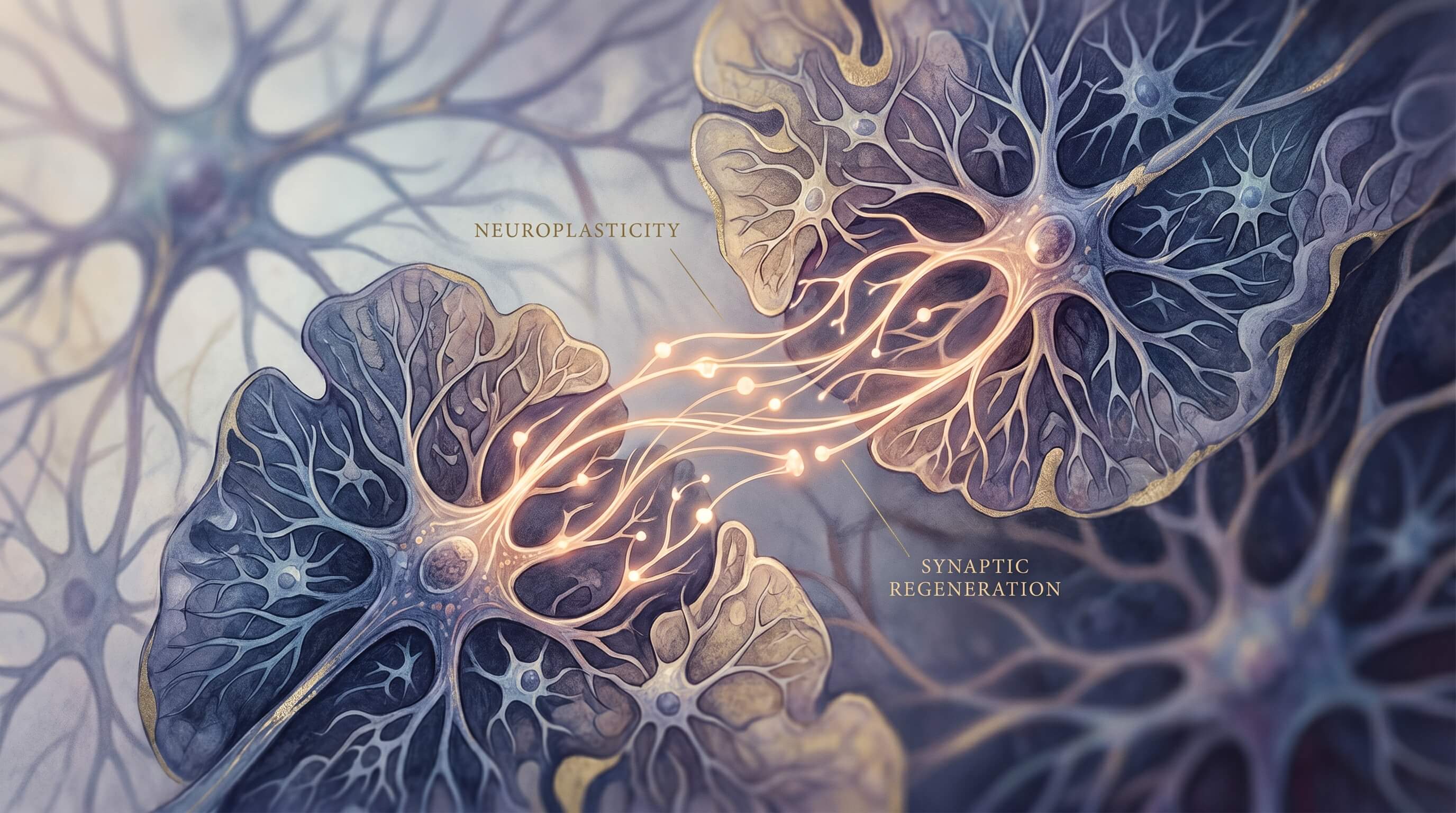
Peptides are short chains of amino acids that the body uses as precise signaling molecules. Some peptides act on neurotransmitter pathways, others on neurotrophic factor expression, and others on receptors that regulate inflammation, stress response, and synaptic plasticity.
Neuropeptides, peptides that act primarily on the central nervous system, have been studied for decades, primarily in Europe and Asia, for a range of cognitive and neurological applications. In the United States, most clinical neuropeptide use is off-label or investigational. None of the peptides discussed below is FDA-approved for the treatment of brain fog, cognitive decline, or any other cognitive condition. They are used in clinical settings under medical supervision as part of personalized cognitive wellness protocols.
The four therapies covered in this guide were selected because each one targets a different mechanism of cognitive symptoms, and each one is supported by published clinical or mechanistic research.
Semax: dopamine, BDNF, and focused attention
Semax is a synthetic heptapeptide originally derived from a fragment of the adrenocorticotropic hormone (ACTH). It was first developed in Russia and has been used clinically in Eastern Europe for several decades.
How Semax is studied to work
Research suggests Semax may act on several systems relevant to cognitive performance. It is being studied for its effect on:
- Brain-derived neurotrophic factor (BDNF) expression, which supports neuronal survival, synaptic plasticity, and learning.
- Dopaminergic and serotonergic neurotransmission, which influences attention, motivation, and mood.
- Inhibition of enzymes that break down enkephalins, the body’s endogenous opioid peptides involved in stress modulation.
These mechanisms, taken together, may explain why some individuals report improved focus, mental clarity, and reduced cognitive fatigue during Semax cycles.
Who explores Semax for brain fog?
In clinical settings, Semax is often considered for adults whose cognitive symptoms include difficulty sustaining attention, mental fatigue under cognitive load, or reduced motivation alongside foggy thinking. It is administered as a nasal spray, which allows direct absorption across the nasal mucosa.
Important context
Semax is not FDA-approved in the United States. The clinical evidence base is moderate and consists primarily of European and Russian research. As with any investigational therapy, decisions about candidacy, dosing, and cycle length should be made in partnership with a qualified medical provider.
Learn more about Semax peptide
Selank: anxiety, calm focus, and the stress component of brain fog
Selank is a synthetic peptide derived from tuftsin, a natural immunomodulatory peptide found in the human body. Like Semax, it was developed in Russia and is used clinically across Eastern Europe.
How Selank is studied to work
Selank is most often studied for its anxiolytic, or anti-anxiety, effects. Research suggests it may act through several pathways:
- Modulation of GABA, the brain’s primary calming neurotransmitter.
- Influence on serotonergic and dopaminergic balance.
- Upregulation of BDNF, which supports neuroplasticity.
- Modulation of cytokine expression, with possible effects on neuroinflammation.
Unlike conventional anxiolytics, Selank has not been associated with sedation or dependence in published research, though longer-term independent data remains limited.
Who explores Selank for brain fog
Many individuals with brain fog also report background anxiety, mental restlessness, or a sense of being constantly overstimulated. When stress and anxiety are part of the cognitive picture, Selank is often considered as a peptide that may support a calmer, more focused mental state. Some providers combine Selank with Semax for patients whose symptoms include both attention difficulty and anxiety overlay.
Selank is administered as a nasal spray.
Important context
Selank is not FDA-approved in the United States. The research base is moderate and primarily European in origin. As always, candidacy and protocol should be determined by a qualified provider.
Learn more about Selank peptide
Cerebrolysin: the most extensively studied neuropeptide preparation
Cerebrolysin is a lipid-free neuropeptide preparation produced through standardized enzymatic breakdown of purified porcine brain proteins. The result is a complex mixture of low-molecular-weight neuropeptides and free amino acids small enough to cross the blood-brain barrier.
It is approved in more than 45 countries for conditions including ischemic stroke, traumatic brain injury, and dementia. In the United States, Cerebrolysin is not FDA-approved for any indication. It may be used off-label by qualified medical providers as an investigational therapy.
How Cerebrolysin is studied to work
Cerebrolysin is described in the research literature as a multimodal neuropeptide, meaning it acts on several pathways simultaneously. Studies suggest it may:
- Mimic the effects of endogenous neurotrophic factors including BDNF, NGF, GDNF, and CNTF.
- Modulate neuroinflammation, with research describing effects on cytokine balance and CREB/PGC-1-alpha signaling.
- Support neurogenesis and synaptic density, particularly in the hippocampus, the brain region central to memory and learning.
- Interrupt secondary injury cascades after neurological insult, including apoptosis and oxidative stress.
Who explores Cerebrolysin for brain fog
Cerebrolysin is the most extensively studied option in this guide, with data from more than 200 clinical trials and approximately 15,000 patients across multiple neurological conditions. Patients who explore Cerebrolysin in a brain fog context typically fall into one of several categories:
- Adults with age-related cognitive decline or mild memory concerns.
- Individuals in post-stroke or post-TBI rehabilitation, under specialist supervision.
- Patients with early-stage neurodegenerative conditions, explored alongside standard-of-care approaches.
- High-performing professionals seeking proactive cognitive optimization with medical supervision.
Important context
Evidence in Cerebrolysin’s various studied applications is mixed. A 2023 Cochrane review found no clear benefit for preventing death in acute ischemic stroke and noted a potentially higher rate of spontaneous adverse events in some trial subgroups. Other reviews, including a 2025 analysis of TBI rehabilitation trials, have reported more favorable findings for functional recovery. Cerebrolysin is not a cure for any neurological condition, and individual results vary significantly.
It is administered by injection, either intramuscular for lower doses or intravenous for higher therapeutic doses. Oral administration is not effective because the peptide fragments are broken down in the digestive tract.
Read our full Cerebrolysin guide | Cerebrolysin peptide information
Battling brain fog?
Certain peptides may support focus and mental clarity. Our Beverly Hills providers build a supervised protocol after a medical consultation based on your goals.
These statements have not been evaluated by the FDA. Not intended to diagnose, treat, cure or prevent any disease. Peptide therapy is provided only after medical consultation by a licensed provider.
NAD+ IV therapy: cellular energy and the metabolic side of brain fog
NAD+, or nicotinamide adenine dinucleotide, is a coenzyme present in every cell in the body. It plays a central role in mitochondrial ATP production, DNA repair, sirtuin activation, and the regulation of inflammation. NAD+ levels naturally decline with age, chronic stress, and metabolic dysfunction, and low NAD+ has been associated with reduced cellular energy, slower cognition, and persistent fatigue.
NAD+ is not a peptide. It is included in this guide because cellular energy is one of the most common physiological gaps underlying brain fog, and because NAD+ IV therapy is frequently used alongside neuropeptides in personalized cognitive wellness protocols.
How NAD+ is studied to work for cognitive support
Research suggests NAD+ may support cognitive function through several mechanisms:
- Enhanced mitochondrial energy production. Studies in the Journal of Neuroscience have shown that restoring NAD+ levels can revitalize ATP production in neurons.
- Reduced neuroinflammation. NAD+ activates sirtuins, including SIRT1 and SIRT3, which help regulate inflammatory pathways in the brain.
- Improved DNA repair through PARP enzyme activity, which becomes increasingly important under conditions of chronic oxidative stress.
- Potential improvements in cerebral blood flow. A study using nicotinamide riboside, a precursor to NAD+, reported increased hippocampal perfusion in adults with mild cognitive impairment.
What recent clinical trials show
The clinical evidence base for NAD+ in cognitive contexts is growing but mixed. A 2025 randomized controlled trial of nicotinamide riboside supplementation in long-COVID patients reported increased NAD+ blood levels but did not find statistically significant group-level improvements in cognition, fatigue, sleep, or mood compared to placebo over the trial period. Within-group analyses suggested some individuals experienced meaningful symptom relief after 10 or more weeks of supplementation, supporting the need for larger trials.
This is exactly the type of nuance that responsible clinical decision-making requires. NAD+ IV therapy may be helpful for some individuals, particularly those with documented cellular energy deficits, age-related decline, or post-viral fatigue, but it is not a guaranteed solution for brain fog. A medical evaluation is the appropriate starting point.
Who explores NAD+ IV therapy for brain fog
NAD+ IV therapy is most often considered when brain fog presents alongside fatigue, reduced physical performance, post-viral symptoms, or signs of accelerated cellular aging. It is also commonly stacked with neuropeptides as part of a broader cognitive longevity protocol.
Explore NAD+ IV therapy at RWA Beverly Hills
Comparison at a glance
| Therapy | Primary studied mechanism | Best suited for | Administration | FDA status |
|---|---|---|---|---|
| Semax | BDNF upregulation, dopamine/serotonin modulation | Focus, attention, mental fatigue | Nasal spray | Not FDA-approved |
| Selank | GABA modulation, anxiolytic effect, BDNF support | Brain fog with anxiety or overstimulation | Nasal spray | Not FDA-approved |
| Cerebrolysin | Multi-target neurotrophic and neuroprotective signaling | Cognitive decline, neurorecovery support, proactive brain health | IM or IV injection | Not FDA-approved (used off-label) |
| NAD+ IV | Mitochondrial energy, sirtuin activation, anti-inflammatory pathways | Fatigue-driven brain fog, post-viral, age-related decline | IV infusion | Not FDA-approved for cognitive use |
The information above is for educational purposes only. Always consult a qualified healthcare provider before beginning any peptide or IV therapy.
Are these therapies usually used alone or stacked?
In clinical practice, peptides and IV therapies for cognitive support are most often selected and combined based on each patient’s symptom pattern, lab results, and goals. The reasoning is mechanistic. If brain fog is driven primarily by an anxiety and overstimulation component, Selank is often the lead choice. If attention and mental clarity are the dominant complaint, Semax may take priority. When cellular energy is suspected to be a meaningful contributor, NAD+ IV therapy is frequently considered. For adults with measurable cognitive decline or proactive longevity goals, Cerebrolysin offers the deepest clinical research base.
Some patients begin with one therapy, evaluate response after a defined cycle, and adjust. Others enter with a layered protocol from the outset based on a comprehensive workup. Decisions about stacking should always be made under medical supervision because interactions and individual tolerability vary, and because layering interventions without clear rationale can obscure what is actually helping.
Important safety considerations
All four therapies discussed in this guide require medical supervision. Each carries potential side effects and contraindications. General considerations include:
- Active epilepsy or seizure history is a contraindication for Cerebrolysin and warrants caution with several neuropeptides.
- Severe kidney impairment is a contraindication for Cerebrolysin and warrants caution with NAD+ protocols.
- Pregnancy, breastfeeding, and active cancers typically warrant deferring peptide therapy until evaluated by a qualified provider.
- Autoimmune conditions require careful evaluation given the immunomodulatory potential of several peptides.
- Concurrent medications should always be reviewed before starting any new therapy.
Reported side effects across these therapies are generally mild and transient when used at recommended doses under medical supervision, and may include headache, mild flushing, injection site reactions, or transient gastrointestinal symptoms. Independent self-administration without medical oversight is not recommended for any of these therapies.
Cognitive wellness foundations matter more than any single therapy
It is important to keep peptide and IV therapy in perspective. The strongest evidence base in cognitive health remains the basics. Regular aerobic exercise is one of the most potent natural BDNF boosters identified in research. Sleep optimization, particularly protecting deep and REM stages, is foundational to memory consolidation. Anti-inflammatory nutrition, stress management, and treating underlying medical conditions matter more than any peptide.
Peptide therapy and IV protocols may add value when foundations are addressed and a specific physiological gap is identified. They are not substitutes for sleep, exercise, nutrition, or medical workup. A responsible cognitive wellness program treats them as one tool in a comprehensive approach.
Frequently asked questions
What is the best peptide for brain fog?
There is no single best peptide for brain fog because brain fog is a symptom with multiple possible underlying causes. The most studied options for cognitive support in clinical settings include Semax, Selank, and Cerebrolysin, often combined with NAD+ IV therapy when cellular energy is a factor. The right protocol depends on the underlying cause, individual health history, and goals identified during a medical consultation.
Are these peptides FDA-approved?
No. Semax, Selank, and Cerebrolysin are not FDA-approved for any indication in the United States. NAD+ is not FDA-approved for cognitive use. Each may be used off-label by qualified medical providers as investigational therapies when appropriate. Availability is subject to evolving regulatory guidance.
How quickly do peptides work for brain fog?
Individual results vary significantly. Some patients report improvements within the first cycle of treatment, while others require multiple cycles. Peptides that act on neuroplasticity may produce effects that continue to develop after the active treatment period ends, while NAD+ tends to produce more immediate but shorter-acting changes in energy and clarity. Setting realistic expectations and tracking objective markers is part of a thoughtful protocol.
Can peptides be combined with other treatments?
Yes, in many cases peptides are used as part of a broader cognitive wellness protocol that may include NAD+ IV therapy, hormone optimization, nutritional support, and lifestyle interventions. Stacking decisions should always be made under medical supervision to manage potential interactions and to track which interventions are producing benefit.
Is brain fog a sign of something serious?
Brain fog can have many causes, ranging from sleep deprivation and nutritional gaps to thyroid dysfunction, post-viral conditions, or early signs of cognitive decline. Persistent or worsening cognitive symptoms warrant medical evaluation. A consultation with a qualified provider can help identify underlying causes and determine whether peptide therapy, IV protocols, or other interventions may be appropriate.
How are peptides administered at RWA Beverly Hills?
Semax and Selank are administered as nasal sprays. Cerebrolysin is administered by intramuscular or intravenous injection in the clinic. NAD+ is administered as an IV infusion at the RWA Beverly Hills clinic or via concierge service for qualifying patients.
Who is not a candidate for peptide therapy for brain fog?
Pregnant or breastfeeding women, individuals with active cancers, those with severe kidney or liver impairment, and patients with certain autoimmune or seizure disorders typically are not appropriate candidates for some peptide therapies. A medical consultation will identify any contraindications based on individual health history.
What does peptide therapy cost at RWA Beverly Hills?
Pricing depends on the specific therapy, dosage, and cycle length. Please contact RWA directly or schedule a consultation for a personalized cost assessment.
Disclaimer
The information provided in this article is for educational purposes only and is not intended as medical advice. The therapies discussed are not approved by the FDA for the diagnosis, treatment, cure, or prevention of brain fog or any other condition. Several are used off-label by qualified medical providers as investigational therapies. Always consult with a qualified healthcare professional before beginning any new wellness protocol. Individual results vary. These statements have not been evaluated by the FDA. Treatment is not intended to diagnose, treat, cure, or prevent any disease.
Find the right peptides for mental clarity
Talk to a provider about which peptides fit your cognitive goals and how to run them safely.
These statements have not been evaluated by the FDA. Not intended to diagnose, treat, cure or prevent any disease. Peptide therapy is provided only after medical consultation by a licensed provider.