


If you have spent time researching IV therapy in Beverly Hills, you have probably seen the usual options: hydration drips, vitamin cocktails, NAD+ infusions. The PK Protocol sits in a different category. It is not a single-session wellness drip. It is a three-part program built around an underexplored idea in mainstream medicine: that many chronic, neurological, and toxin-related symptoms trace back to damage in the cell membrane itself, and that those membranes can be supported by replenishing the right phospholipids.
The protocol was developed by Dr. Patricia Kane, PhD, a cell biologist whose work in lipid therapy has been adopted by integrative and functional medicine clinicians worldwide. This guide walks through what the PK Protocol actually is, how phosphatidylcholine functions in the body, what each part of the program contains, who tends to explore it, what to realistically expect over a course of sessions, and how it compares to other IV options.
Important: The PK Protocol is an experimental therapy used by integrative medicine practitioners. It is not FDA-approved for any specific disease. Statements about the PK Protocol have not been evaluated by the FDA. Treatment is not intended to diagnose, treat, cure, or prevent any disease. This article is for educational purposes only and is not a substitute for personalized medical advice.
What Is the PK Protocol?
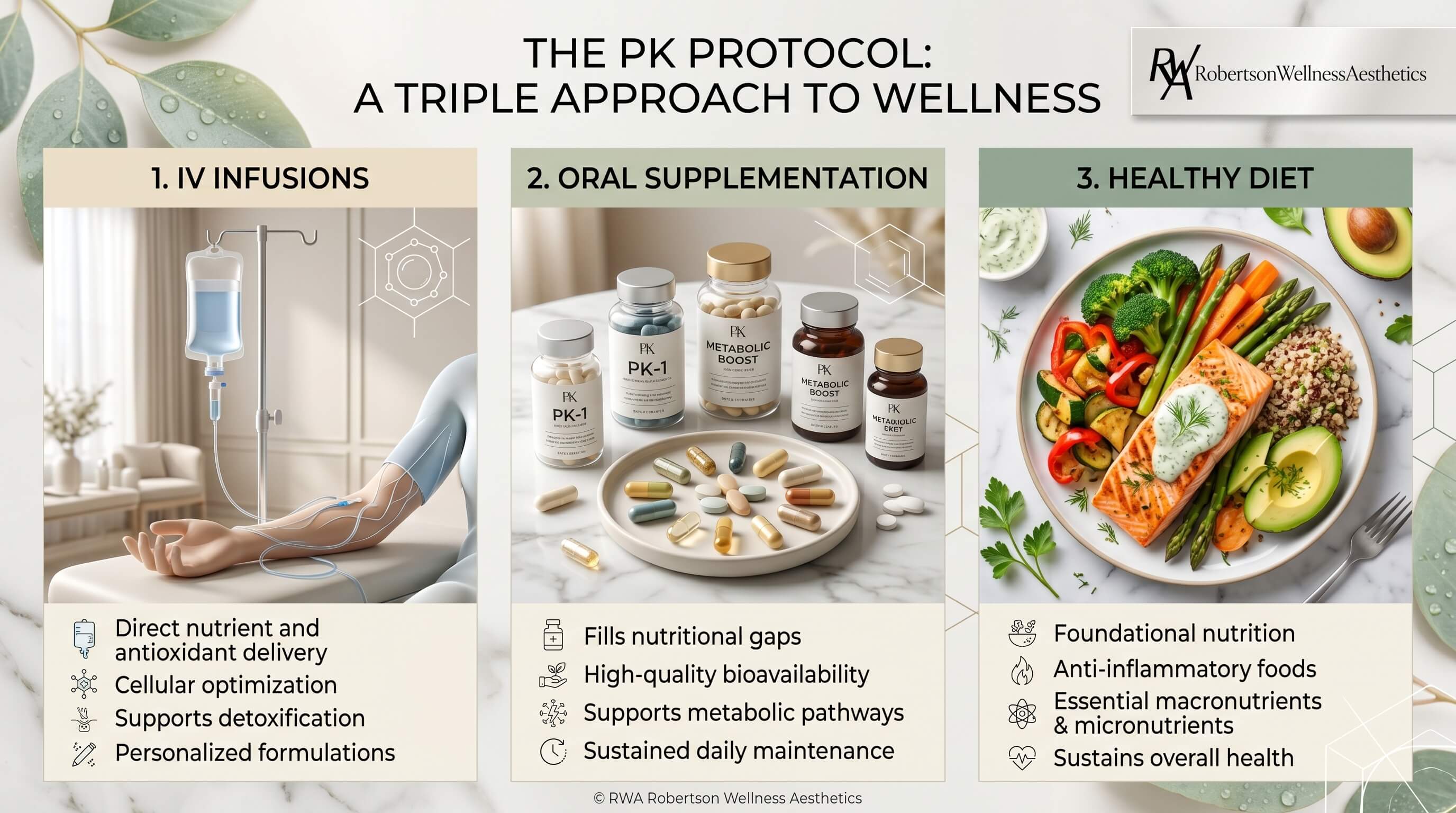
The PK Protocol, sometimes called the Patricia Kane Protocol, is a three-part intravenous and dietary program focused on cell membrane repair and cellular detoxification. It uses phosphatidylcholine (PC), a phospholipid that forms a structural building block of every cell membrane in the body, as its core component.
The underlying theory is straightforward: toxins, infections, oxidative stress, and chronic inflammation can damage cell membranes over time. Damaged membranes lead to impaired cellular communication, reduced mitochondrial efficiency, and slowed detoxification. By delivering phosphatidylcholine alongside antioxidants and methylation cofactors, the protocol aims to restore membrane integrity and re-open the body’s own repair pathways.
Dr. Patricia Kane developed this approach over decades of clinical observation in patients with severe neurological and chronic conditions. While the protocol has not been studied in large randomized clinical trials, individual components, especially phosphatidylcholine and glutathione, have a substantial body of peer-reviewed research behind them.
The Three Parts of the PK Protocol
One of the things that makes the PK Protocol distinct from a standard IV drip is its scope. It is not a single bag of fluid. It is a program that combines three coordinated parts.
| Component | What it includes | Role in the protocol |
|---|---|---|
| Part 1: IV infusions | Phosphatidylcholine (PC), glutathione, leucovorin (folinic acid), methylcobalamin (B12), sodium butyrate | Delivers lipids and cofactors directly into the bloodstream to support cell membranes, methylation, and detoxification pathways |
| Part 2: Oral supplementation | Essential fatty acids (evening primrose, flaxseed, safflower oil); targeted vitamins and minerals | Provides the steady supply of fats and micronutrients the body needs between IV sessions |
| Part 3: Specialized diet | Organic, nutrient-dense, low-carbohydrate and high-fat (Paleo or ketogenic-style) | Reinforces a metabolic environment that supports cellular repair and detoxification |
All three parts are designed to work together. Skipping the dietary component or the oral supplements substantially changes the experience and the rationale of the protocol.
Phosphatidylcholine: The Core Ingredient
Phosphatidylcholine is not exotic. It is one of the most abundant phospholipids in the human body and a primary component of every cell membrane. It is also concentrated in bile, where it helps emulsify fats, and in lipoproteins, where it helps transport cholesterol and triglycerides.
Why deliver it intravenously? In oral form, phosphatidylcholine has to survive digestion and is partially broken down before it reaches the bloodstream. IV phosphatidylcholine bypasses that process and delivers the intact phospholipid directly into circulation, where, in theory, it becomes more available for incorporation into cell membranes.
Phosphatidylcholine has been studied for several roles in human physiology:
- Maintaining the structural integrity of cell membranes throughout the body
- Supporting healthy liver function and the transport of fats and cholesterol
- Contributing to brain health, since the brain is one of the most lipid-rich tissues in the body
- Supporting bile flow and digestive function
Peer-reviewed research from the National Institutes of Health database catalogs the role of phosphatidylcholine in liver health, lipid metabolism, and the central nervous system.
What Is Inside a PK Protocol IV?
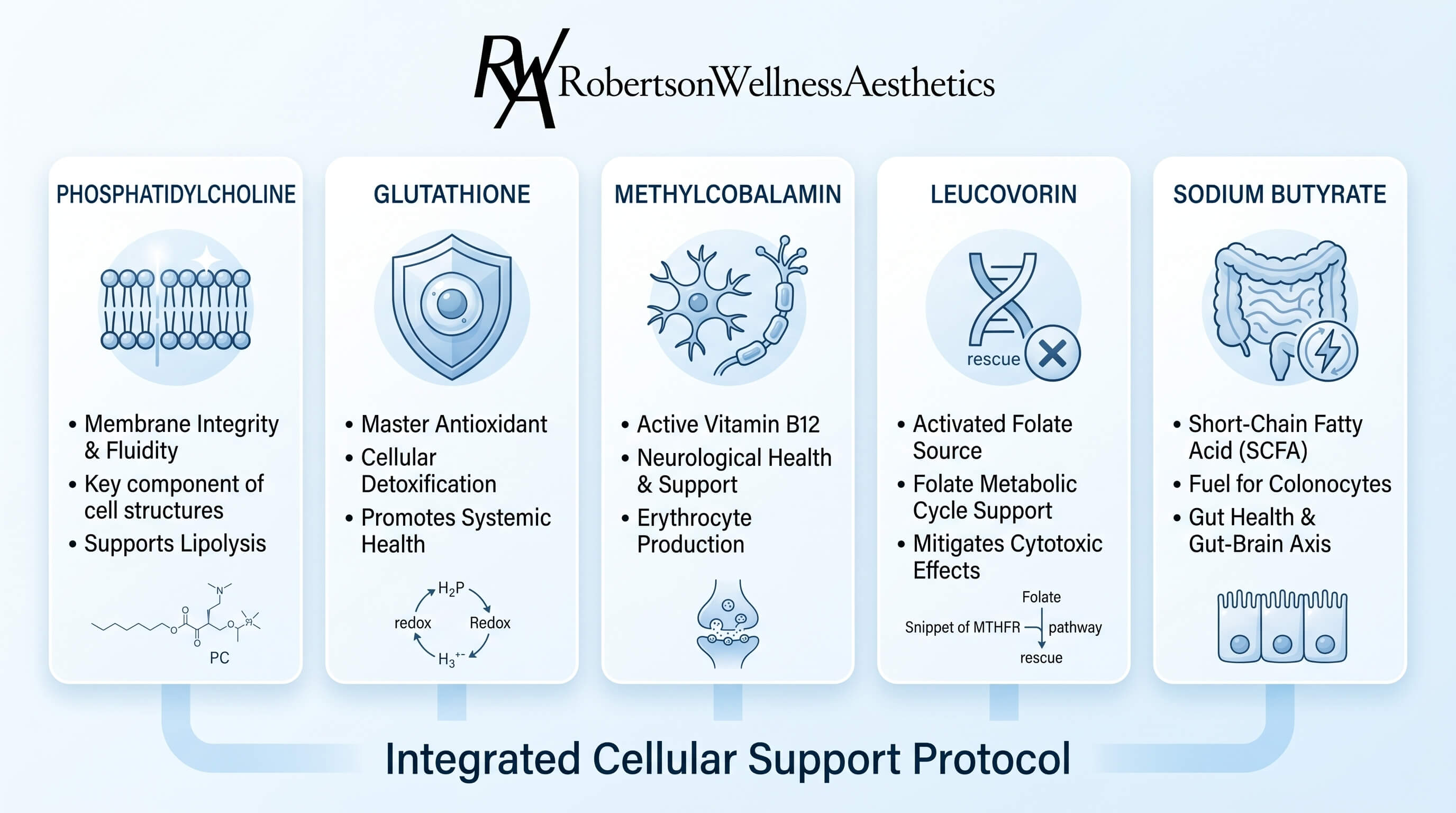
Beyond phosphatidylcholine, a PK Protocol IV typically includes a carefully selected group of antioxidants and cofactors that work synergistically. The exact formulation is individualized, but the recurring ingredients are:
| IV ingredient | Role studied in cellular health and detoxification |
|---|---|
| Phosphatidylcholine (PC) | A phospholipid that forms a major component of all cell membranes. Studied for its role in liver health, brain function, and fat metabolism. |
| Glutathione | A primary intracellular antioxidant. Studied for its role in neutralizing reactive oxygen species and supporting phase II liver detoxification. |
| Leucovorin (folinic acid) | An activated form of folate that supports methylation pathways without needing the MTHFR enzyme. |
| Methylcobalamin (B12) | The activated form of vitamin B12. Studied for its role in nervous system health and energy metabolism. |
| Sodium butyrate | A short-chain fatty acid studied in animal and human research for its effects on gut barrier function and inflammation. |
Each ingredient has its own evidence base. Together, they target three connected goals: rebuild membranes, reduce oxidative stress, and support the methylation pathways that drive detoxification.
Who Explores the PK Protocol?
The PK Protocol is most often used by integrative and functional medicine clinicians as a supportive therapy for patients with complex, chronic, or toxin-related concerns. According to clinicians working with the protocol and Dr. Patricia Kane’s published clinical observations, the conditions in which the PK Protocol is explored include:
- Chronic neurological conditions, including ALS (amyotrophic lateral sclerosis), Parkinson’s disease, multiple sclerosis (MS), and post-stroke recovery
- Cognitive concerns and brain fog, including post-concussion symptoms
- Chronic Lyme disease and post-Lyme syndromes
- Chronic fatigue and post-viral conditions
- Mold toxicity and Chronic Inflammatory Response Syndrome (CIRS)
- Heavy metal exposure
- Autism spectrum and developmental conditions
It is worth restating clearly: the PK Protocol is not approved by the FDA to treat any of these conditions. It is used as a supportive therapy alongside conventional medical care, and it should never replace evaluation and treatment by a primary care provider or specialist.
Patients who tend to do best with the protocol are those who:
- Have had thorough conventional medical workups and are seeking adjunctive support
- Are willing to commit to the full three-part program, including dietary changes
- Understand that the PK Protocol is a process, not a single treatment
- Have realistic expectations about gradual progress
What to Expect From a Course of Sessions
The PK Protocol is designed as a course of treatment, not a single session. A typical full course consists of 10 to 20 sessions, sometimes more, scheduled once or twice per week. Each session lasts 1.5 to 3 hours, depending on the specific formulation and the patient’s tolerance.
Patient experiences vary, but a general arc tends to look like this:
| Sessions | What patients commonly report |
|---|---|
| Sessions 1-5 | Initial cellular support; some patients notice mild detoxification symptoms as the body begins to mobilize stored toxins |
| Sessions 5-10 | Improved energy, reduced inflammation, early support for neurological and cognitive function |
| Sessions 10-15 | Enhanced cellular function and improved mental clarity in many patients |
| Sessions 15-20+ | Deeper detoxification, sustained cellular repair, ongoing maintenance of progress |
Some patients report mild detoxification symptoms in the first one or two sessions, sometimes called a Herxheimer-like response, as toxins begin to mobilize. These typically include short-lived fatigue, headache, or flu-like symptoms. They are not universal, but they are an expected possibility, which is one reason the protocol is administered under direct medical supervision.
Curious about the PK Protocol?
The PK Protocol uses IV phosphatidylcholine to support cellular membrane repair – delivered as a supervised series after a medical consultation in Beverly Hills.
The PK Protocol is provided under medical supervision after consultation. These statements have not been evaluated by the FDA and are not intended to diagnose, treat, cure or prevent any disease.
How the PK Protocol Compares to Other IV Therapies
Because the PK Protocol is sometimes confused with general nutrient IVs, it helps to put them side by side. Both have a place in a wellness program, but they answer different questions.
| Feature | PK Protocol IV | Standard nutrient IV (e.g. Myers cocktail) |
|---|---|---|
| Primary focus | Cell membrane repair and detoxification | Hydration and acute nutrient repletion |
| Core ingredient | Phosphatidylcholine (lipid) | Vitamins and minerals (vitamin C, B-complex, magnesium) |
| Session length | 1.5 to 3 hours | 30 to 60 minutes |
| Number of sessions | Typically 10 to 20+ | As needed, often single sessions |
| Includes oral and dietary protocol | Yes, three-part program | Usually no |
| Best suited for | Patients exploring support for chronic, neurological, or toxin-related concerns | General wellness, recovery, energy, immune support |
In short, a Myers cocktail IV is a strong choice for general wellness and acute support. The PK Protocol is a structured, multi-session intervention for people exploring deeper support for chronic concerns.
Safety, Side Effects, and Contraindications
PK Protocol IV therapy is administered by medical professionals in a clinical environment. While the protocol is generally well tolerated, side effects are possible, especially in the early phase of treatment when toxins begin to mobilize.
Possible side effects include:
- Mild fatigue, headache, or flu-like symptoms during initial sessions
- Temporary digestive changes as the body adapts to the dietary protocol
- Soreness at the IV site
- Rare allergic reactions to specific ingredients
The PK Protocol is not appropriate for everyone. Patients should discuss the protocol with their physician if they have a history of soy allergy (phosphatidylcholine is often soy-derived), are pregnant or breastfeeding, have an active acute illness, or are taking medications that may interact with the protocol’s components.
Because the protocol is experimental and not FDA-approved, decisions about whether to pursue it should be made carefully, in consultation with a qualified clinician.
The PK Protocol at Robertson Wellness in Beverly Hills
Robertson Wellness and Aesthetics offers the PK Protocol as part of an integrative wellness program in Beverly Hills. Each protocol is administered under medical supervision, with individualized formulations designed around the patient’s specific goals.
Programs are structured as packages, so patients can plan a full course rather than booking single sessions:
| Package | What is included | Investment |
|---|---|---|
| Initial Assessment | Diagnostic testing and the first IV session | $1,100 |
| 5 Session Package | 5 IV sessions plus the oral supplement protocol | $2,000 |
| 10 Session Package | 10 IV sessions plus the full three-part protocol | $2,750 |
The Initial Assessment is the recommended starting point for any patient new to the protocol. It combines diagnostic testing with a first IV session, which gives both the patient and the clinical team a baseline.
Frequently Asked Questions About the PK Protocol
How long is each PK Protocol IV session?
Sessions typically last 1.5 to 3 hours, depending on the formulation and individual tolerance. Sessions are usually scheduled once or twice per week.
How many sessions will I need?
A typical course is 10 to 20 sessions or more. The exact number is individualized based on the initial diagnostic findings and how each patient responds. Many patients do an initial intensive course, then transition to a maintenance schedule.
When will I see results?
Results vary substantially. Sessions 1 to 5 are often a period of adjustment. Many patients report improved energy and reduced inflammation around sessions 5 to 10. Cognitive shifts and deeper repair tend to develop over sessions 10 and beyond. The protocol is not a quick fix; it is a process that unfolds over weeks to months.
Is the PK Protocol FDA-approved?
No. The PK Protocol is considered experimental. Its use is supported by clinical observation by integrative medicine practitioners and by the published research on individual components, but it has not been evaluated in large double-blind, placebo-controlled clinical trials for any specific disease.
Is the PK Protocol the same as a phosphatidylcholine IV at any clinic?
No. A simple phosphatidylcholine IV is one ingredient delivered intravenously. The PK Protocol is a structured three-part program that combines IV infusions with oral supplementation and a specialized diet, with formulations and timing developed by Dr. Patricia Kane.
Can I do the PK Protocol while continuing other treatments?
In many cases yes, but this should always be reviewed with the prescribing clinician. Some medications and supplements interact with components of the protocol, so the full medication list needs to be reviewed before starting.
What does the diet portion involve?
The recommended dietary approach is organic, nutrient-dense, low in carbohydrates, and high in healthy fats, often modeled on Paleo or ketogenic protocols. The goal is to create a metabolic environment that supports cellular repair and reduces inflammatory load while the IV therapy works.
Where in Beverly Hills is the PK Protocol available?
Robertson Wellness and Aesthetics offers the PK Protocol at 8920 Wilshire Blvd, Suite 320, Beverly Hills, CA 90211. Consultations can be scheduled by phone at (310) 407-0542.
Related Therapies That Often Pair Well
Many patients exploring the PK Protocol are also looking at other advanced therapies that target different aspects of cellular health and detoxification. Common pairings include:
- NAD+ IV therapy for mitochondrial energy production and cellular repair, often used as a complement to membrane support.
- Ozone therapy and EBOO + UV Light, which target oxidative stress, microbial load, and inflammation.
- Glutathione and Myers cocktail IV therapy, which support general antioxidant capacity and nutrient repletion.
- Peptide therapy, a growing area of integrative medicine that targets specific cellular signaling pathways.
- Comprehensive blood testing, which provides the baseline data to track progress and guide therapy adjustments.
- Ultraviolet Blood Irradiation (UBI), another tool used by integrative clinicians for chronic inflammation and immune support.
The right combination depends entirely on the patient’s history, goals, and clinical findings. That is why Robertson Wellness builds programs case by case, rather than offering a one-size-fits-all package.
Is the PK Protocol Right for You?
The PK Protocol is not a casual choice. It is a meaningful investment of time, attention, and resources, and it works best for patients who are ready to commit to a full course and the lifestyle changes that go with it.
If you have been working through complex symptoms, exploring options that go beyond conventional care, or looking for a deeper level of support for cellular health, the PK Protocol may be worth a conversation. The right starting point is an honest evaluation of where you are now and a clear discussion of what the protocol can and cannot offer.
Schedule a consultation through the Robertson Wellness PK Protocol page or call (310) 407-0542 to discuss whether the protocol is a good fit for your situation.
Robertson Wellness and Aesthetics, 8920 Wilshire Blvd, Suite 320, Beverly Hills, CA 90211.
These statements have not been evaluated by the Food and Drug Administration. The PK Protocol is an experimental therapy. Treatment is not intended to diagnose, treat, cure, or prevent any disease. Individual results vary. The information in this article is educational only and is not a substitute for personalized medical advice. Always consult a qualified healthcare provider about your specific situation.
References
- Patricia Kane, PhD – clinician profile and PK Protocol background. American Academy of Anti-Aging Medicine: a4m.com/patricia-kane.html
- Patricia Kane Protocol entry. MEpedia: me-pedia.org/wiki/Patricia_Kane_protocol
- Phosphatidylcholine: research on liver, brain, and cellular health. NIH/NCBI literature available at pubmed.ncbi.nlm.nih.gov
- Glutathione and antioxidant defense. NIH/NCBI: ncbi.nlm.nih.gov
Start your PK Protocol in Beverly Hills
Talk to a provider about whether the PK Protocol fits your goals and which series length is right for you.
The PK Protocol is provided under medical supervision after consultation. These statements have not been evaluated by the FDA and are not intended to diagnose, treat, cure or prevent any disease.


