


Ozone therapy uses medical-grade ozone (O₃) to trigger a mild, controlled dose of oxidative stress that, in turn, prompts the body to strengthen its own antioxidant and immune defenses. Its most consistently described benefits — improved oxygen delivery, immune modulation, and reduced inflammation — come from this “hormetic” effect, where a small stressor produces an adaptive, protective response. That said, an honest look at the evidence matters here: ozone therapy is used in integrative medicine and has a real research base for certain applications, but it is not FDA-approved for general medical treatment, and many popular claims outrun the science. Here is what the research actually supports, and what to keep a healthy skepticism about.
What is ozone therapy?
Ozone is a molecule made of three oxygen atoms. In a medical setting, medical-grade oxygen is passed through an ozone generator to create a precise concentration of ozone, which is then introduced to the body in controlled ways. The most common clinical method is major autohemotherapy (MAH): a small volume of your blood is drawn, mixed with medical-grade ozone, and reinfused. Higher-dose protocols repeat this cycle multiple times in one session (often called “10-pass” ozone). RWA offers physician-supervised ozone IV therapy, as well as related blood therapies like EBOO and ultraviolet blood irradiation (UBI).
Crucially, ozone is used at carefully calculated therapeutic concentrations. Ozone is also a toxic gas if inhaled, which is why it is never breathed in and why administration by trained clinicians with proper equipment is non-negotiable.
How does ozone therapy work? (mechanism)
The science of ozone therapy rests on a principle called hormesis — the idea that a low, controlled dose of a stressor can stimulate a beneficial adaptive response. When ozone contacts blood, it reacts with fatty acids in red blood cell membranes to form short-lived messengers (reactive oxygen species and lipid oxidation products). These, in turn, are thought to:
- Activate the body’s antioxidant systems. The mild oxidative signal upregulates protective enzymes (via pathways such as Nrf2), which may help the body handle chronic oxidative stress more effectively over time — in plain terms, a small challenge that trains your cellular defenses.
- Improve oxygen delivery. Ozone can increase red blood cell flexibility and oxygen metabolism, supporting circulation and tissue oxygenation.
- Modulate the immune system. At therapeutic doses, ozone appears to regulate immune signaling — a mechanism of interest in both infection and inflammation.
- Exert antimicrobial effects. Ozone can disrupt the membranes of bacteria, viruses, and fungi in direct contact, which underlies its established use in disinfection and dentistry.
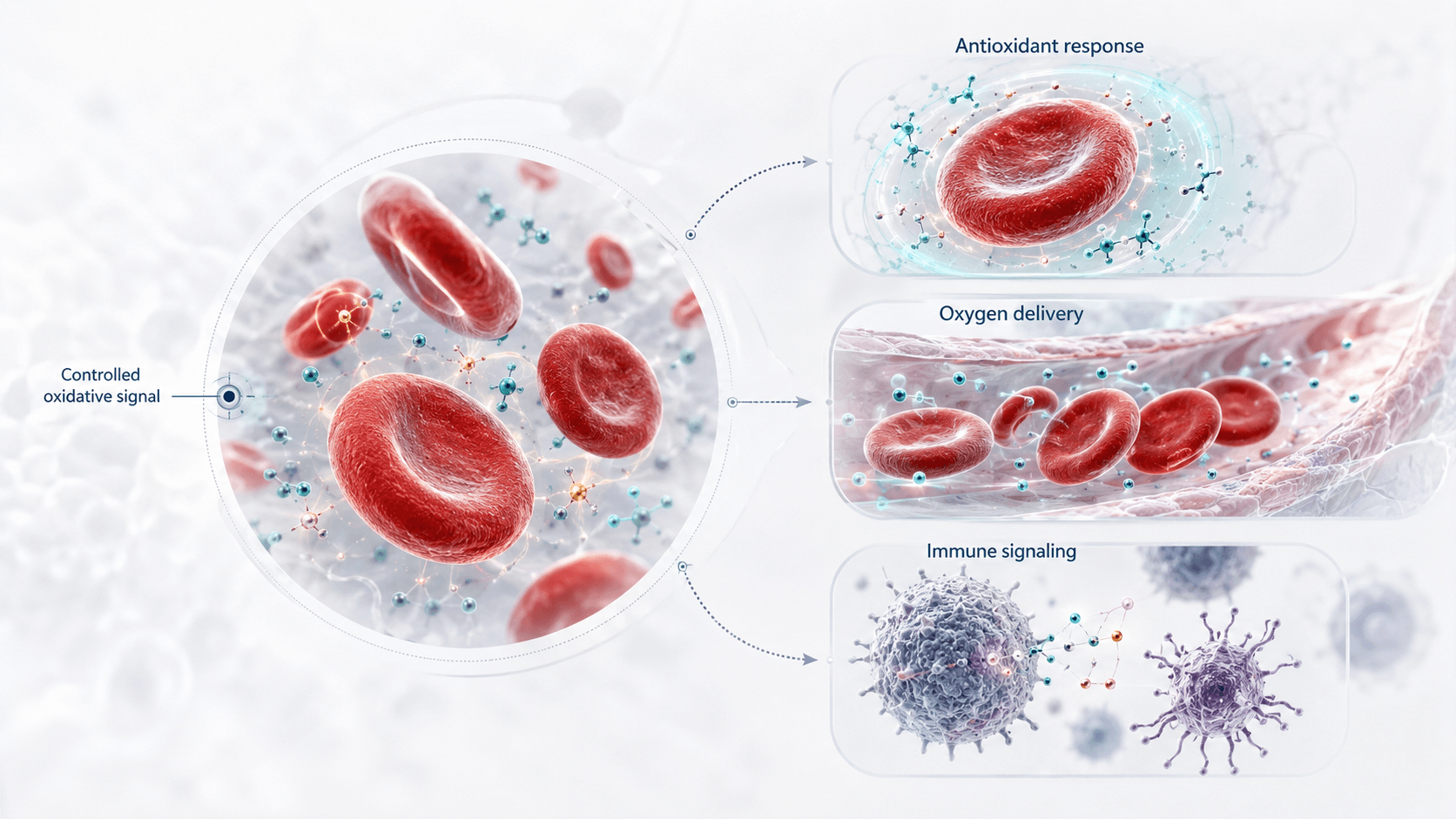
These mechanisms are described in integrative-medicine reviews such as Elvis & Ekta (Journal of Natural Science, Biology and Medicine, 2011) and a more recent evidence review in PMC (2023). They explain why ozone might help — but mechanism is not the same as proven clinical benefit, which is where honesty matters.
What does the science actually say about the benefits?
The evidence for ozone therapy is uneven: stronger for a few specific, localized uses, and weaker or preliminary for the broad systemic claims often seen in marketing. A fair summary:
- Better supported. Ozone has reasonable evidence in dentistry (disinfection, early caries), in chronic wound and diabetic foot ulcer care as an adjunct, and in some studies of knee osteoarthritis and herniated disc / low back pain when injected locally. These are areas with published clinical trials, though quality varies.
- Preliminary or investigational. Systemic uses for immune support, fatigue, circulation, and general “detox” or anti-aging are areas of active interest and some early research, but they are not established, and results should be viewed cautiously.
- Not a proven treatment for serious disease. Ozone therapy should not be presented as a cure for chronic conditions such as Lyme disease, autoimmune disease, or cancer. Claims like these are not supported by rigorous evidence, and the honest framing is “wellness support” or “adjunctive,” never disease cure.
In short: ozone therapy is best understood as an integrative, wellness-oriented option with a genuine mechanistic rationale and selective clinical evidence — not a miracle treatment. A reputable clinic will say exactly that.
Considering ozone therapy in Beverly Hills?
Ozone therapy should be done right: individualized protocols, medical-grade equipment, and required G6PDscreening before treatment. Our Beverly Hills clinicians walk you through what the evidence supports —and what it doesn’t — so you can decide with clear expectations.
These statements have not been evaluated by the FDA. Ozone therapy is considered investigational, is notFDA-approved for the indications discussed, is not intended to diagnose, treat, cure, or prevent any disease,and is not appropriate for everyone. Provided only after evaluation by a licensed provider. Results vary.
Is ozone therapy safe? Side effects and the G6PD screen
When administered correctly by trained clinicians at therapeutic concentrations, ozone therapy is generally well tolerated. Possible side effects include temporary discomfort or bruising at the IV site, lightheadedness, fatigue, or a brief flu-like feeling as the body responds. Because ozone is harmful if inhaled, it is never administered by breathing.
The single most important safety step is screening for G6PD deficiency. G6PD is an enzyme that protects red blood cells from oxidative damage; people who are deficient can experience hemolysis (red blood cell breakdown) when exposed to an oxidative therapy like ozone. That is why a reputable clinic requires a G6PD blood test before higher-dose ozone — a screen RWA performs as part of comprehensive blood testing. Ozone therapy is also generally avoided in pregnancy, in people with certain bleeding or cardiovascular conditions, and in anyone with uncontrolled hyperthyroidism, and candidacy should always be confirmed by a clinician.
On the regulatory side, be clear-eyed: the FDA has not approved ozone for general medical treatment and has historically cautioned that ozone is a toxic gas with no proven medical use at uncontrolled exposures. Legitimate clinical ozone therapy operates in the integrative/off-label space under physician supervision — which is exactly why sourcing, dosing, screening, and oversight are what separate responsible care from hype.
What to expect during ozone therapy
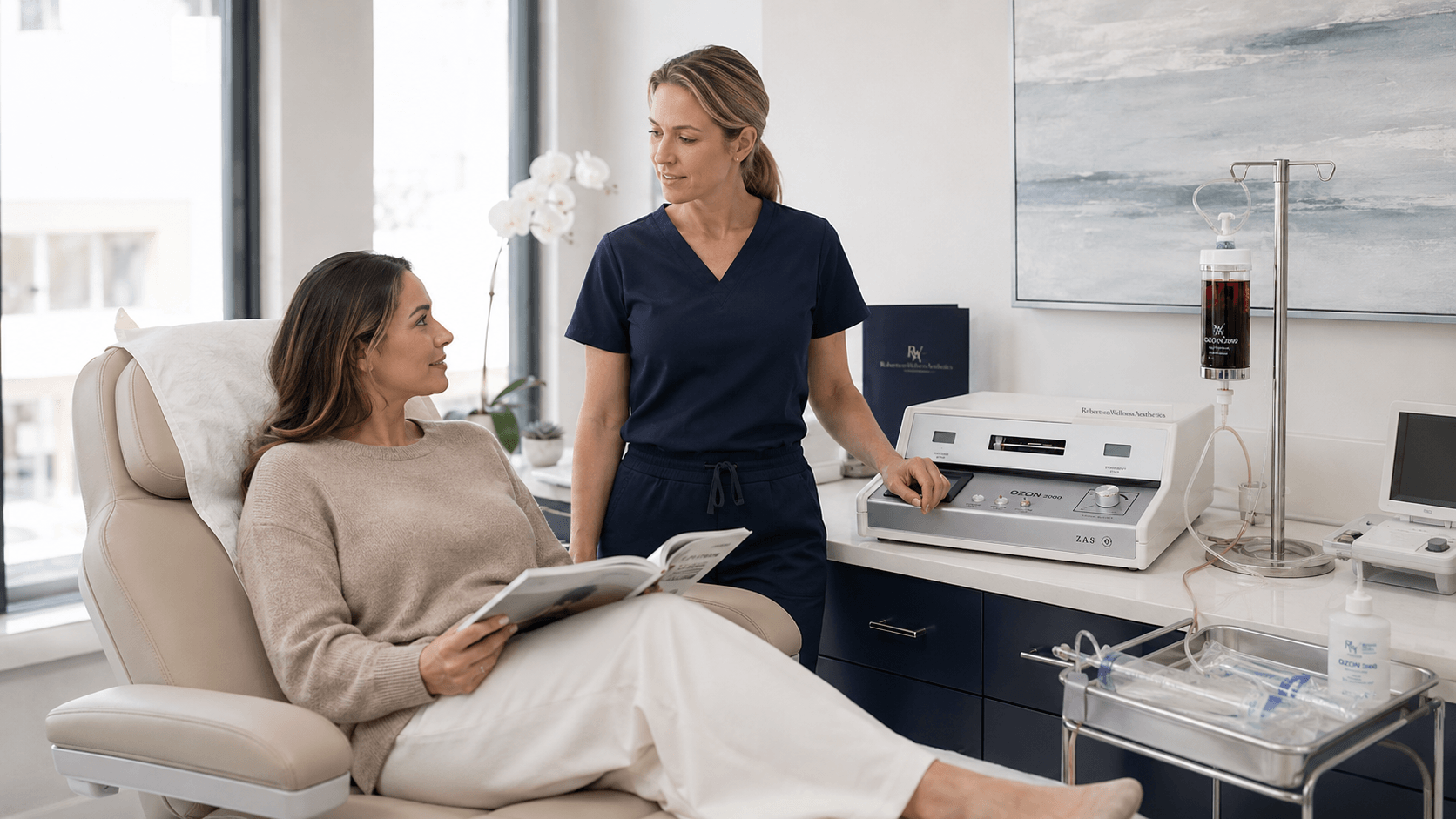
A typical MAH session takes under an hour. After a consultation and any required screening, a clinician draws a small volume of blood (roughly 60–200 mL depending on protocol), mixes it with a precise concentration of medical-grade ozone, and reinfuses it — each “pass” taking about 7–10 minutes. First visits are typically limited to 1–3 passes; higher-dose protocols follow only after a normal G6PD result. The number of passes and sessions is individualized, and many patients combine ozone with other longevity-focused care such as NAD+ IV therapy or biological age testing. Curious about pricing and packages? See our guide to how much ozone therapy costs.
Medical Disclaimer
These statements have not been evaluated by the Food and Drug Administration. This article is for educational purposes only and is not intended to diagnose, treat, cure, or prevent any disease. Ozone therapy is considered investigational and is not FDA-approved for the indications discussed; it is used in integrative medicine under the supervision of a licensed provider. It is not appropriate for everyone, requires G6PD screening before higher-dose treatment, and carries contraindications. Individual results may vary and are not guaranteed. Always consult a qualified healthcare provider before beginning any new treatment.
Frequently asked questions
What is ozone therapy good for?
Ozone therapy is studied for its effects on oxygen delivery, immune modulation, and inflammation. It has better evidence in specific, localized uses such as dentistry, chronic wound and diabetic foot ulcer care, and some joint and back-pain applications, while broader systemic and anti-aging uses are preliminary. It is best viewed as an integrative wellness option, not a proven cure for disease.
How does ozone therapy work?
It works through hormesis — a small, controlled dose of oxidative stress that prompts the body to strengthen its antioxidant defenses, improve oxygen utilization, and modulate immune activity. Medical-grade ozone is mixed with a small amount of your blood and reinfused so the effect is systemic but controlled.
Is ozone therapy FDA-approved?
No. Ozone is not FDA-approved for general medical treatment, and the FDA has cautioned that ozone is a toxic gas at uncontrolled exposures. Clinical ozone therapy is used in the integrative and off-label space under physician supervision. Reputable clinics disclose this rather than claiming FDA approval.
What are the side effects of ozone therapy?
Most side effects are mild and temporary: IV-site discomfort or bruising, lightheadedness, fatigue, or a brief flu-like feeling. The most important safety consideration is G6PD deficiency, which is why a G6PD blood test is required before higher-dose ozone to avoid red blood cell breakdown (hemolysis).
How many sessions of ozone therapy do you need?
It varies by goal and protocol. First visits are usually limited to 1–3 passes, with higher-dose or repeated sessions planned individually after screening. Your provider determines the right number of passes and sessions based on your health and response.
Does ozone therapy really work?
For certain localized uses it has supportive clinical evidence; for many systemic and anti-aging claims the evidence is early or mixed. The honest answer is that ozone therapy has a real mechanistic rationale and selective evidence, but it is not a guaranteed or proven treatment for most conditions, and expectations should be realistic.
Talk to a physician about ozone therapy
If you’re weighing ozone therapy, the most useful step is a consultation with a clinician who will screen you properly and give you an honest read on the evidence. Robertson Wellness and Aesthetics offers physician-supervised ozone IV therapy in Beverly Hills, with required G6PD screening and individualized protocols, overseen by our clinical team. Book a consultation to discuss whether it fits your goals and health history.


