


HCG (human chorionic gonadotropin) is a hormone that, in men, acts like luteinizing hormone (LH) — the body’s natural signal telling the testes to produce testosterone and sperm. That single mechanism explains its two main roles in men’s health: it can raise the testes’ own testosterone production, and it can preserve fertility and testicular size — which is exactly why it’s often added to testosterone replacement therapy (TRT). HCG is a prescription medication that must be used under physician supervision after evaluation. Here is how it works, when it’s combined with TRT, its role in fertility, and what to know about safety.
What is HCG, and how does it work in men?
Human chorionic gonadotropin is a naturally occurring hormone best known in pregnancy, but it has an important use in male hormone health because of how closely it resembles LH. In men, LH is released by the pituitary gland and travels to the Leydig cells in the testes, signaling them to make testosterone. Because HCG mimics LH, it delivers that same “produce testosterone” message directly to the testes.
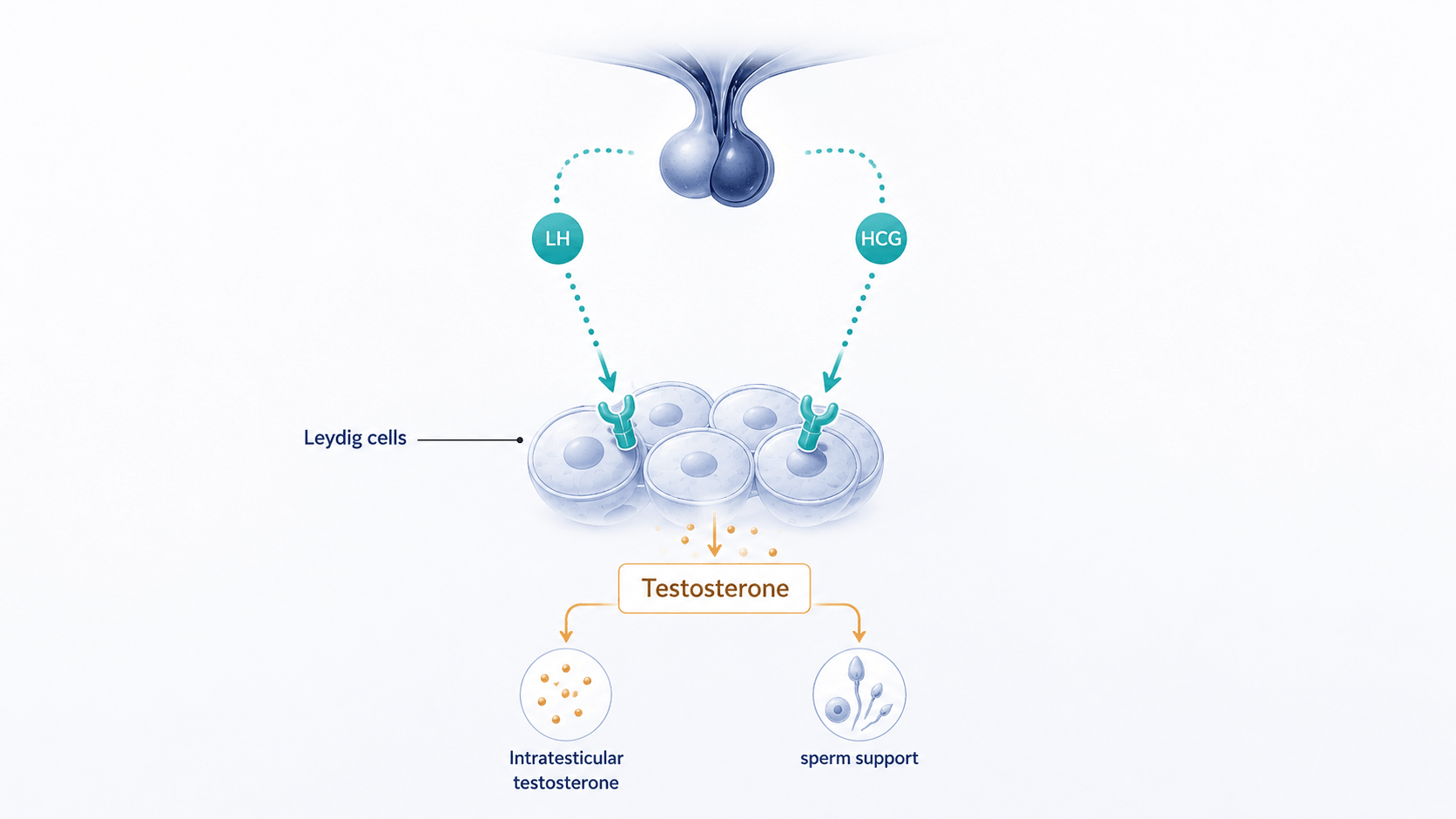
This produces two effects that matter clinically: the testes make more of their own testosterone, and they stay active — maintaining testicular size and supporting the intratesticular testosterone needed for sperm production. In plain terms, HCG keeps the testes “switched on” and doing their job, rather than going dormant. This is central to why it’s used in men’s hormone optimization.
HCG and TRT: why they’re often combined
This is the most common reason men encounter HCG. Standard testosterone replacement therapy works by supplying testosterone from outside the body — but the body notices the higher levels and responds by shutting down its own signals (LH and FSH). With those signals switched off, the testes stop producing testosterone on their own, which leads to two well-known consequences of TRT: testicular shrinkage and reduced fertility (lower sperm production).
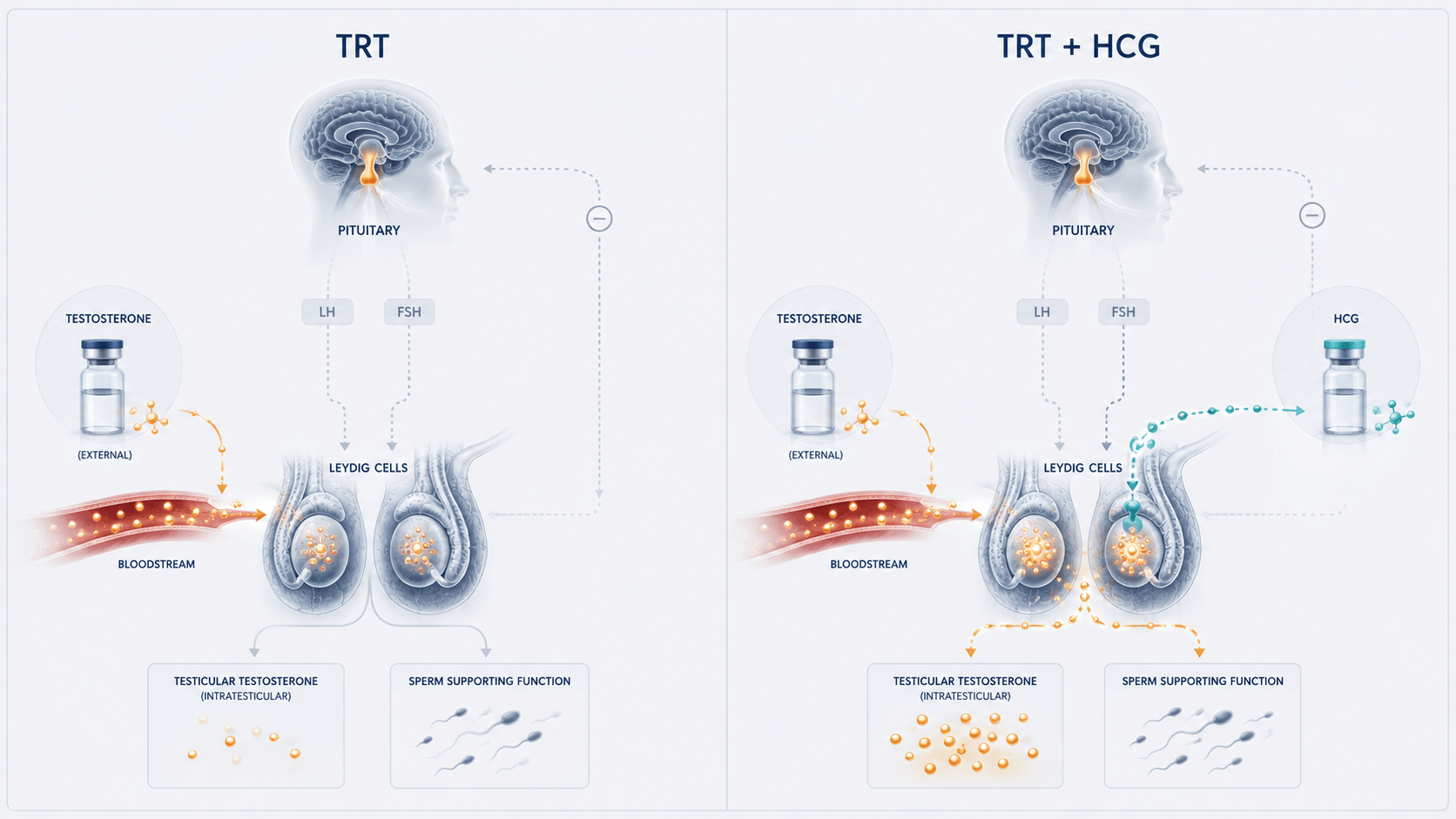
Adding HCG solves this by replacing the missing LH signal. While TRT keeps blood testosterone in an optimal range, HCG keeps the testes stimulated — helping preserve their size, their intratesticular testosterone, and sperm production. For many men, that means getting the benefits of TRT without fully sacrificing testicular function. Whether HCG belongs in a given protocol is an individualized clinical decision, made with lab data as part of a supervised TRT program. For the full picture on testosterone therapy itself, see our complete guide to TRT in Beverly Hills.
HCG for fertility
HCG’s fertility role follows directly from its mechanism. Because sperm production depends on high testosterone levels inside the testes (which external TRT alone doesn’t provide), stimulating the testes with HCG helps maintain or restore that intratesticular environment. In practice, HCG is used in a few fertility-related ways:
- Preserving fertility during TRT — added to a testosterone protocol so sperm production isn’t fully suppressed, important for men who may want children.
- Restoring the natural axis — sometimes used (often with other medications) to help restart the body’s own testosterone and sperm production after stopping TRT.
- Secondary hypogonadism — when the problem is a lack of pituitary signaling, HCG can raise testosterone while supporting fertility, unlike testosterone alone.
If fertility is a current or future priority, it’s essential to raise it at your consultation, because it shapes the entire treatment plan. Alternatives such as enclomiphene may also be considered, and the right choice depends on your goals, labs, and history.
Considering HCG or TRT for men?
HCG and testosterone therapy are clinical decisions that start with bloodwork, not guesswork. Our Beverly Hillsproviders run a comprehensive hormone panel, discuss fertility goals candidly, and build a supervised plan —including HCG where appropriate — with ongoing lab monitoring.
These statements have not been evaluated by the FDA for all uses discussed. HCG and TRT are prescriptiontreatments provided only after a medical evaluation by a licensed provider, and are not appropriate for everyone.Some uses may be off-label. Individual results vary.
HCG vs enclomiphene vs TRT: how they differ
Men researching low testosterone and fertility often compare these three, and they work differently. TRT supplies testosterone from outside the body and is highly effective at raising levels, but suppresses natural production and fertility. HCG stimulates the testes to make their own testosterone and supports fertility, and is often used alongside TRT or on its own. Enclomiphene works higher up, prompting the pituitary to release more LH and FSH, which can raise testosterone while preserving fertility — an oral option some men prefer. None is universally “best”: the right approach depends on your testosterone levels, whether fertility matters, and a physician’s assessment. Men exploring these often also consider peptide therapy for recovery and body composition as part of a broader plan.
Who is HCG for — and who isn’t it for?
HCG is generally considered for men who want to raise testosterone while maintaining fertility, men on TRT who wish to preserve testicular function and sperm production, and men with certain forms of secondary hypogonadism — always confirmed with comprehensive hormone testing first. It is not a fit for everyone: it requires medical evaluation, is not appropriate for men with certain hormone-sensitive conditions, and, like any hormone therapy, calls for ongoing monitoring. It is also not an anabolic steroid and not a shortcut to peak performance — it is a medical treatment that works with your own physiology.
HCG side effects and safety
When prescribed and monitored appropriately, HCG is generally well tolerated. Possible side effects include injection-site reactions, acne, mood changes, water retention, and breast tenderness or enlargement (gynecomastia) — the latter because the testosterone HCG stimulates can convert to estrogen, which is one reason estradiol is watched on lab work. As with TRT, responsible care means baseline and follow-up bloodwork (including hormones and, where relevant, markers like hematocrit and estradiol) and dose adjustments over time.
On regulatory status: HCG is an FDA-approved prescription medication with recognized uses in men, including certain cases of hypogonadotropic hypogonadism, though its specific use to preserve fertility alongside TRT is frequently off-label. Either way, it must be prescribed by a licensed provider — not sourced online — and used within a supervised plan overseen by an experienced clinical team.
Medical Disclaimer
These statements have not been evaluated by the Food and Drug Administration for all uses discussed. This article is for educational purposes only and is not intended to diagnose, treat, cure, or prevent any disease. HCG and testosterone replacement therapy are prescription treatments that must be prescribed and supervised by a licensed healthcare provider following an individual medical evaluation and laboratory testing. Some uses of HCG in men, including fertility preservation during TRT, may be off-label. These therapies are not appropriate for everyone, and individual results may vary. Always consult a qualified healthcare provider before beginning any new treatment.
Frequently asked questions
Does HCG increase testosterone in men?
Yes. HCG mimics luteinizing hormone and signals the testes to produce more of their own testosterone. Unlike TRT, which supplies testosterone from outside, HCG stimulates your body’s natural production, which is why it also supports testicular size and fertility.
Why do men take HCG with TRT?
TRT suppresses the body’s own signals to the testes, causing testicular shrinkage and reduced sperm production. Adding HCG replaces that signal, keeping the testes active so men can preserve testicular size and fertility while still benefiting from optimized testosterone levels.
Can HCG help with fertility?
Yes. Because sperm production depends on high testosterone levels inside the testes, HCG can help maintain or restore fertility — whether used alongside TRT to prevent suppression, to help restart natural production after stopping testosterone, or in certain cases of secondary hypogonadism. Fertility goals should be discussed at your consultation.
Is HCG a steroid?
No. HCG is a hormone that signals your testes to make their own testosterone; it is not an anabolic steroid. It works with your natural physiology rather than replacing it with supraphysiologic doses.
How quickly does HCG work?
HCG can begin stimulating testosterone production relatively quickly, though the timeline for noticeable effects — and for fertility-related goals — varies by individual, dose, and protocol. Your provider tracks progress with follow-up labs rather than promising a fixed result by a fixed date.
Is HCG safe for men?
When prescribed and monitored by a qualified provider, HCG is generally well tolerated, with side effects such as injection-site reactions, acne, or breast tenderness being the most common. Safety depends on proper evaluation, correct dosing, and ongoing lab monitoring — not on buying it without supervision.
Talk to a physician about HCG and men’s health
If you’re weighing HCG — whether to raise testosterone, protect fertility on TRT, or restart your natural production — the right first step is a consultation and a comprehensive hormone panel. Robertson Wellness and Aesthetics offers clinician-supervised men’s health and testosterone therapy in Beverly Hills, with candid guidance on fertility and no contracts. Book a consultation to find out whether HCG fits your goals, your labs, and your health history.
[AUTHOR BIO — credentials required before publish] This article should be attributed to and medically reviewed by a licensed RWA provider (MD/DO/NP as appropriate). Insert the named provider, title, credentials, and a one-paragraph bio establishing relevant experience in men’s health and hormone optimization. Suggested reviewer: Biana Borchenko, FNP-BC (Family Nurse Practitioner, Board-Certified; A4M), who oversees men’s hormone therapy at Robertson Wellness and Aesthetics.


