


NAD+ injections have become one of the most flexible ways to support cellular health outside of a clinical IV setting. They deliver a faster session, can be continued at home under supervision, and make consistent NAD+ dosing practical for busy schedules.
This guide explains what NAD+ injections are, how they differ from NAD+ IV therapy, the benefits being studied, what patients commonly report before and after, and how to decide if injections are the right fit for your goals.
What are NAD+ injections?
NAD+ injections are shots of nicotinamide adenine dinucleotide delivered either just under the skin (subcutaneous) or into the muscle (intramuscular). They introduce NAD+ directly into the body without going through the digestive system, which means the molecule avoids the breakdown that happens with oral supplements.
Because a shot takes only minutes, injections offer a practical middle ground between a full IV infusion (which can take hours) and oral supplementation (which depends on absorption).
NAD+ injections vs NAD+ IV infusions
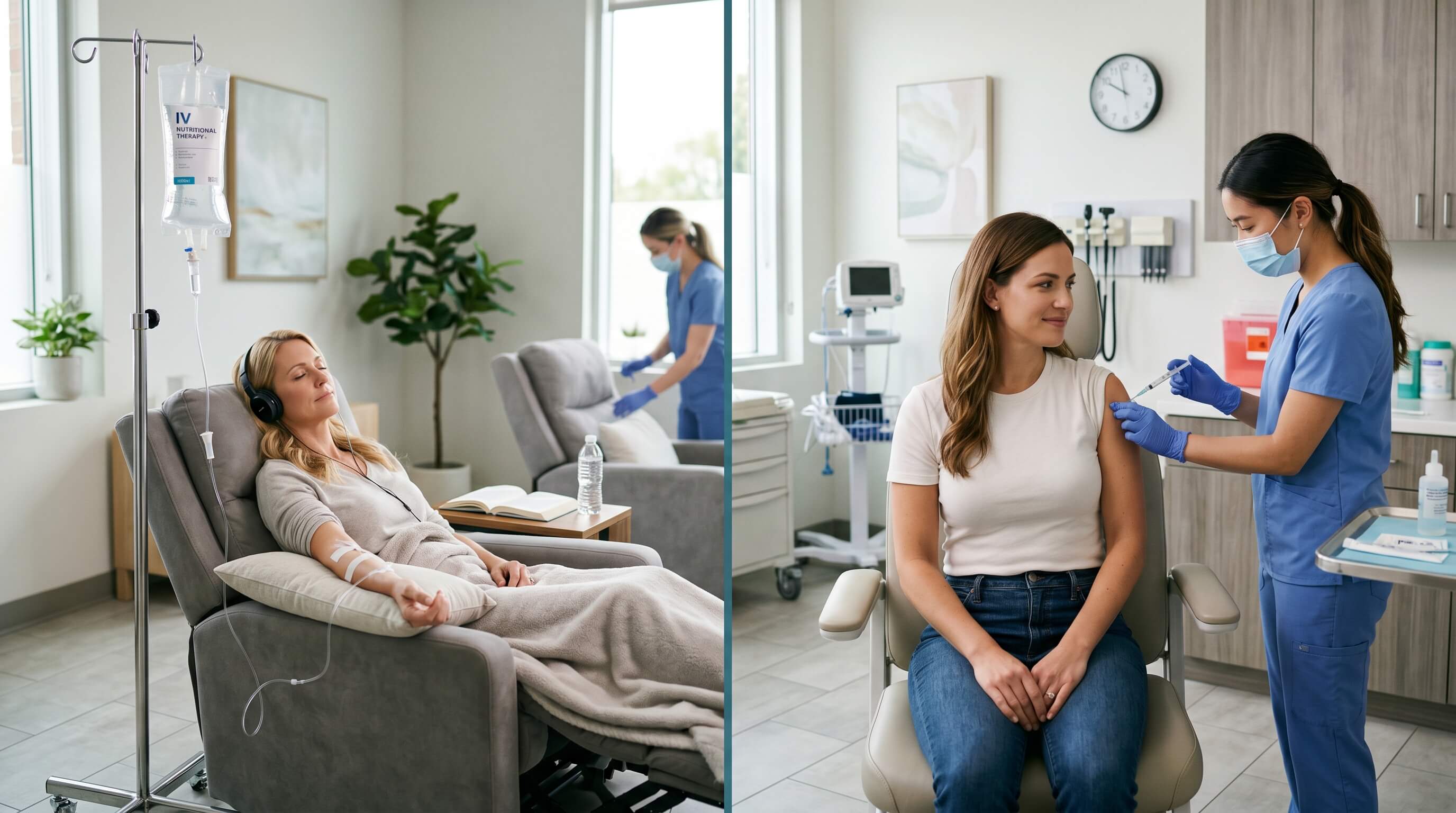
Both deliver NAD+ into the bloodstream, but the experience and use cases differ. An IV infusion delivers a large dose over two to four hours in a clinic. A NAD+ injection delivers a smaller, more frequent dose in just a few minutes.
Many patients use both. A clinical loading series of NAD+ IV sessions raises baseline levels, and weekly injections maintain those levels between visits. This pairing is often more cost-effective and time-efficient than running IV sessions alone.
NAD+ shots explained
“NAD+ shot” and “NAD+ injection” are used interchangeably in most clinical settings. Both refer to a concentrated dose of NAD+ delivered by syringe. At RWA Center, NAD+ shots are available in 100 mg and 200 mg single doses, with protocols tailored after a medical consultation.
How NAD+ injections work in the body
Once injected, NAD+ is absorbed into capillary beds in the tissue and enters systemic circulation. From there, it becomes available to cells throughout the body, where it supports cellular energy production, DNA repair enzymes (PARPs), and sirtuin activity involved in healthy aging.
This is the same mechanism that makes IV NAD+ effective. The difference is dose size and speed of delivery, not the underlying biology.
Subcutaneous vs intramuscular injection
NAD+ injections can be given two ways:
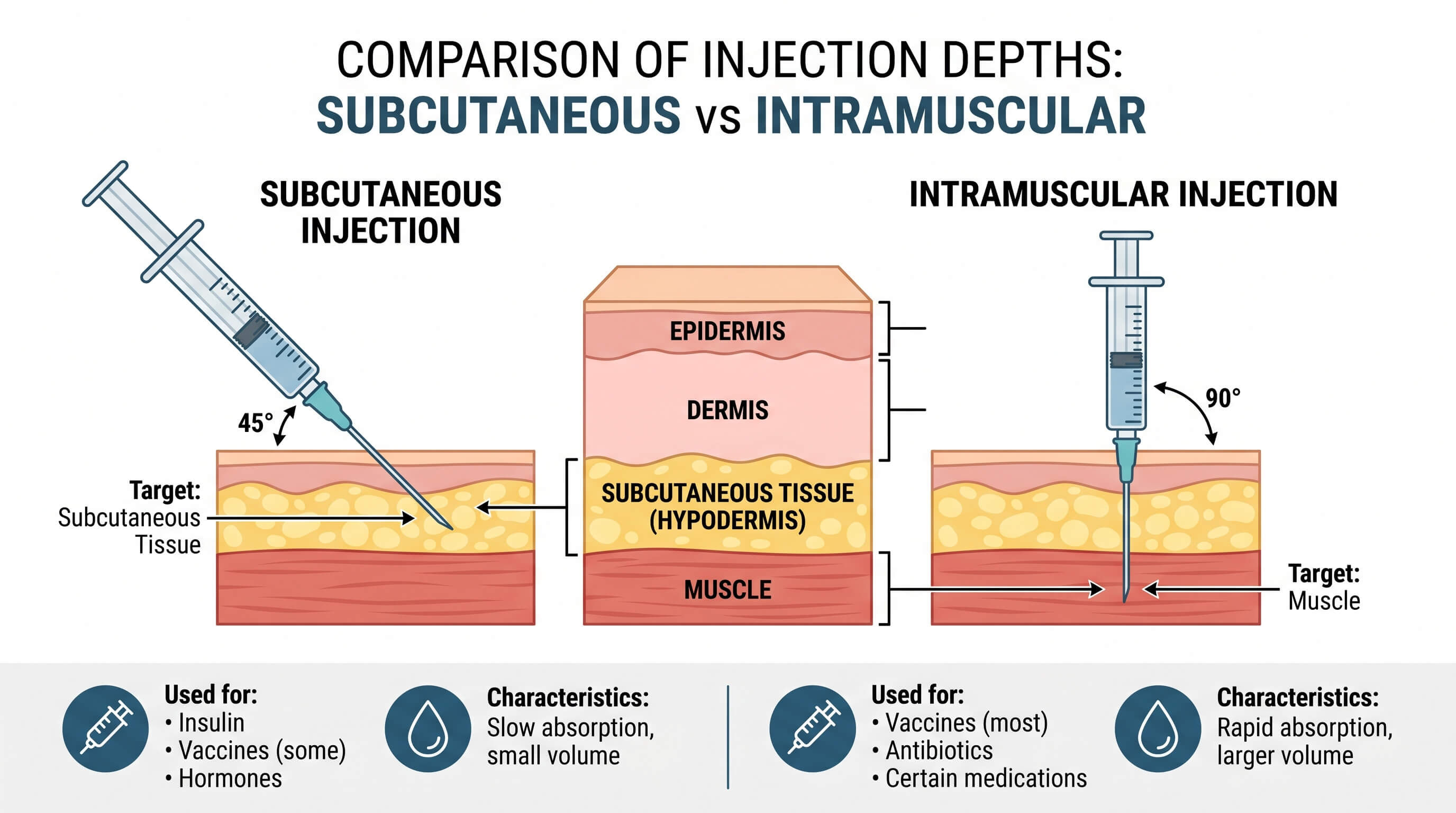
- Subcutaneous (SubQ): Injected just beneath the skin, typically into the abdomen or thigh. Absorption is slower and more gradual. This is the most common route for at-home NAD+ protocols.
- Intramuscular (IM): Injected into a larger muscle like the deltoid or gluteal region. Absorption is faster and can produce a more immediate sensation.
Both methods are considered effective. Your provider will recommend the route that best matches your dose, goals, and comfort level with self-administration.
Why injections may be more convenient than IV drips
A 200 mg NAD+ shot takes about five minutes. A 500 mg IV infusion typically takes three to four hours. For patients who are building NAD+ into a long-term wellness routine, injections make it realistic to stay consistent.
Injections also allow smaller, more frequent dosing, which some clinicians prefer because it keeps NAD+ levels steadier over time rather than producing peaks and troughs.
Benefits of NAD+ injections
The benefits being studied for NAD+ injections mirror those of NAD+ IV therapy because the active molecule is identical. Research is ongoing, and individual responses vary.
Cellular energy and mitochondrial support
NAD+ is essential for the electron transport chain that produces ATP, the fuel your cells use. By supporting mitochondrial function, NAD+ injections may help patients who feel persistently drained despite adequate rest.
Because injections allow frequent dosing, they are particularly useful for patients whose energy concerns are chronic rather than acute. Small, steady doses may help the body maintain higher baseline NAD+ availability over weeks rather than producing a single peak that fades quickly.
Cognitive performance and mental clarity
Neurons have high energy demands and rely heavily on NAD+ for repair and signaling. Some patients report improved focus, sharper memory, and a lifting of “brain fog” after starting a NAD+ injection protocol, though controlled clinical data are still limited.
For knowledge workers, creatives, and students, this is one of the most commonly cited reasons for trying NAD+ injections. Results vary, and lifestyle factors (sleep, hydration, stress management) remain the foundation.
Recovery, athletic performance, and healthy aging
NAD+ activates sirtuin proteins involved in inflammation regulation and DNA repair. These same pathways are part of why NAD+ is being studied in longevity research. Active adults and athletes often use injections to support recovery between training cycles.
The connection to longevity is especially active in biomedical research. Sirtuins are being studied in the context of cellular aging, metabolic health, and stress resistance, and raising NAD+ availability is one of the main strategies researchers use to support sirtuin activity.
Flexibility for ongoing maintenance
One practical benefit deserves its own mention: injections make consistent NAD+ support possible. Many patients start with a series of NAD+ IV infusions to raise baseline levels, then transition to weekly or biweekly injections to maintain them. This is the most realistic schedule for busy professionals.
Support during demanding periods
Periods of heavy travel, intense training cycles, recovery from illness, or high cognitive load can all drain cellular energy reserves. NAD+ injections are often used as targeted support during these windows. They are not a replacement for sleep, nutrition, or proper recovery, but they can reinforce the body’s existing systems when demand temporarily outpaces supply.
Who may benefit from NAD+ injections?
NAD+ injections are being explored by a wide range of adults. Common patient profiles include:
- Busy professionals who want the benefits of NAD+ without blocking out half a day for an IV session
- Frequent travelers who need portable, consistent NAD+ support across time zones
- Active adults over 35 who are noticing slower recovery, lower energy, or reduced mental sharpness
- Longevity-focused individuals incorporating NAD+ into a broader healthy-aging protocol
- Athletes using injections to support recovery and cellular repair between training blocks
- Post-illness recovery patients who want structured cellular support as they return to baseline
- Existing IV therapy patients who want to maintain benefits between clinic visits
NAD+ injections are not for everyone, and a medical evaluation is always the first step.
Types of NAD+ injections available
Not every NAD+ injection is the same. Here are the main formats patients encounter.
| Format | Typical dose | Where it’s given | Best for |
|---|---|---|---|
| NAD+ shot (in-clinic) | 100 mg – 200 mg | Clinic, administered by a provider | Patients who want medical supervision for every dose |
| Subcutaneous NAD+ injection (at-home) | 50 mg – 150 mg per dose | Self-administered, abdomen or thigh | Ongoing maintenance between clinical visits |
| Intramuscular NAD+ injection | 100 mg – 200 mg | Clinic or supervised at-home use | Faster absorption, less frequent dosing |
| NAD+ transdermal patch | Variable (slow release) | Applied to skin, worn over time | Patients avoiding needles who want gradual support |
NAD+ shots at RWA Center
RWA Center offers 100 mg and 200 mg NAD+ shots as standalone appointments or as add-ons to other treatments. These are practical for patients who want the benefits of NAD+ without committing to a multi-hour IV session.
At-home subcutaneous NAD+ injections
For patients continuing a protocol between clinic visits, at-home subcutaneous NAD+ injections are an option after training and medical approval. Your provider will prescribe an appropriate dose, demonstrate technique, and schedule follow-ups.
NAD+ patches as an alternative
For patients who want to avoid needles entirely, transdermal NAD+ patches deliver the molecule through the skin over several hours. This is a lower-intensity option and can complement in-clinic shots rather than replace them. RWA Center offers the ACTIVApatch IontoGo system for patients exploring this route.
Thinking about NAD+ injections?
NAD+ shots are a fast, convenient option – dosed to your goals after a medical consultation at our Beverly Hills clinic.
These statements have not been evaluated by the FDA. Not intended to diagnose, treat, cure or prevent any disease. NAD+ therapy is provided only after medical consultation by a licensed provider.
NAD+ injections before and after: realistic expectations
“Before and after” results for NAD+ injections vary widely. Unlike a cosmetic treatment, there is no visual snapshot that captures cellular-level changes. The most honest way to think about it is to track your own baseline and watch for shifts over weeks.
What patients commonly report
- Steadier daily energy that does not crash mid-afternoon
- Clearer thinking and faster mental recall
- Better sleep quality
- Quicker recovery from workouts or travel
- A general sense of feeling “less run down”
These reports are subjective, not guaranteed outcomes. Individual responses depend on starting NAD+ status, lifestyle factors, and the overall protocol.
Timeline: how long until you notice changes
Most patients do not feel dramatic changes after a single shot. Effects typically build over two to six weeks of consistent dosing. A common pattern is:
- Week 1-2: Subtle shifts in energy, possibly better sleep
- Week 3-4: Clearer mental focus, steadier daily rhythm
- Week 6+: Cumulative effects become more noticeable, especially with combined IV and injection protocols
How long effects last
Without maintenance dosing, patient-reported effects tend to fade gradually over weeks. This is why most NAD+ protocols include a maintenance phase, whether through monthly IV sessions, weekly injections, or a combination.
A useful way to think about it: a single injection is a deposit into your cellular NAD+ reserve. That reserve is constantly being drawn down by daily cellular activity, sleep loss, stress, and oxidative demand. Consistent injections keep the reserve topped up; a one-off shot provides a temporary lift that your body eventually uses and replaces.
Tracking your own response
Because NAD+ effects are often subtle and cumulative, tracking helps. Before starting, note your baseline on three or four measures that matter to you – morning energy, afternoon focus, sleep quality, recovery after exercise. Review them weekly. This gives you honest data to work with rather than relying on memory or general impression.
NAD+ injections vs NAD+ IV therapy: full comparison
This is the most common question patients bring to a consultation.
| Factor | NAD+ injections | NAD+ IV therapy |
|---|---|---|
| Time per session | 5-15 minutes | 2-4 hours |
| Typical dose | 100-200 mg per shot | 250-500 mg per session |
| Absorption route | Subcutaneous or intramuscular tissue | Directly into a vein |
| Bioavailability | Moderate to high | Highest (direct to bloodstream) |
| Convenience | Very high, can be at-home after training | Clinic-based, requires scheduled time |
| Cost per dose | $100-$200 per shot | $160-$460+ per session |
| Best use case | Maintenance and ongoing support | Loading phases, deeper support |
| Common combined approach | Used between IV sessions | Used to establish baseline |
The two are not competitors. Used together under medical guidance, they form a more sustainable NAD+ strategy than either one alone.
What to expect at your first NAD+ injection appointment
Your first visit focuses on establishing whether NAD+ injections are right for you and, if so, building the right protocol.
- Medical consultation. A full review of your health history, current medications, symptoms, and wellness goals.
- Eligibility review. Your provider confirms that NAD+ injections are appropriate based on your history and current conditions.
- Dose selection. Starting doses are usually conservative (100 mg) and increased based on tolerance and goals.
- The injection itself. The area is cleaned, a small needle is used to deliver the dose, and the site is observed briefly.
- Post-injection observation. You rest for a few minutes while your provider checks for flushing, nausea, or any discomfort.
- Protocol planning. Based on your response, your provider outlines frequency, dose progression, and whether home injections may eventually be an option.
A first appointment typically runs 30 to 45 minutes, including consultation. Subsequent shots are much faster, often 10 minutes or less.
Are NAD+ injections safe?
When prescribed and administered correctly, NAD+ injections are generally well tolerated. The molecule is produced naturally by the body, so injections simply supplement what is already there.
Common sensations during and after an injection
- A brief pinch at the injection site
- Warm or tingling sensation at the injection area
- Flushing of the face in the first few minutes (more common with intramuscular doses)
- Mild nausea, typically resolving quickly
- Occasional temporary bruising at the site
These effects are usually mild and short-lived. Serious adverse reactions are uncommon when dosing is appropriate.
Who should avoid NAD+ injections
NAD+ injections are not appropriate for everyone. People in the following categories should discuss alternatives with their provider:
- Those who are pregnant or breastfeeding
- Patients with active cancer (without oncology approval)
- Individuals with severe kidney or liver disease
- Patients on medications with potential interactions
- Those with a history of injection-site infections or poor healing
A proper intake and medical review is standard before starting any injection protocol.
How often should you take NAD+ injections?
Frequency depends on your starting point and your goals. Common protocols include:
- Loading phase: 2-3 injections per week for 2-4 weeks
- Maintenance phase: 1 injection per week, or every 10-14 days
- Combined protocol: Monthly NAD+ IV infusion plus weekly injections
Dosing should be individualized. For a detailed breakdown of how to select your specific dose, see our NAD+ dosage guide.
Getting started with NAD+ injections at RWA Center
NAD+ injections at RWA Center are offered as part of a physician-supervised regenerative medicine program. Every protocol begins with a consultation to review your health history, goals, and any existing therapies.
Depending on your plan, your provider may recommend:
- A series of in-clinic 100 mg or 200 mg NAD+ shots
- A loading phase of NAD+ IV sessions followed by injection maintenance
- At-home subcutaneous protocols after appropriate training
- A NAD+ patch option for needle-averse patients
You can also explore the broader IV therapy menu or browse related peptide options that pair well with NAD+.
Frequently asked questions
Can I do NAD+ injections at home?
Yes, with proper training and a prescription from your provider. Many patients transition to at-home subcutaneous NAD+ injections for maintenance after an initial in-clinic phase. Your provider will demonstrate technique, prescribe an appropriate dose, and schedule follow-up visits.
How much do NAD+ injections cost?
Pricing varies by dose and clinic. At RWA Center, a 100 mg NAD+ shot starts at $100 and a 200 mg shot at $200. For a deeper breakdown of NAD+ pricing, see our NAD+ cost guide.
Are NAD+ injections FDA approved?
NAD+ is not FDA-approved as a drug for the diagnosis, treatment, cure, or prevention of any disease. NAD+ injections given in a clinical setting typically use compounded NAD+ from a licensed compounding pharmacy, which is regulated under FDA pharmacy compounding rules. NAD+ is best understood as a supportive wellness therapy.
Can I use NAD+ injections instead of NAD+ IV therapy?
For some patients, yes. Others benefit more from a combination of both. The right approach depends on your goals, your baseline NAD+ status, and how quickly you want to see effects. IV therapy delivers larger doses faster; injections offer easier long-term maintenance.
Are NAD+ shots the same as NAD+ injections?
Yes. The two terms are used interchangeably. A NAD+ shot is simply a single injection of NAD+ delivered either subcutaneously or intramuscularly.
Can NAD+ injections be combined with peptides or other therapies?
In many cases, yes. Patients often pair NAD+ with peptide therapy, ozone treatments, or targeted IV protocols. Combining therapies should always be done under medical guidance to ensure doses are appropriate and spacing between treatments is safe.
Will I feel something immediately after a NAD+ shot?
Some patients feel a subtle energy shift within hours. Most report effects developing gradually over weeks of consistent dosing rather than dramatically after a single shot.
The information provided is for educational purposes only and is not intended as medical advice. Certain therapies discussed may be investigational and are not approved by the FDA for the diagnosis, treatment, cure, or prevention of disease. Always consult with a qualified healthcare professional before beginning any new wellness protocol.
Ready to book NAD+ injections?
Talk to a provider about whether NAD+ shots or IV infusions fit your goals, and the right cadence and dose.
These statements have not been evaluated by the FDA. Not intended to diagnose, treat, cure or prevent any disease. NAD+ therapy is provided only after medical consultation by a licensed provider.


