
What are peptides, and why are researchers studying them for weight management?
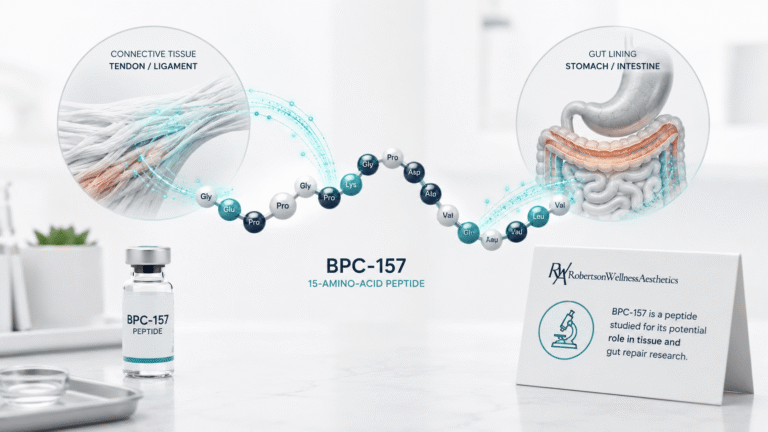
 Peptides are short chains of amino acids that act as biological messengers. They tell cells and tissues what to do, from regulating appetite to influencing how the body stores or burns fat. Because peptides occur naturally and act on specific receptors, researchers see them as a potentially more targeted approach to metabolic conditions than older, broader weight-loss drugs.
In weight management research, several mechanisms are being studied:
Peptides are short chains of amino acids that act as biological messengers. They tell cells and tissues what to do, from regulating appetite to influencing how the body stores or burns fat. Because peptides occur naturally and act on specific receptors, researchers see them as a potentially more targeted approach to metabolic conditions than older, broader weight-loss drugs.
In weight management research, several mechanisms are being studied:
- Appetite signaling: Some peptides interact with receptors in the brain and gut that help regulate hunger and satiety.
- Insulin sensitivity and blood sugar: Others may support how the body responds to insulin, which is closely tied to weight, energy, and metabolic health.
- Lipolysis (fat breakdown): Certain peptides are being investigated for their potential role in helping the body access stored fat for energy.
- Mitochondrial function: Emerging research is exploring whether peptides derived from mitochondrial DNA may support cellular energy production and metabolic flexibility.
Medical weight management options, including GLP-1 medications, are prescribed only after a licensed physician evaluates whether they are appropriate, may not be suitable for everyone, and can carry side effects. Men can learn how this is handled through our men’s medical weight management program.
FDA-approved peptide medications for weight management
Currently, the two peptide-based medications most widely used in physician-supervised weight management programs are semaglutide and tirzepatide. Both belong to a class called GLP-1 receptor agonists (tirzepatide also acts on a second receptor, GIP). These medications are FDA-approved for specific indications, including chronic weight management in adults who meet defined clinical criteria. Large-scale trials have shown meaningful average weight reduction over 12 to 18 months in study participants who also followed lifestyle changes. They are prescribed by a licensed physician after a thorough medical evaluation that includes a personal and family medical history, lab work, and assessment of contraindications. Common side effects reported in clinical trials include nausea, gastrointestinal discomfort, and reduced appetite. These medications are not appropriate for everyone. They are contraindicated in patients with a personal or family history of medullary thyroid carcinoma or multiple endocrine neoplasia syndrome type 2 (MEN 2), and they are not used during pregnancy or nursing. If you are exploring GLP-1 therapy as part of a structured medical program, you can learn more about how our team approaches it on our weight management program page.Investigational peptides being studied for fat loss and metabolic health
 Beyond the FDA-approved options, several peptides are being researched for their potential role in metabolic support. These are considered investigational, meaning they have not been FDA-approved for weight loss in the United States. Any clinical use occurs under the supervision of a licensed physician who has evaluated whether the therapy is appropriate for that specific patient.
AOD-9604
AOD-9604 is a synthetic fragment of human growth hormone. Unlike full growth hormone, it was designed to isolate the segment of the molecule that early research linked to fat metabolism, without the broader growth-promoting effects. Research has explored its potential role in supporting lipolysis (the breakdown of stored fat for energy) without affecting blood sugar or producing the growth-related effects of full HGH. It is not currently FDA-approved for weight loss in the United States. Learn more about AOD-9604.Tesofensine
Tesofensine is a serotonin-noradrenaline-dopamine reuptake inhibitor that has been studied in clinical trials for obesity. Research has examined its effects on appetite regulation and energy expenditure. It is approved for obesity treatment in some countries but is not FDA-approved in the United States. Learn more about tesofensine.MOTS-c
MOTS-c is a mitochondrial-derived peptide that has attracted significant research interest in the longevity and metabolic health communities. Studies have examined its potential influence on insulin sensitivity, exercise capacity, and metabolic flexibility. Research on humans is still limited, and MOTS-c remains investigational.5-amino-1MQ
5-amino-1MQ is a small molecule (technically not a peptide, though it is often grouped with peptide therapies in clinical settings) that researchers are studying for its effects on a metabolic enzyme called NNMT. Early-stage research has explored its potential role in fat metabolism and muscle function. It is investigational.SLU-PP-332
SLU-PP-332 is an experimental compound being studied for its effects on a class of receptors called ERRs, which are involved in cellular energy metabolism. It is in early research stages and is not approved for clinical use as a weight-loss therapy.Who is being evaluated for peptide-supported weight management?
Peptide-based weight management is not appropriate for everyone, and it is never a standalone solution. In a physician-supervised program, candidacy is typically assessed based on several factors:- Body mass index and metabolic markers
- Medical history, including thyroid, cardiovascular, and gastrointestinal conditions
- Personal and family history of certain cancers, particularly medullary thyroid carcinoma
- Current medications and possible interactions
- Pregnancy, nursing, or plans for pregnancy
- Lifestyle factors, including diet, activity, sleep, and stressPhysician-supervised5.0 on Yelp · 35+ reviews
Exploring peptides for weight loss?
GLP-1 medications like semaglutide and tirzepatide are prescribed and monitored by our Beverly Hills physicians as part of a supervised weight program.
Semaglutide$800 / monthTirzepatide$925 / monthGLP-1 medications are prescribed by a licensed physician after evaluation. These statements have not been evaluated by the FDA and are not intended to diagnose, treat, cure or prevent any disease.
- Previous experience with weight management approaches
What to expect during a physician-supervised peptide program
 A medically supervised peptide program for weight management typically begins with a comprehensive consultation. This includes a detailed health history, physical assessment, and laboratory testing to evaluate metabolic markers such as fasting glucose, HbA1c, lipid panel, thyroid function, and other relevant labs.
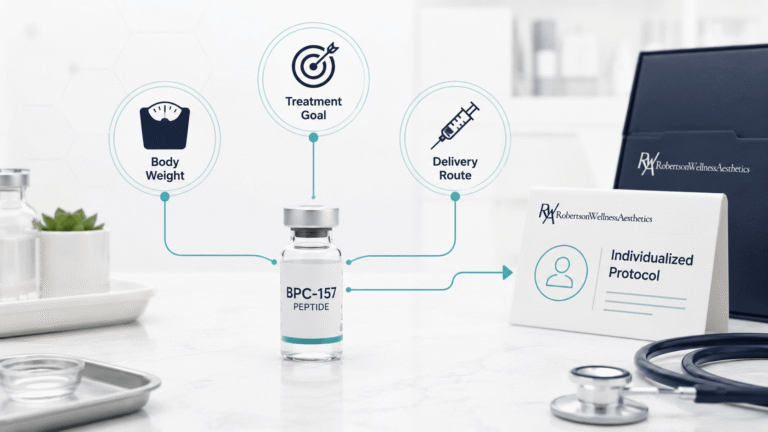
If peptide therapy is determined to be appropriate, the physician develops an individualized protocol that may include:
A medically supervised peptide program for weight management typically begins with a comprehensive consultation. This includes a detailed health history, physical assessment, and laboratory testing to evaluate metabolic markers such as fasting glucose, HbA1c, lipid panel, thyroid function, and other relevant labs.
If peptide therapy is determined to be appropriate, the physician develops an individualized protocol that may include:
- The specific peptide or medication and its dosing schedule
- Administration method (typically subcutaneous injection)
- A nutrition and movement plan designed to support healthy, sustainable progress
- Follow-up visits to monitor progress, side effects, and lab markers
- Adjustments to the protocol based on clinical response
Potential side effects and contraindications
All medications and investigational therapies carry potential side effects. With peptides used in weight management programs, commonly reported effects in research include:- Nausea, particularly in the early weeks of GLP-1 therapy
- Reduced appetite and changes in eating patterns
- Gastrointestinal effects, including constipation or reflux
- Injection site reactions
- Fatigue or mild headache during dose adjustment
Peptide therapy for weight management in Beverly Hills
At Robertson Wellness and Aesthetics in Beverly Hills, peptide-based therapies are part of a comprehensive, physician-supervised approach to metabolic health. Every protocol begins with a detailed medical evaluation and is tailored to the individual patient. The goal is sustainable progress supported by nutrition, movement, sleep, and ongoing clinical oversight, not a one-size-fits-all prescription. For patients who prefer privacy or have demanding schedules, our concierge service brings physician-supervised care to a residence, hotel, or office in the greater Los Angeles area.Frequently asked questions
Do peptides help you lose weight?
Research suggests that certain peptides may support weight management when used as part of a physician-supervised program that also includes nutrition and lifestyle changes. FDA-approved GLP-1 medications such as semaglutide and tirzepatide have the strongest clinical evidence. Other peptides remain investigational, and individual results vary. Peptides are not a substitute for sustainable lifestyle change.Are peptides safe for weight loss?
Safety depends on the specific peptide, the patient’s medical history, and whether use is supervised by a qualified physician. FDA-approved GLP-1 medications have extensive safety data from large clinical trials, though they carry potential side effects and contraindications. Investigational peptides have less long-term safety data, which is why supervised clinical use is important.How long does peptide therapy for weight loss take to work?
Timelines vary by peptide and by individual. With FDA-approved GLP-1 medications, clinical trials have observed progressive weight reduction over 12 to 18 months in study populations. With investigational peptides, less long-term human data is available. A physician-supervised program includes regular check-ins to assess response and adjust the protocol.What is the difference between FDA-approved and investigational peptides?
FDA-approved peptides have completed the multi-phase clinical trial process required to demonstrate safety and effectiveness for a specific indication. They are manufactured to FDA standards and labeled for defined uses. Investigational peptides have not yet completed this process for the indication in question. They may be used clinically in some circumstances under physician supervision, but they are not approved as standard treatments.How much does peptide therapy for weight management cost?
Cost varies by peptide, dose, length of program, and level of clinical support. FDA-approved GLP-1 medications may be partially covered by insurance for qualifying patients. Investigational peptides are generally not covered by insurance. A consultation is the first step to understanding what a full program would involve for your situation.Can I combine peptide therapy with other wellness treatments?
In many cases, yes, though combinations are determined on an individual basis. Some patients combine peptide therapy with IV nutrient support, hormone optimization, or other modalities. Your physician evaluates potential interactions and designs a coordinated plan.Important medical disclaimer
This article is for educational purposes only and is not intended as medical advice. The information provided does not establish a physician-patient relationship and is not a substitute for consultation with a qualified healthcare professional. These statements have not been evaluated by the U.S. Food and Drug Administration. Peptide therapy is not intended to diagnose, treat, cure, or prevent any disease. Individual results vary and are not guaranteed. Some peptides discussed in this article are not FDA-approved for the uses described and are considered investigational. Where peptide therapies are referenced, they are administered under the supervision of a licensed physician after individual medical evaluation. Peptide therapy may not be appropriate for everyone, including individuals who are pregnant, nursing, or have certain pre-existing conditions. Robertson Wellness and Aesthetics provides physician-supervised peptide therapy in Beverly Hills, California. All protocols are individualized based on medical history, evaluation, and clinical judgment. To determine whether peptide therapy may be appropriate for you, please schedule a consultation.Start a medically supervised weight program
Talk to a physician about whether a GLP-1 program fits your goals and health history.
GLP-1 medications are prescribed by a licensed physician after evaluation. These statements have not been evaluated by the FDA and are not intended to diagnose, treat, cure or prevent any disease.