


If you have been told your testosterone is low, you may be weighing two very different paths: traditional testosterone replacement therapy (TRT) or enclomiphene, an oral option that works with your body’s own hormone signaling. They can both raise testosterone, but they do so in opposite ways, and the right choice often comes down to one question – do you want to preserve fertility? Here is how the two compare, in plain terms, so you can have an informed conversation with your provider.
What is TRT and how does it work
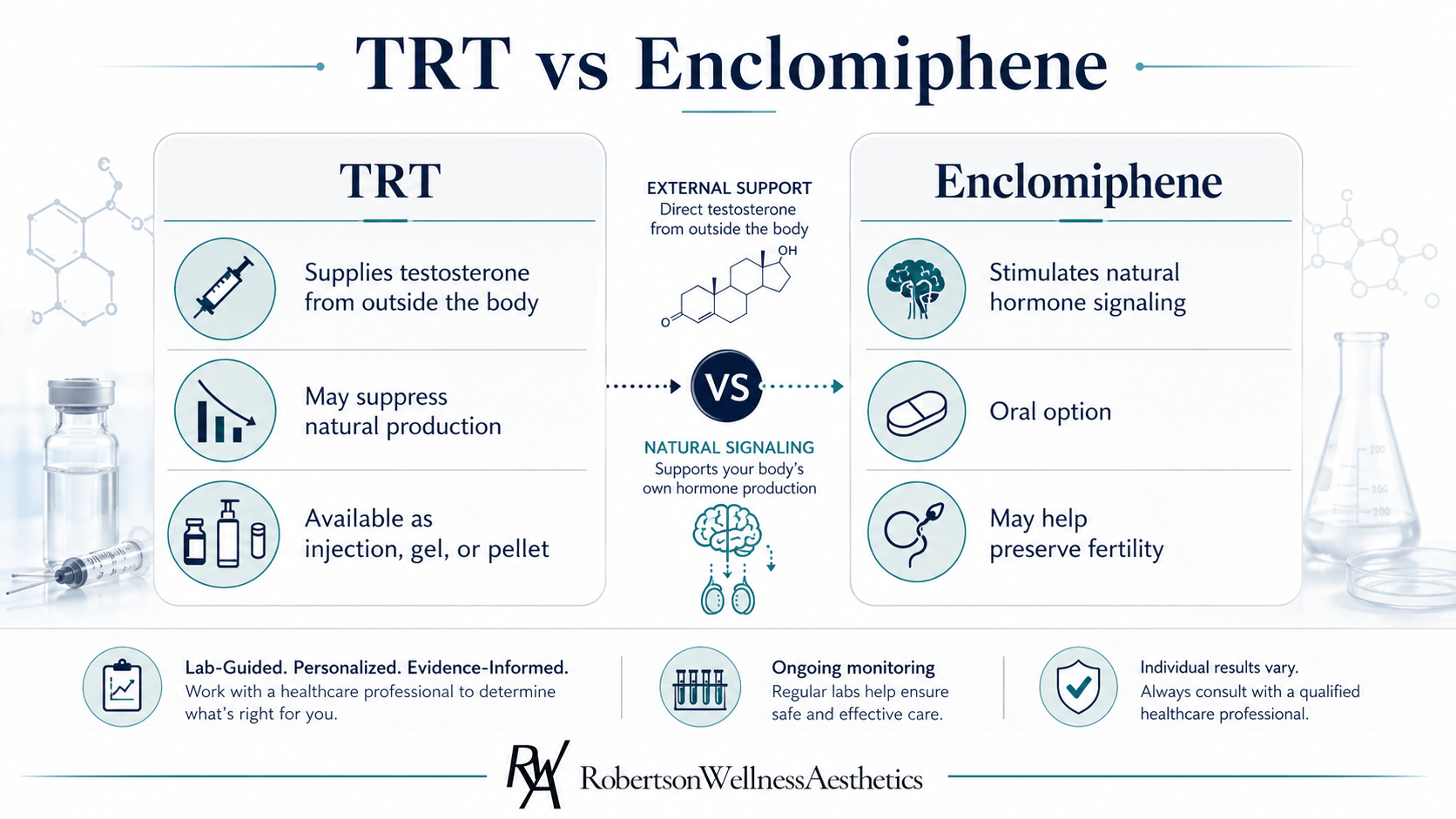
Testosterone replacement therapy supplies testosterone from the outside, usually as an injection, gel, or pellet, to bring low levels back into a healthy range. It is an established treatment for men diagnosed with hypogonadism, meaning men who have both symptoms and consistently low blood testosterone confirmed on more than one morning test (Endocrine Society Clinical Practice Guideline). Because the body senses there is enough testosterone already present, it tends to dial down its own production while you are on therapy.
What is enclomiphene and how does it work
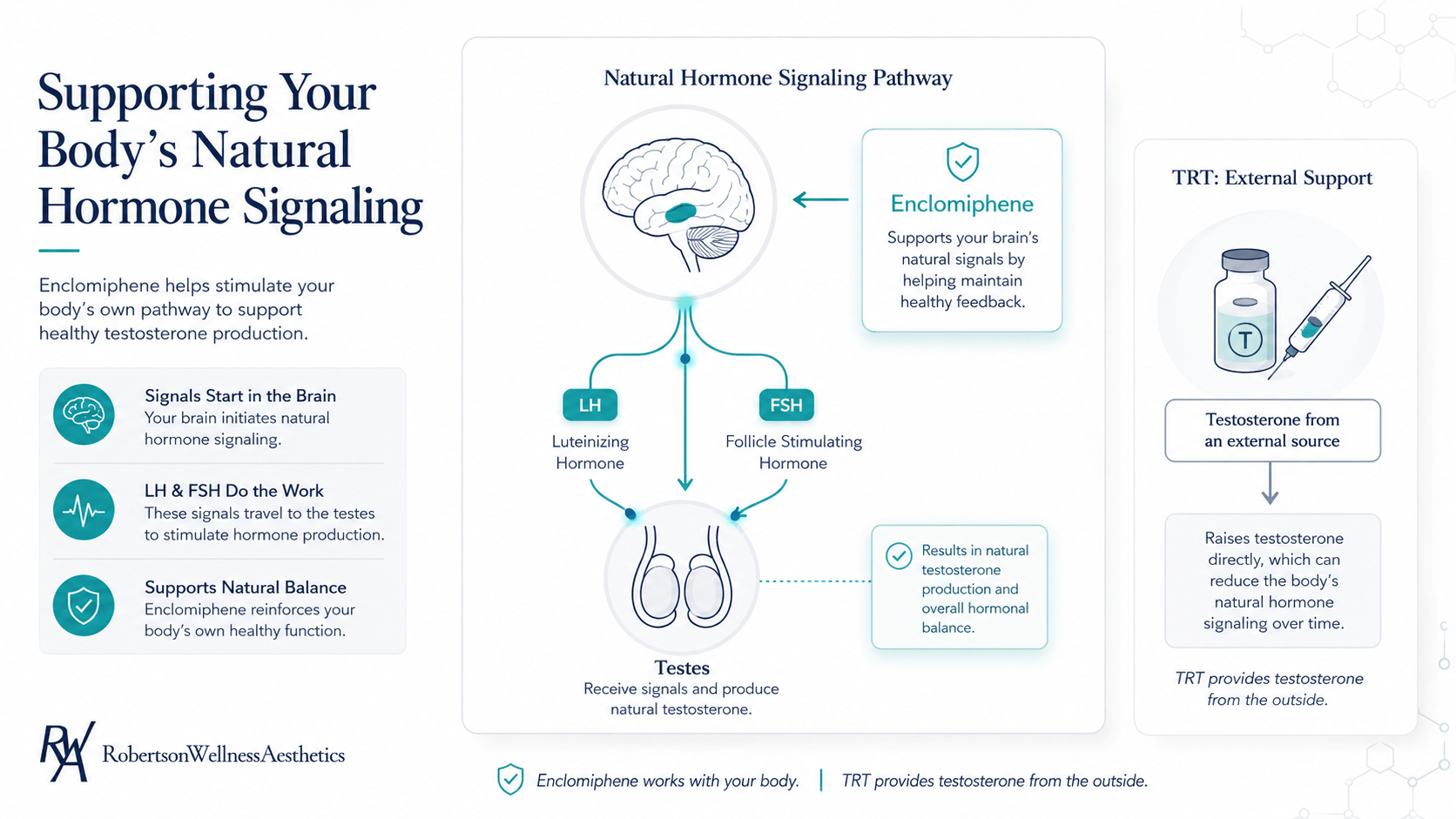
Enclomiphene takes a different route. It is a selective estrogen receptor modulator (SERM) and the trans-isomer of clomiphene, a medication that has been used off-label in men for decades. Rather than adding testosterone directly, enclomiphene signals the brain to release more luteinizing hormone (LH) and follicle-stimulating hormone (FSH), which prompts the testes to make more of their own testosterone. Research in men with secondary hypogonadism has shown it can raise testosterone into a normal range while preserving sperm production, unlike topical testosterone (Wiehle et al., randomized phase II trial).
One important point for honesty and safety: enclomiphene is not FDA-approved for treating low testosterone in men, and clomiphene is used off-label for this purpose. It is being studied for male hypogonadism, and a provider may consider it as an off-label option in the right candidate (Rodriguez et al., review). FDA-approved testosterone products, by contrast, are indicated for classical hypogonadism.
TRT vs enclomiphene: key differences
| Feature | TRT (testosterone replacement) | Enclomiphene |
|---|---|---|
| How it raises testosterone | Supplies testosterone from outside the body | Stimulates the body to make more of its own |
| Effect on the body’s own production | Tends to suppress natural production while in use | Works through and maintains natural signaling |
| Effect on sperm and fertility | Can reduce sperm production | May preserve sperm production |
| Typical form | Injection, gel, or pellet | Oral capsule |
| FDA status for low T in men | FDA-approved for hypogonadism | Not FDA-approved; used off-label |
| Often considered for | Men not planning near-term fertility | Men who want to preserve fertility |
Fertility: the biggest deciding factor
For many men, fertility is what tips the decision. Because TRT signals the body that testosterone levels are sufficient, it can suppress the hormonal axis that drives sperm production, and this effect is a recognized consideration in treatment guidelines. Enclomiphene takes the opposite approach by raising LH and FSH, which is why studies suggest it can support testosterone while maintaining sperm counts. For men who want to keep their options open, some providers also use HCG alongside or instead of testosterone to help preserve testicular function. If you may want children in the future, this is worth raising early, before starting any therapy.
Who each option may suit
There is no single “better” choice – only the option that fits your biology, your goals, and your timeline. In general terms:
- TRT may suit men with confirmed low testosterone who are not planning to have children in the near future and who want a well-established, FDA-approved approach.
- Enclomiphene may suit men with secondary hypogonadism who want to raise testosterone while preserving fertility, or who prefer an oral option, understanding that its use for this purpose is off-label.
Your provider can also discuss how these fit alongside other parts of a men’s health plan, including hormone optimization and supportive peptide therapies where appropriate.
Side effects and considerations
Both options require monitoring and are not right for everyone. TRT can raise red blood cell counts and requires regular checks of hematocrit, prostate-specific antigen (PSA), and estradiol, and it is generally avoided in men with certain prostate or breast cancers, untreated severe sleep apnea, or uncontrolled heart failure. Enclomiphene, in clinical trials, has been generally well tolerated, with reported effects in a minority of participants such as mild nausea or visual and mood changes. Because individual risks differ, a provider will review your full history and labs before recommending either path.
What to expect once you start
Neither option is set-and-forget. Both are guided by follow-up blood work so your provider can confirm the treatment is doing what it should. With TRT, your provider typically rechecks testosterone along with hematocrit, prostate-specific antigen (PSA), and estradiol, and symptom changes such as energy, mood, and libido may develop over a few weeks to a few months. With enclomiphene, hormone markers including LH, FSH, testosterone, and estradiol are usually rechecked after several weeks to confirm the medication is working and to fine-tune your dose. In both cases the plan is adjusted to how you actually respond rather than a fixed template, which is part of why ongoing monitoring matters as much as the starting choice.
TRT or enclomiphene – which is right for you?
They work differently. Our Beverly Hills physicians review your labs and goals, then recommend the right path – including fertility-sparing options.
TRT and enclomiphene are prescribed by a licensed physician after evaluation. These statements have not been evaluated by the FDA and are not intended to diagnose, treat, cure or prevent any disease.
Cost and convenience
Beyond the biology, day-to-day practicality often shapes the decision. Enclomiphene is taken as an oral capsule, which some men find simpler than injections. TRT can be self-administered at home or given as a weekly in-office injection, depending on what you prefer and what your provider recommends. Because the medication and the way it is delivered both affect price, it helps to compare the full picture rather than a single number. Our breakdown of how much TRT costs in Beverly Hills walks through the plans and what is included, and you can see the current options on our men’s health and TRT page. Insurance coverage varies by plan and diagnosis, and many men choose to pay out of pocket for the privacy and scheduling of a concierge-level program.
Can you switch or combine these options?
Hormone plans are not always permanent. Some men begin on one approach and adjust over time, for example shifting toward a fertility-sparing option when family planning becomes a priority, or using HCG to help support natural production around a period on testosterone. These transitions are individualized, because stopping, switching, or layering therapies changes how your body’s own hormone signaling responds, and that response is monitored with labs. The key point is that any change should be planned with your provider rather than attempted on your own, so your levels and symptoms are tracked safely through the transition.
Every plan starts with a comprehensive consultation and a full hormone blood panel, so the decision is based on your data rather than guesswork. From there, your provider builds a personalized plan and a monitoring schedule to keep treatment safe over time. To see how costs compare across options, read our breakdown of how much TRT costs in Beverly Hills, or explore the full guide to TRT in Beverly Hills.
Frequently asked questions
Is enclomiphene better than TRT?
Neither is universally better. Enclomiphene may be preferred when preserving fertility is a priority, while TRT is a well-established, FDA-approved option for men who are not planning near-term fertility. The right choice depends on your labs, symptoms, and goals.
Does TRT make you infertile?
TRT can suppress sperm production while in use, which is why fertility plans should be discussed before starting. Effects often improve after stopping, and options such as HCG or enclomiphene may help men who want to preserve fertility. Talk with your provider about your specific situation.
Is enclomiphene FDA-approved?
No. Enclomiphene is not FDA-approved for treating low testosterone in men and is used off-label. It is being studied for male hypogonadism. FDA-approved testosterone products are indicated for classical hypogonadism.
Can you take enclomiphene and TRT together?
Some protocols combine therapies under close supervision, but this is an individualized medical decision. Only a licensed provider can determine whether a combination is appropriate and safe for you.
How fast does each option work?
Both can change hormone levels within weeks, but symptom response varies between individuals. Your provider will recheck your labs to confirm you are responding and adjust your plan as needed.
How long does enclomiphene take to work?
Hormone levels often shift within a few weeks, and providers typically recheck labs after several weeks to confirm the medication is raising testosterone, LH, and FSH as expected. How quickly you notice symptom changes varies from person to person.
Can I switch from TRT to enclomiphene later?
Sometimes, but it is an individualized medical decision. Switching changes how your body’s natural hormone production responds, so it should be planned and monitored with your provider, often with labs and sometimes with supportive options such as HCG during the transition.
Medically reviewed by Biana Borchenko, FNP-BC – Family Nurse Practitioner and A4M member with more than 20 years of clinical experience.
These statements have not been evaluated by the Food and Drug Administration. This content is for educational purposes only and is not intended to diagnose, treat, cure, or prevent any disease. Enclomiphene is not FDA-approved for use in men and any off-label use is at the discretion of a licensed physician. Treatment is prescribed only after medical evaluation, is not appropriate for everyone, and carries potential risks and side effects that your provider will review with you.
Get a physician recommendation
Talk to a physician about whether TRT or enclomiphene fits your goals and health history.
TRT and enclomiphene are prescribed by a licensed physician after evaluation. These statements have not been evaluated by the FDA and are not intended to diagnose, treat, cure or prevent any disease.


