
A long evening out, an important celebration, a weekend that ran longer than planned – the next morning often arrives with a pounding head, dry mouth, fatigue, and a sensitive stomach. For many health-conscious adults, the question is no longer simply “how do I get through the day,” but “what is actually happening in my body, and what can genuinely help it recover?”
Hangover IV therapy has become one of the more talked-about wellness options in this space. It sits at the intersection of hydration science, nutrient support, and modern wellness medicine. Unlike coffee or over-the-counter pain relievers, which address isolated symptoms, an IV infusion is designed to support multiple recovery pathways at once by restoring fluids, electrolytes, and key water-soluble nutrients directly into circulation.
This guide explains what the therapy is, how it works biologically, what current research suggests, and what to consider before scheduling a session – written for readers who value evidence over marketing.
What is hangover IV therapy?
Hangover IV therapy is an intravenous infusion designed to support the body after alcohol consumption. Instead of relying on oral fluids and supplements (which must pass through the digestive system and compete with an already-stressed liver), the formulation is delivered directly into the bloodstream through a small catheter placed in a vein.
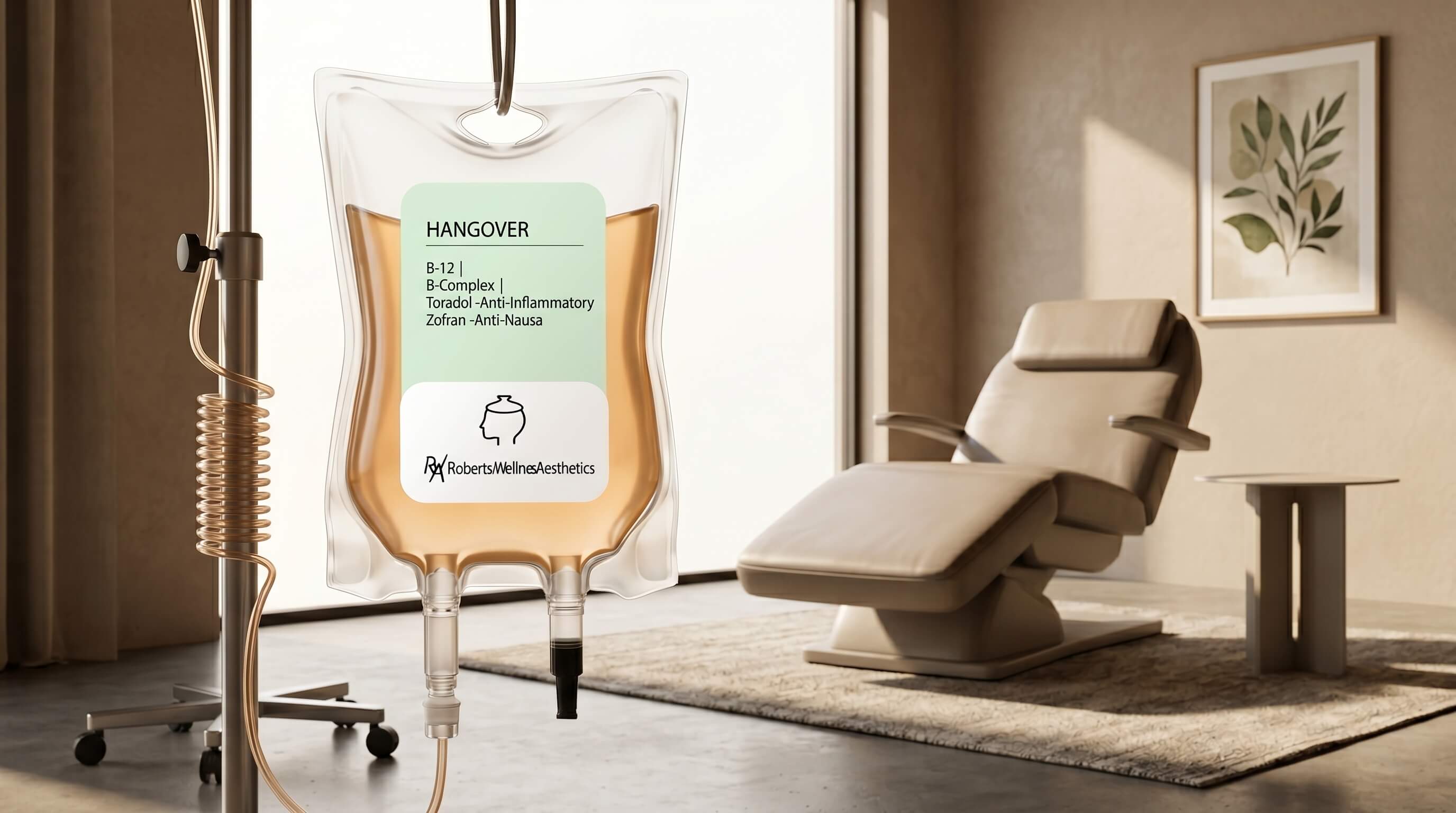
A typical hangover IV blend may include:
| Component | Role in the body |
|---|---|
| Sterile saline or lactated Ringer’s solution | Supports rehydration and electrolyte balance |
| B-complex vitamins (including B1, B6, B12) | Play a role in energy metabolism and nervous system function |
| Vitamin C | Contributes to antioxidant activity and cellular health |
| Magnesium | Is involved in muscle function and relaxation |
| Anti-nausea or anti-inflammatory medications (when clinically appropriate) | May help address symptoms such as queasiness or headache |
Because the nutrients bypass the gut, absorption is not limited by stomach irritation, delayed gastric emptying, or the reduced appetite that often follows a night of drinking. This is one of the reasons some patients report feeling refreshed more quickly after an IV hydration therapy session than after oral hydration alone.
It is worth noting that IV therapy formulations for wellness purposes are often considered off-label uses of approved components, and specific combinations may be considered investigational in the wellness context. They are not FDA-approved treatments for hangover as a medical condition. The infusion is intended to provide hydration and nutrient support – not to reverse the physiological effects of alcohol that have already occurred.
How hangover IV therapy differs from oral recovery strategies
Oral rehydration, electrolyte drinks, and vitamin supplements can all play a helpful role in general recovery. However, oral absorption is inherently slower and more variable. A stomach that is irritated by alcohol may not absorb fluids efficiently, and nausea can make drinking large volumes difficult. IV delivery sidesteps these limitations, which is part of what draws patients to the modality when symptoms are more pronounced.
How it works in the body
To understand why hangover IV therapy is being studied as a recovery tool, it helps to look at what alcohol actually does to the body.
The biology of a hangover
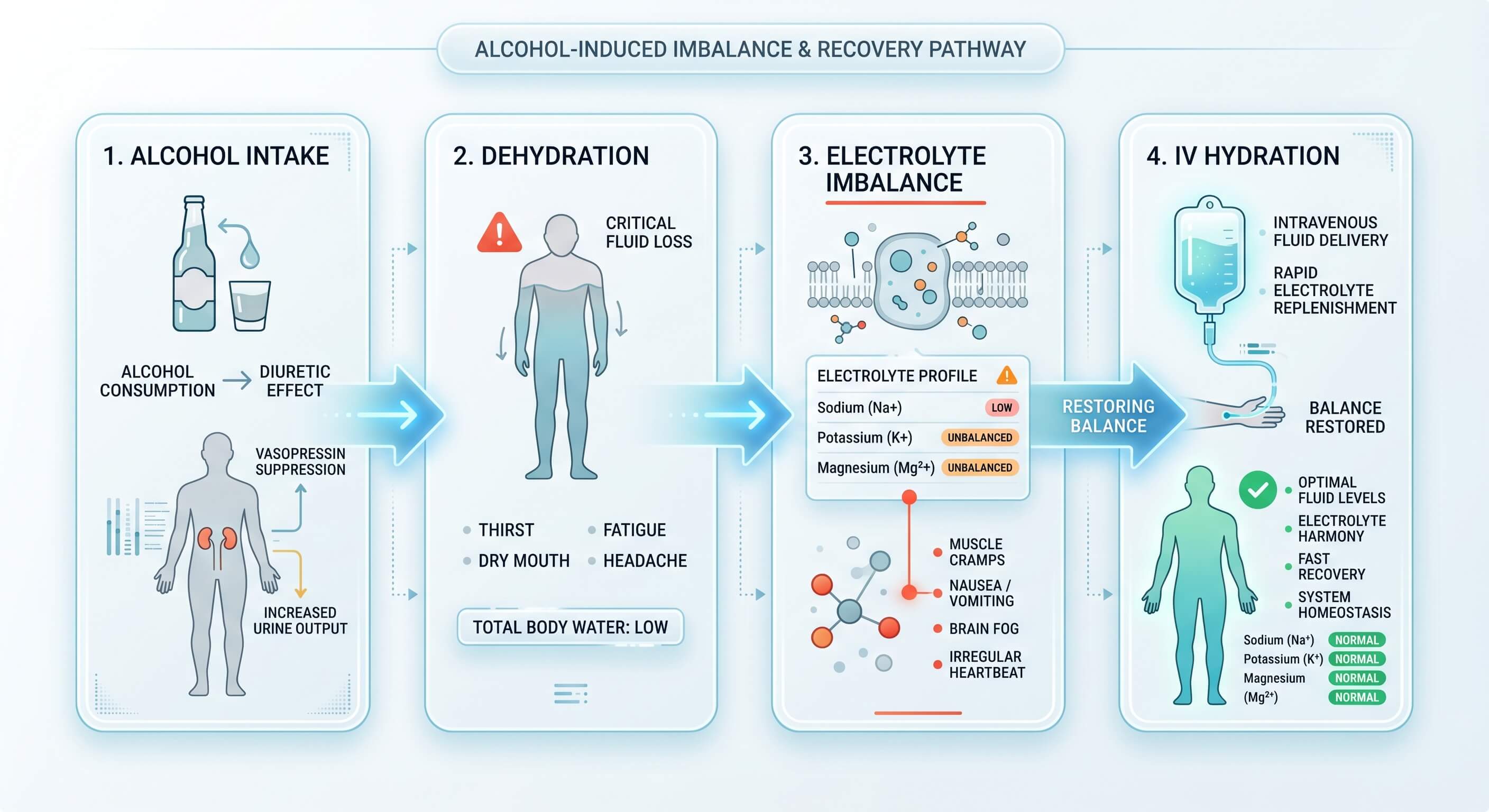
Alcohol (ethanol) affects the body through several overlapping mechanisms:
- It acts as a diuretic by suppressing vasopressin (antidiuretic hormone), which increases urine output and contributes to fluid loss.
- It is metabolized in the liver to acetaldehyde, a reactive compound that is believed to play a role in the inflammation and oxidative stress associated with hangover symptoms.
- It can disrupt electrolyte balance, blood sugar regulation, and sleep architecture.
- It depletes certain water-soluble nutrients, particularly B vitamins involved in alcohol metabolism.
- It may irritate the gastrointestinal lining, which contributes to nausea and reduced oral intake.
The result is a cluster of symptoms – headache, fatigue, nausea, brain fog, dry mouth, and sensitivity to light or sound – that reflects a body working hard to restore equilibrium. Hangover intensity varies from person to person based on genetics, hydration status, sleep quality, and individual differences in how the liver processes alcohol.
Where IV therapy fits in
Intravenous hydration bypasses the gastrointestinal tract entirely. Fluids, electrolytes, and nutrients reach systemic circulation within minutes rather than over hours. This direct delivery is what gives IV therapy its speed advantage, and it is why hospitals have used IV fluids for decades in cases of severe dehydration and post-surgical recovery.
In a wellness context, the same principle is applied at a smaller scale. Rehydration supports vascular volume. Electrolytes such as magnesium and potassium are involved in nerve signaling and muscle function. B vitamins play a role in the enzymatic pathways that metabolize alcohol and its byproducts. Antioxidants like vitamin C, and in some protocols glutathione, are being studied for their role in supporting the body’s response to oxidative stress.
The therapy is not a treatment that “cures” a hangover – no therapy can reverse the effects of alcohol already metabolized. It is better understood as a structured way to support the body’s natural recovery processes while symptoms are being experienced.
Potential benefits of hangover IV therapy
Clinical data on IV therapy specifically for hangover recovery is still emerging, and most available information comes from small studies, clinician observations, and patient-reported outcomes. With that context in mind, the following benefits are commonly discussed in current wellness literature:
Hydration restoration
Alcohol-induced fluid loss is one of the most well-understood contributors to hangover symptoms. IV fluids may support rapid restoration of hydration status, which some patients report helps ease headache intensity and general fatigue. The infusion is delivered at a controlled rate, restoring hydration steadily without the bloating that sometimes accompanies large volumes of oral fluid intake.
Electrolyte rebalancing
Magnesium, potassium, and sodium are lost through increased urination during and after drinking. Replenishing these minerals intravenously may support normal muscle and nerve function. Some patients report reduced lightheadedness and muscle discomfort afterward.
Nutrient replenishment
B vitamins, particularly B1 (thiamine), are involved in the metabolic pathways that process alcohol. Emerging research suggests that restoring these nutrients may support the body’s return to its baseline metabolic state. A related option, the Myers cocktail IV, is a vitamin-rich infusion often referenced in the wellness space for general nutrient support and is sometimes chosen by patients seeking broader metabolic support rather than hangover-specific relief.
Antioxidant and metabolic support
Ingredients such as vitamin C – and in some protocols, glutathione – are being studied for their role in cellular health and the body’s response to oxidative stress. This is an area of active research, and definitive conclusions have not been established.
Symptomatic relief
When clinically appropriate, a provider may include anti-nausea or anti-inflammatory medications in the infusion. These are prescribed on an individual basis based on a clinician’s assessment and are not part of every protocol. Not every patient requires or is a candidate for these additions.
Mental clarity and energy support
Many patients report that once hydration, electrolytes, and nutrients are restored, they notice a subjective improvement in mental clarity and energy. This is consistent with the understanding that dehydration and electrolyte imbalance can themselves contribute to cognitive sluggishness. Results vary between individuals.
| Commonly discussed benefit | What it may support | Evidence status |
|---|---|---|
| Rapid rehydration | Fluid volume, headache intensity | Well-established for IV fluids in clinical settings |
| Electrolyte balance | Muscle function, dizziness | Well-established clinically |
| B-vitamin repletion | Energy metabolism | Emerging, patient-reported |
| Antioxidant support | Cellular response to oxidative stress | Being studied |
| Anti-nausea or pain relief (when indicated) | Symptom management | Based on individual clinical assessment |
| Mental clarity | Cognitive sluggishness from dehydration | Patient-reported, variable |
Individual results vary, and the degree of benefit depends on hydration status, overall health, the formulation used, and how the body has metabolized alcohol up to that point. Sleep, rest, balanced food intake, and time remain central to any recovery process – IV therapy is one supportive tool, not a replacement for these fundamentals.
Rough morning? Recover faster with an IV
Our hangover IV delivers fluids, electrolytes, B-vitamins and anti-nausea support under physician supervision at our Beverly Hills clinic.
IV therapy is provided under medical supervision. These statements have not been evaluated by the FDA and are not intended to diagnose, treat, cure or prevent any disease.
Who may consider this therapy?

Hangover IV therapy may be of interest to adults who experience difficult recovery after social drinking and who are looking for a structured hydration and nutrient-support protocol. It is most often considered by people who:
- Have an important day planned and want focused hydration and nutrient support
- Experience significant dehydration symptoms after alcohol consumption
- Prefer direct intravenous delivery over extended oral hydration
- Travel frequently and want a consistent recovery option when away from home routines
- Are interested in supporting their overall wellness and cellular health
- Appreciate a clinical setting and professional supervision during the process
Hangover IV therapy is not appropriate for everyone. It is generally not recommended for individuals with certain cardiovascular, kidney, or metabolic conditions without specific clearance from their personal physician. Pregnant or nursing patients, people with a history of severe allergic reactions to IV components, and individuals with certain electrolyte disorders should also consult their physician before proceeding.
It is also not a substitute for medical evaluation if symptoms are severe, unusual, or persistent. Severe symptoms after drinking – such as repeated vomiting, confusion, chest pain, or loss of consciousness – can occasionally reflect more serious conditions that require medical attention.
This therapy does not treat or cure alcohol use disorder. If drinking patterns feel difficult to manage, a conversation with a qualified healthcare professional is the appropriate first step.
Hangover IV therapy prices
At RWACenter, the Hangover IV infusion is offered at a flat rate of $199 per session, which includes the full protocol: hydration fluids, electrolytes, a B-complex blend (including B12), and when clinically appropriate, anti-inflammatory and anti-nausea medications administered under licensed medical supervision.
For patients who anticipate using IV therapy more than occasionally, the RWACenter IV Membership offers a more cost-effective structure at $149 per month. The membership includes one IV infusion per month from a selection of the most popular protocols and 20% off any additional IVs, injections, or add-ons. Members can choose from a rotating menu that includes the Hangover IV, All-Inclusive IV (a $299 value), High Dose Vitamin C, Energy Boost IV, Immune Boost, Myers Cocktail, Migraine, Stomach Bug, and Beauty infusions. New members also receive a complimentary Vitamin B12 shot and Vitamin D shot (a $75 value) upon enrollment.
| Option | Price | What’s included |
|---|---|---|
| Single Hangover IV session | $199 | Full hydration protocol, B-complex, electrolytes, supportive medications when appropriate |
| IV Membership (monthly) | $149/month | 1 IV per month from membership menu + 20% off additional IVs, injections, and add-ons + free B12 and Vitamin D shots on enrollment |
The membership requires a three-month minimum commitment, and benefits expire annually. Certain advanced services – including NAD+ IV treatments, exosomes, weight management, ozone/UBI therapy, and peptide therapy – are not included in the membership and are billed separately. Pricing is current at the time of publication and may be updated periodically; the most accurate and up-to-date figures can be confirmed directly with our team at the time of booking.
What to expect during treatment
A well-run IV session should feel calm, clinical, and unhurried. At RWACenter, the general flow looks like this:
- Intake and review. A clinician reviews medical history, current symptoms, medications, and any relevant health conditions. This is where the appropriateness of the session is confirmed and the formulation is individualized when possible. Questions from the patient are welcome during this stage.
- Preparation. The patient is seated in a comfortable chair. The clinician identifies a suitable vein (usually in the arm or hand) and places a small catheter using sterile technique. Many patients describe the placement as a brief pinch.
- Infusion. The prepared IV bag is connected, and fluids begin to flow at a controlled rate. A typical hangover session takes approximately 45-60 minutes.
- Monitoring. Vital signs and comfort are checked throughout. Patients can read, rest, use their phone, or simply relax during the session.
- Completion. The catheter is removed, a small bandage is applied, and aftercare guidance is provided. Patients are generally able to resume their normal activities shortly afterward.
Many patients report feeling noticeably more comfortable by the end of the session, though individual response varies and some people feel the effects gradually over the hours that follow. Light food and continued oral hydration after the session are often recommended as part of the overall recovery approach.
Preparing for your session
Simple steps can make the session smoother. Arriving well-rested, wearing comfortable clothing with easy sleeve access, eating a light meal beforehand if tolerated, and letting the clinician know about any medications or supplements taken recently all contribute to a more comfortable experience.
Safety considerations and the importance of medical supervision
IV therapy is a medical procedure. When delivered in a properly credentialed setting, it has a well-established safety profile, but it is not risk-free. Choosing a qualified provider is the single most important decision a patient makes in this space.
Key safety considerations include:
| Consideration | Why it matters |
|---|---|
| Licensed medical oversight | IV therapy should be ordered and supervised by qualified healthcare professionals |
| Sterile technique | Proper sterile procedure reduces the risk of infection or infiltration |
| Individualized formulation | Ingredients should reflect the patient’s health history, not a one-size-fits-all recipe |
| Allergy and contraindication screening | Certain components are not suitable for patients with specific conditions |
| Transparent ingredient disclosure | Patients should know exactly what is being infused and why |
| Clean, professional setting | The environment should meet clinical cleanliness and privacy standards |
Possible side effects are typically mild and may include temporary bruising at the IV site, a cool sensation during the infusion, or a transient flushing feeling when certain vitamins are administered. Serious complications are uncommon in properly supervised settings but can include allergic reactions, vein irritation (phlebitis), fluid overload in patients with specific conditions, or, rarely, infection. Any provider who does not clearly discuss risks or who cannot speak to the clinical rationale for their formulation should be approached with caution.
Patients should also be cautious of settings that heavily market unusually high doses of vitamins or claims of disease-specific benefits. Responsible providers describe their offerings in terms of general wellness and hydration support, not as treatments for medical conditions.
Hangover IV therapy is not a substitute for moderation, sleep, or sound judgment around alcohol. It is a recovery-oriented wellness service intended to support – not replace – the body’s own processes. It also does not reduce blood alcohol concentration or make it safe to drive sooner after drinking.
The role of IV therapy in a broader wellness approach
For many patients, hangover IV therapy is one occasional touchpoint within a wider interest in wellness optimization, longevity, and metabolic health. Viewed this way, the infusion is less a “fix” and more a tool that fits alongside other practices – consistent hydration, nutrient-dense eating, sleep hygiene, stress management, and periodic lab work through blood testing to understand one’s baseline. Its value, when present, tends to emerge through thoughtful, consistent use under professional guidance rather than one-off visits.
Personalized care at RWACenter
At Robertson Wellness & Aesthetics Center, hangover IV therapy is delivered as part of a broader commitment to thoughtful, individualized wellness care. Every session begins with a clinical conversation, not a menu. Formulations can be adjusted within medical guidelines to reflect the patient’s health profile, goals, and sensitivities.
Patients who are drawn to regenerative and longevity-oriented care may also be interested in complementary services such as NAD+ IV therapy for cellular support, immune boost IV therapy, or energy boost IV therapy for metabolic support. Those more focused on aesthetic-oriented wellness may find the beauty IV drip a relevant addition. For patients planning ahead, the IV membership program allows routine wellness infusions to be integrated into a longer-term wellness rhythm at a predictable cost.
Our team’s approach is grounded in professionalism, clean clinical standards, and a genuine interest in how each patient feels when they leave. No guarantees are made about specific outcomes. What we offer is careful, attentive care and a clear explanation of what every infusion is designed to support.
To learn more about our full range of wellness infusions, visit our IV treatments overview, review the IV therapy FAQ, or contact our team to discuss whether a session is appropriate for you.
Important information
The information provided is for educational purposes only and is not intended as medical advice. Certain therapies discussed may be investigational and are not approved by the FDA for the diagnosis, treatment, cure, or prevention of disease. Individual results vary. Always consult with a qualified healthcare professional before beginning any new wellness protocol, particularly if you have an existing medical condition, take prescription medications, or are pregnant or nursing.
Book your hangover IV in Beverly Hills
Skip the slow recovery – our team will have you rehydrated and feeling human again, fast.
IV therapy is provided under medical supervision. These statements have not been evaluated by the FDA and are not intended to diagnose, treat, cure or prevent any disease.