


Most iron infusion side effects are mild, temporary, and manageable. The common ones — a brief metallic taste during the drip, headache, nausea, or muscle and joint aches in the day or two after — typically resolve on their own within a few days. Serious reactions such as a true allergic response are rare, which is why an iron infusion should always be given under medical supervision with continuous monitoring. Below is what to expect during treatment, the next day, and in the weeks after, plus the warning signs that warrant a call to your provider.
What is an iron infusion, and why do side effects happen?
An iron infusion (iron IV therapy) delivers medical-grade iron directly into your bloodstream through a vein, bypassing the digestive system so your body absorbs a full therapeutic dose in one or a few visits. Iron is the raw material your body uses to build hemoglobin, the protein in red blood cells that carries oxygen — so when iron is depleted, energy, focus, and stamina fall with it. According to the National Heart, Lung, and Blood Institute, iron-deficiency anemia is one of the most common nutritional deficiencies worldwide, and IV iron is a standard treatment when oral iron isn’t enough or isn’t tolerated.
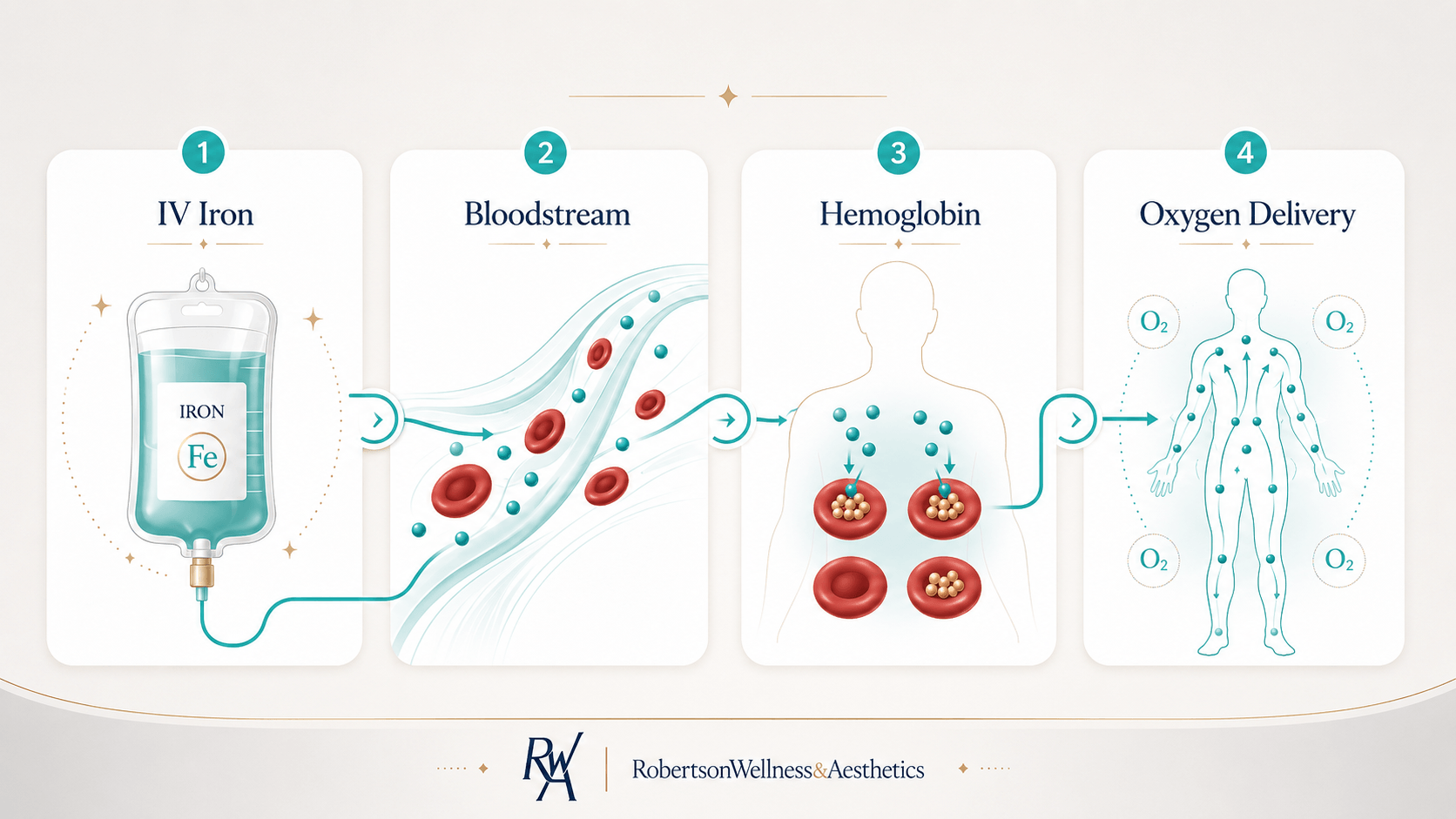
Side effects occur because iron is a reactive mineral being introduced quickly and in a concentrated form. Your body registers that surge — most often as short-lived, flu-like symptoms — while it takes the iron up and puts it to work. Understanding which effects are expected, which are merely uncomfortable, and which are genuinely urgent is the key to a smooth recovery. To learn how the treatment itself works, see our iron IV therapy overview.
Common iron infusion side effects (mild and temporary)
The majority of patients experience either no side effects or only mild ones. The most frequently reported include:
- Metallic taste — a temporary taste of metal during or shortly after the infusion, which fades on its own.
- Headache — usually mild and short-lived.
- Nausea or stomach upset — less common than with oral iron pills, but possible.
- Muscle and joint aches (myalgia and arthralgia) — often felt the next day, like a mild flu.
- Dizziness or light-headedness — typically brief.
- Flushing or a sensation of warmth — a passing feeling of heat in the face or body.
- Temporary changes at the IV site — mild soreness, redness, or bruising where the catheter was placed.
These effects reflect the body adjusting to a rapid iron load and generally settle within one to three days. As the Cleveland Clinic notes in its patient guidance on intravenous iron, most people tolerate the procedure well and return to normal activities the same day.
Iron infusion side effects the next day
It’s common to feel a little “off” the day after an infusion — a mild, flu-like combination of muscle aches, joint stiffness, headache, low-grade warmth, or fatigue. This delayed reaction is usually self-limited and eases within one to three days. Rest, hydration, and gentle movement typically help. Over-the-counter measures may be appropriate, but check with your provider first, especially if you take other medications. If next-day symptoms are severe, worsening, or accompanied by facial swelling, rash, or difficulty breathing, treat that as urgent rather than expected.
Less common and rare side effects to know about
A smaller number of patients experience effects that deserve specific mention:
- Skin staining (extravasation). If iron leaks out of the vein into surrounding tissue during the infusion, it can cause a brownish discoloration of the skin at the site. Unlike a bruise, this staining can be long-lasting or, occasionally, semi-permanent. Careful IV placement and monitoring by a trained clinician is the main way to prevent it — another reason technique and supervision matter.
- Low phosphate levels (hypophosphatemia). Certain IV iron formulations, particularly ferric carboxymaltose, can lower blood phosphate. Duke Health has highlighted this risk, which is usually mild and transient but can, with repeated dosing, contribute to fatigue or bone symptoms if unrecognized. This is one reason lab-guided dosing and follow-up testing are part of responsible care.
- Fishbane reaction. A brief episode of facial flushing and chest or back tightness that can occur during the infusion. Though alarming, it is typically self-limited, not a true allergy, and resolves when the infusion is paused — but it must be evaluated on the spot by the clinician.
- Serious hypersensitivity or allergic reaction. Genuinely rare, but the reason infusions are given where trained staff and emergency measures are available. Signs include hives, swelling of the face or throat, wheezing, or difficulty breathing, and require immediate medical attention.
Considering an iron infusion in Beverly Hills?
At Robertson Wellness and Aesthetics, every iron infusion is guided by your bloodwork and deliveredunder physician supervision with continuous monitoring — the safeguards that keep side effectsmild and rare reactions caught early. In-clinic or concierge, at your home, hotel, or office.
*Promotional pricing; ask about current specials. These statements have not been evaluated by the FDA.Iron IV therapy is a medical treatment provided only after evaluation by a licensed provider, is notappropriate for everyone, and individual results vary.
How long do iron infusion side effects last?
For most people, mild side effects appear within the first 24 hours and fade within one to three days. The metallic taste is usually gone by the end of the appointment or shortly after; flu-like aches and fatigue tend to peak the next day and taper off. Skin staining from a leak is the main exception, as it can persist far longer. If any side effect lasts beyond a few days, intensifies, or feels out of proportion, contact your provider — lingering symptoms are worth a professional look rather than a wait-and-see.
What to do — and avoid — after an iron infusion
A few simple steps make recovery smoother:
- Stay hydrated and eat normally; water and light movement help with next-day aches.
- Rest if you feel flu-like, then ease back into activity as you feel able. Most people resume normal routines the same day.
- Don’t double up on oral iron supplements at the same time unless your clinician specifically advises it.
- Watch the IV site for spreading redness, swelling, or discoloration and report it.
- Seek help immediately for any rash, facial or throat swelling, wheezing, or difficulty breathing.
Because iron corrects the underlying deficiency rather than masking it, many people feel meaningfully better within two to four weeks as hemoglobin rises and ferritin stores rebuild. If fatigue is your main concern, an Energy Boost IV can complement iron therapy once your levels are restored, and pairing your visit with IV hydration therapy can help you feel your best in the days that follow.
Who should not get an iron infusion?
Iron IV therapy is safe for most people with confirmed iron deficiency, but it is not appropriate for everyone. It is generally avoided in people with iron-overload conditions such as hemochromatosis, those with a history of serious reactions to IV iron, and certain active infections, and it requires extra caution during pregnancy and in some chronic conditions. Crucially, iron infusions should be reserved for people who actually need them: giving iron to someone who isn’t deficient carries risk without benefit. That is why the process starts with testing, not assumption. At Robertson Wellness and Aesthetics, comprehensive blood testing confirms iron deficiency and rules out other causes before any infusion is recommended.
How side effects are minimized at a medical clinic
Most side effects are influenced by three things a real clinical setting controls: correct patient selection, the right formulation and dose, and the infusion rate and monitoring. In the heart of Beverly Hills, every iron infusion at Robertson Wellness and Aesthetics is guided by lab work, matched to your bloodwork, and administered by a licensed clinician who monitors you from the first drop to the last — in a private, clinical environment near Cedars-Sinai. For patients who would rather not leave home, our concierge IV services bring the same physician-supervised standard to your home, hotel, or office across Beverly Hills and Los Angeles. You can also see how iron fits alongside our other drips on the full IV infusion menu.
Medical Disclaimer
These statements have not been evaluated by the Food and Drug Administration. This article is for educational purposes only and is not intended to diagnose, treat, cure, or prevent any disease. Iron IV therapy is a medical treatment that must be prescribed and supervised by a licensed healthcare provider following an individual evaluation and appropriate lab testing. It is not appropriate for everyone, and individual results may vary. If you experience signs of a serious reaction — such as difficulty breathing, swelling, or a spreading rash — seek medical care immediately. Always consult a qualified healthcare provider before beginning any new treatment.
Frequently asked questions
What are the most common iron infusion side effects?
The most common are mild and temporary: a metallic taste during the infusion, headache, nausea, muscle or joint aches, dizziness, flushing, and mild soreness at the IV site. Most resolve on their own within one to three days.
Is it normal to feel worse the day after an iron infusion?
Yes, a mild, flu-like feeling — muscle aches, fatigue, or low-grade warmth — the next day is a recognized and usually self-limited reaction that eases within a few days. Rest and hydration help. Severe next-day symptoms, or any swelling, rash, or trouble breathing, are not normal and should be evaluated right away.
How long do iron infusion side effects last?
Mild side effects typically appear within 24 hours and fade within one to three days. The main exception is skin staining from iron leaking at the IV site, which can last much longer. Anything that persists beyond a few days or worsens should be reported to your provider.
What should you not do after an iron infusion?
Avoid taking oral iron supplements at the same time unless your clinician advises it, don’t ignore spreading redness or swelling at the IV site, and don’t push through severe symptoms. Stay hydrated, rest if you feel achy, and report any signs of an allergic reaction immediately.
Are iron infusions safe?
For people with confirmed iron deficiency, iron infusions are considered safe and are widely used, with serious reactions being rare. Safety depends on proper patient selection, correct dosing, a controlled infusion rate, and monitoring — which is why the treatment should be done under medical supervision rather than as a casual walk-in drip.
Does an iron infusion make you tired?
Some people feel temporarily tired or flu-like in the day or two after an infusion. This is short-lived. Over the following weeks, most people experience the opposite — more energy and less fatigue — as their iron stores rebuild and oxygen delivery improves.
Talk to a physician before your infusion
If you’re weighing an iron infusion — whether to relieve fatigue, correct anemia, or because iron pills haven’t worked — the safest first step is a consultation and bloodwork, not a guess. Robertson Wellness and Aesthetics offers physician-supervised iron IV therapy in Beverly Hills, in-clinic or via concierge. Book a consultation to confirm whether an infusion is right for you and to make your treatment as comfortable as possible.


