
The phrase “medical spa” sounds like a contradiction. A spa is where you relax. A medical office is where you get treated. A medical spa, or med spa, is where those two worlds meet: clinical treatments delivered with the comfort and calm of a spa, but under licensed medical supervision. That last part is the whole point, and it is also the part that is easiest to get wrong when you are choosing where to go.
If you are exploring a Beverly Hills medical spa, this guide explains what the term actually means, how a med spa differs from a regular day spa, what you can expect to find under one roof, and how to tell a genuinely medical practice like Robertson Wellness and Aesthetics from a spa that simply borrows the look.
What a medical spa actually is
A medical spa offers treatments that go beyond what a traditional spa can legally or safely provide, because they involve medical-grade products, devices, or procedures. Think injectables, energy-based skin and body devices, IV therapy, and physician-guided wellness programs. What separates a med spa from a cosmetic clinic on one side and a day spa on the other is the combination: medical oversight plus a comfortable, non-clinical experience.
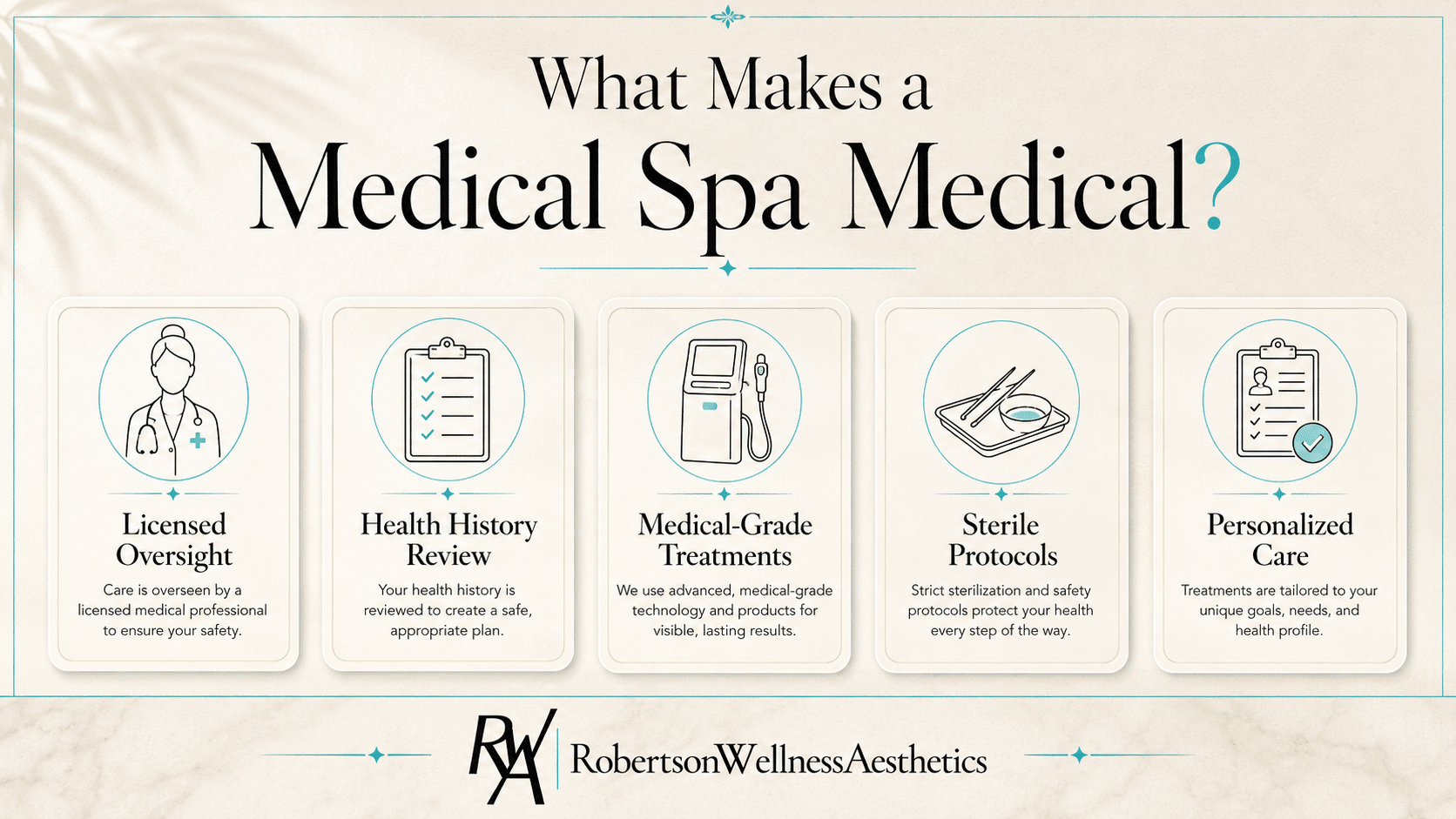
In a properly run medical spa, a licensed medical professional is responsible for your care. That can mean a physician, a nurse practitioner, or another qualified provider who reviews your history, confirms a treatment is appropriate, and oversees what happens. The relaxing setting is real, but it sits on top of a medical foundation, not in place of one.
Medical spa vs day spa: the real difference
Both can feel luxurious. The difference is what is allowed to happen in the treatment room and who is accountable for it.
| Day spa | Medical spa | |
|---|---|---|
| Oversight | No medical supervision required | Treatments overseen by licensed medical professionals |
| Typical services | Massage, basic facials, relaxation treatments | Injectables, medical-grade devices, IV therapy, and physician-guided programs |
| Products and devices | Cosmetic, over-the-counter grade | Medical-grade and, where applicable, prescription |
| Intake | Little or no health screening | Health history and evaluation before treatment |
| Best for | Relaxation and general pampering | Results-driven aesthetic and wellness goals with a safety net |
Neither is better in the abstract. They are built for different goals. If you want an hour of calm, a day spa is perfect. If you want a treatment with a real physiological effect, you want the oversight a medical spa provides.
Looking for a medical spa in Beverly Hills?
Robertson Wellness & Aesthetics blends physician-supervised wellness – IV therapy, NAD+, peptides and weight programs – with aesthetics, all in one Beverly Hills clinic.
Treatments are provided under medical supervision after consultation. These statements have not been evaluated by the FDA and are not intended to diagnose, treat, cure or prevent any disease.
What you can expect to find at a Beverly Hills medical spa
Med spas vary widely. Some focus narrowly on injectables, while others, like Robertson Wellness, combine aesthetics with broader wellness and regenerative services. Here is the range you may encounter, with the understanding that what is right for you depends on a consultation.
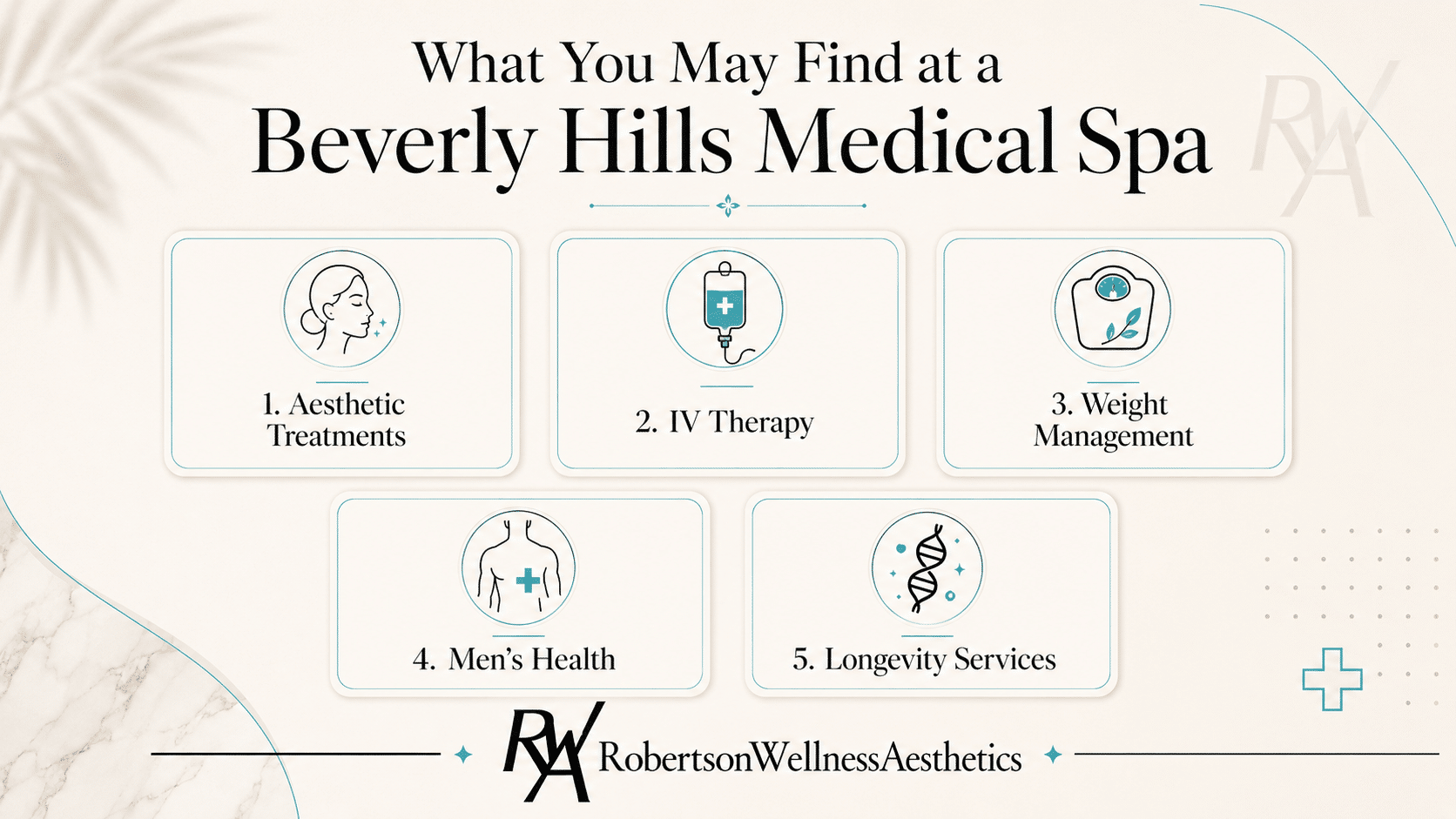
Aesthetic treatments. This is the category most people picture first, including options such as microneedling with PRP and other skin and body treatments. You can see the full range on the aesthetics page.
IV therapy. Vitamin and hydration infusions are a med spa staple. If you are weighing your options there, the full IV infusions menu is a good starting point.
Medical weight management. Physician-guided weight management programs have become a defining med spa service, and because they may involve prescription medication, they belong in a setting with medical oversight rather than a retail one.
Men’s health and hormone support. Programs such as testosterone support require evaluation and prescribing by a qualified clinician, which is exactly why they sit inside a medical practice.
Regenerative and longevity services. More advanced offerings, from NAD+ infusions to peptide and exosome therapies, sit at the medical end of the spectrum and are areas of active research rather than guaranteed outcomes.
How to tell a true medical spa from one that just looks the part
A few simple questions separate the two. Ask who supervises treatments and whether a licensed medical professional is on site or directly responsible. Ask whether you will have an evaluation before treatment. Ask about the products and devices used and whether they are medical-grade. A practice that answers these clearly and screens you before treating you is showing you its medical foundation. A practice that rushes you past these questions is showing you something too.
Is a medical spa right for you?
A medical spa is a strong fit if you want results-oriented aesthetic or wellness treatments with the reassurance of medical oversight, and if you value a consultation-first approach over a one-size-fits-all menu. As with any medical or cosmetic treatment, individual suitability varies, and some people, including those who are pregnant or managing certain health conditions, should discuss their plans with a qualified clinician first. For background on cosmetic procedures and safety, the U.S. Food and Drug Administration maintains consumer resources.
Frequently asked questions
Is a medical spa the same as a dermatologist’s office? Not exactly. A dermatology practice is a medical office focused on skin health and disease. A medical spa offers a broader menu of aesthetic and wellness treatments in a spa-like setting, under medical supervision.
Are medical spa treatments safe? When performed in a properly supervised medical setting after an appropriate evaluation, med spa treatments are generally well tolerated, though no treatment is risk-free. The setting and oversight are a large part of what makes the difference.
Do I need a referral to visit a medical spa? Usually not. Most visits begin with a consultation, where a clinician reviews your goals and history and recommends an appropriate plan.
What should I bring to my first visit? A list of your current medications and any relevant health history is helpful, since it allows your provider to tailor recommendations and flag anything that should change your plan.
Medically reviewed by Biana Borchenko, FNP-BC, Robertson Wellness and Aesthetics, Beverly Hills.
These statements have not been evaluated by the Food and Drug Administration. Treatments offered at a medical spa are not intended to diagnose, treat, cure, or prevent any disease. Individual results vary. Always consult a qualified healthcare provider before beginning any new treatment
Visit our Beverly Hills medical spa
Book a consultation and our team will recommend the right treatments for your goals.
Treatments are provided under medical supervision after consultation. These statements have not been evaluated by the FDA and are not intended to diagnose, treat, cure or prevent any disease.