Blog
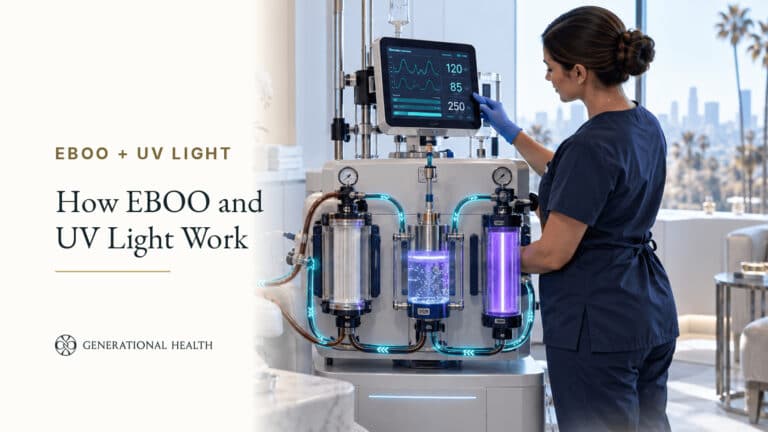
What happens to your blood during EBOO + UV Light: filtration, ozonation and UV explained, what the studies show, side effects, contraindications and cost in Beverly Hills.
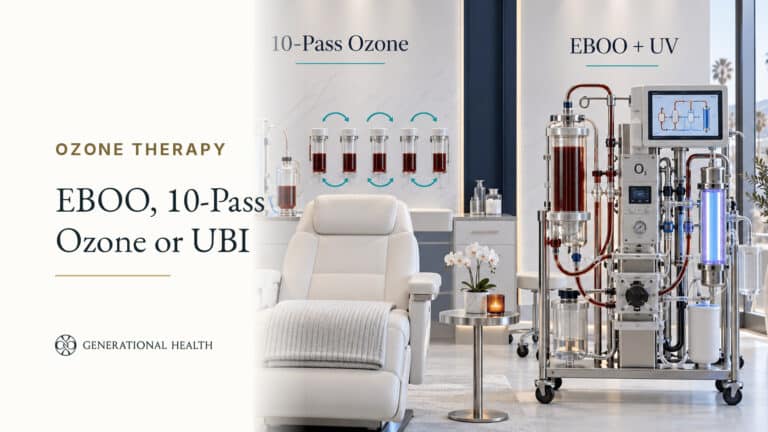
UBI, 10-pass ozone and EBOO differ mainly in how much blood they treat and what they treat it with. Here is how each works and how providers choose.
Tirzepatide is dosed once weekly and titrated slowly from 2.5 mg up to 15 mg. Here is the full titration chart, missed-dose rules, and what changed in 2026.
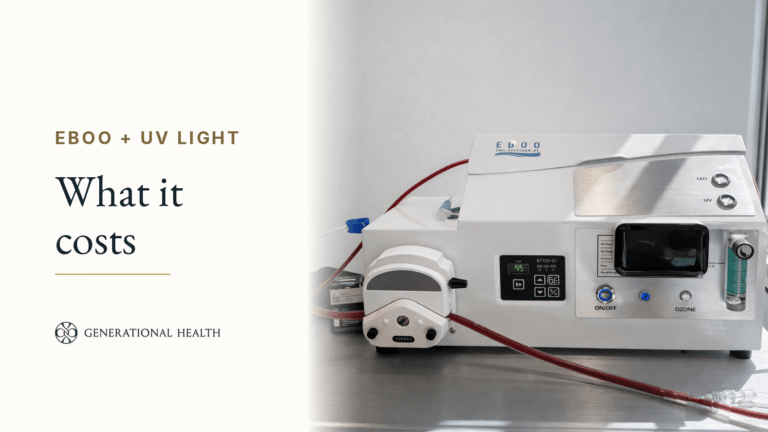
EBOO costs $799 per session at Robertson Wellness & Aesthetics in Beverly Hills, or $699 per session in a 4-session package. Here is what is included.
BPC-157 is a synthetic 15-amino-acid peptide derived from a protein in gastric juice. Here is what animal studies show, what human evidence is missing, and the side effects.
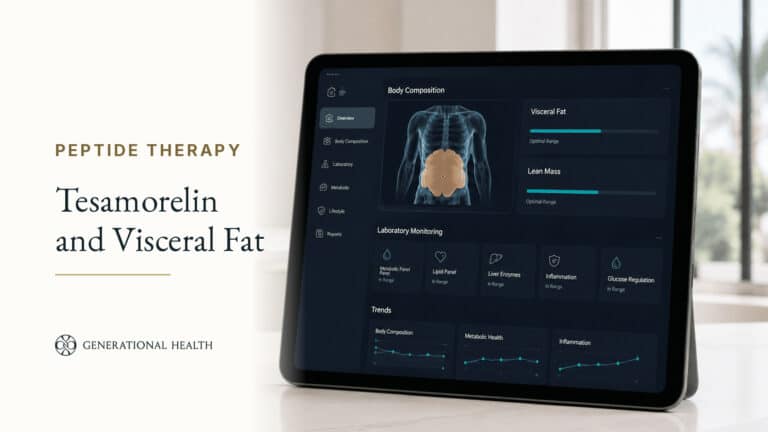
Tesamorelin prompts your body to produce more of its own growth hormone, and its best-documented benefit is reducing visceral fat. Here is what the research shows for body composition.
BPC-157 is most often dosed at 200 to 500 mcg per day in published research and supervised practice. Here are the common protocols, dosing charts, and realistic timelines.
MOTS-c is a 16-amino-acid peptide encoded in your mitochondria rather than your nuclear DNA. Here is what the research shows so far, how it is dosed, and what remains unknown.
Most GLP-1 side effects are gastrointestinal and ease within a few weeks. Here is what to expect after a dose increase and how to manage nausea and constipation.
In men, HCG acts like luteinizing hormone, signaling the testes to produce testosterone and sperm. Here is how it is used alongside TRT and what it means for fertility.
Sermorelin, ipamorelin and CJC-1295 are all growth hormone peptides, but they work in different ways. Here is how they compare and when each one makes sense.
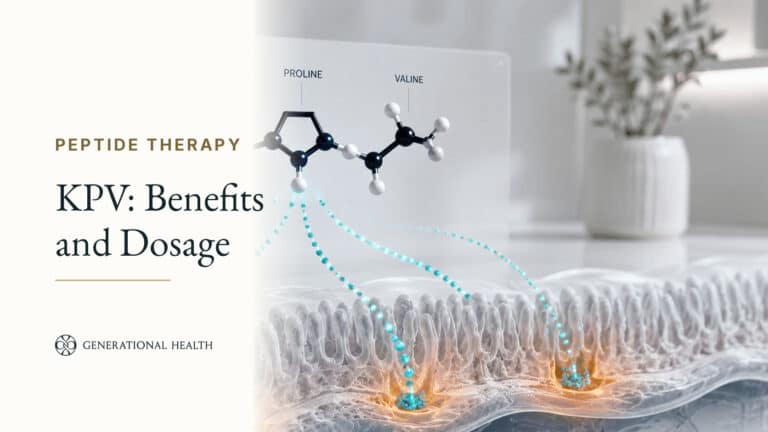
KPV is a three-amino-acid peptide that forms the anti-inflammatory core of the natural hormone alpha-MSH. Here is what the research shows, typical dosing, and possible side effects.