

MOTS-c is a 16-amino-acid peptide encoded not in your nuclear DNA but in your mitochondria — one of a small family of “mitochondrial-derived peptides” discovered only in the last decade. It acts as a metabolic signal: it activates AMPK, the enzyme your cells use to sense and respond to low energy, and it influences how the body handles glucose and fat. Because exercise raises natural MOTS-c levels and MOTS-c levels fall with age, it has been nicknamed an “exercise mimetic.” Two things belong in the first paragraph, not buried at the bottom: MOTS-c is not FDA-approved and is not on the FDA 503A bulks list, and it is prohibited at all times in competitive sport under the WADA Prohibited List. Here is what the research actually shows, and what those two facts mean in practice.
MOTS-c at a glance
| What it is | A 16-amino-acid mitochondrial-derived peptide (MDP) encoded in the mitochondrial 12S rRNA region |
| Discovered | 2015, by Lee, Cohen and colleagues (Cell Metabolism) |
| Main mechanism | Activates AMPK via the folate-methionine cycle; translocates to the nucleus to influence gene expression |
| Studied for | Insulin sensitivity, glucose metabolism, exercise capacity, metabolic and age-related decline |
| Evidence level | Strong preclinical (cell and animal); human data largely observational, no large trials |
| FDA status (2026) | Not approved; removed from Category 2 in April 2026 but not added to the 503A bulks list |
| Sport status | Prohibited at all times (WADA, metabolic modulators / AMPK activators) |
What is MOTS-c?
Almost every protein in your body is built from instructions in nuclear DNA. MOTS-c is an exception. Its name stands for “Mitochondrial ORF of the 12S rRNA type-c,” and it is encoded inside the small, separate genome that lives in your mitochondria. That makes it part of a young and genuinely interesting research field: mitochondrial-derived peptides, molecules that appear to let mitochondria send instructions to the rest of the cell rather than simply producing energy on demand.
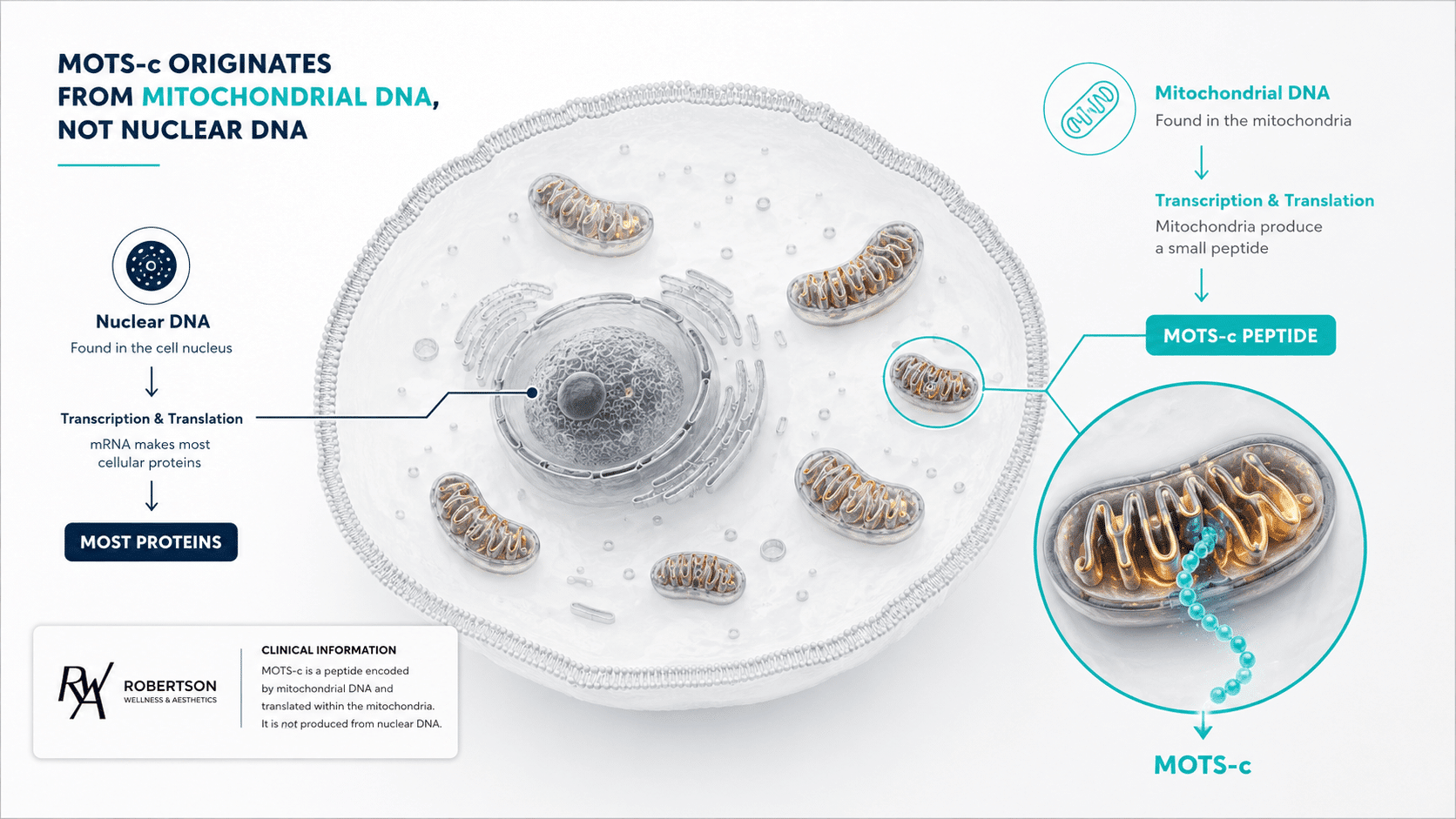
MOTS-c was identified in 2015 by a research group at the University of Southern California, and interest grew for two reasons. First, circulating MOTS-c levels tend to decline with age. Second, they tend to rise with exercise. That combination — a molecule your body makes more of when you train and less of as you get older — is exactly the profile that attracts longevity research, and exactly the profile that attracts marketing overreach. Both are worth separating.
How does MOTS-c work?
MOTS-c acts primarily as a metabolic regulator, through two mechanisms that are worth distinguishing.
AMPK activation
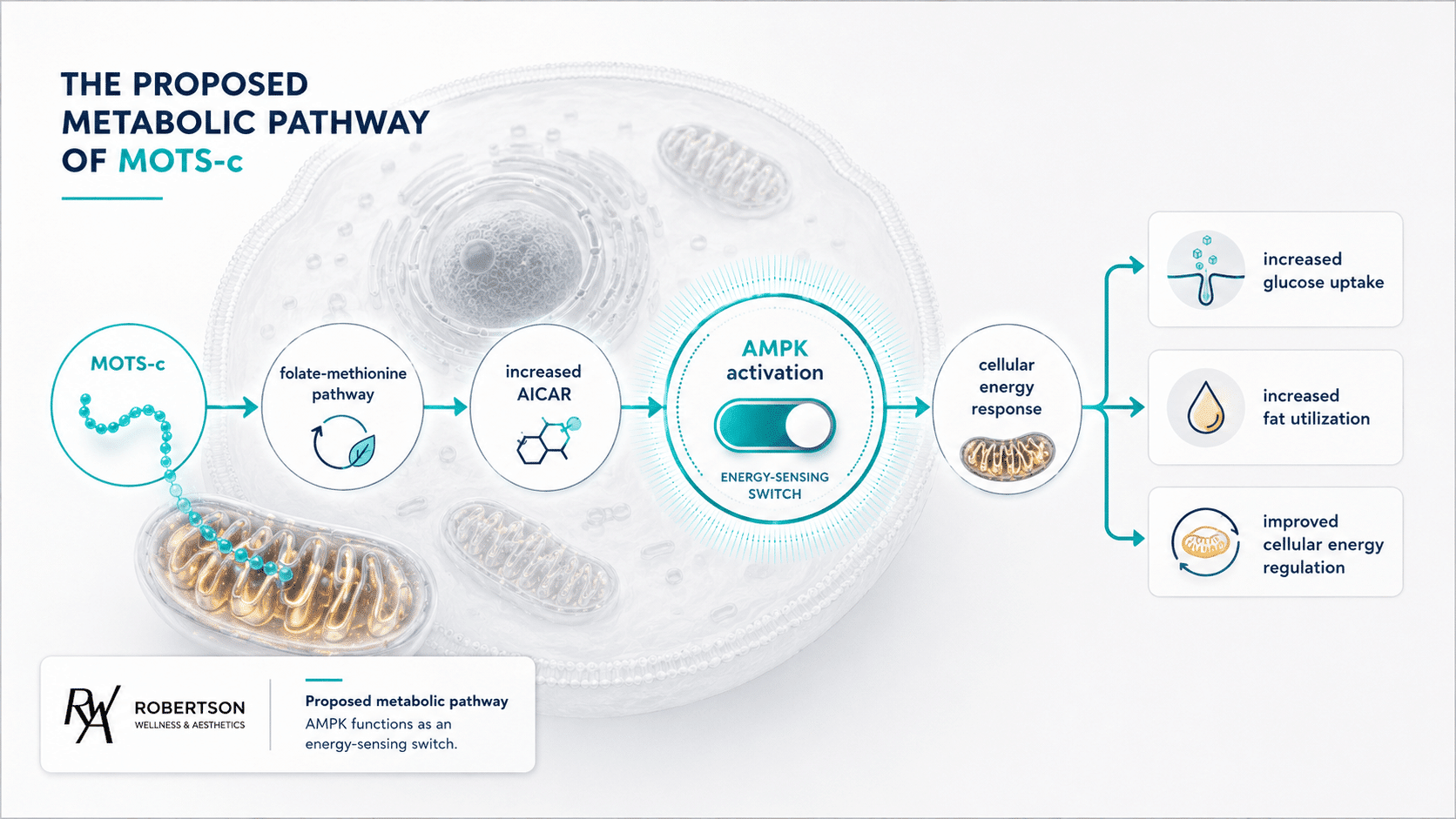
AMPK (AMP-activated protein kinase) is often described as the cell’s fuel gauge. When cellular energy runs low — during exercise or fasting, for example — AMPK switches the cell toward producing energy: taking up glucose, burning fat, and improving mitochondrial efficiency. MOTS-c influences the folate-methionine cycle in a way that leads to accumulation of AICAR, an intermediate that activates AMPK. In plain terms, it triggers the same metabolic “energy-conservation mode” your body enters when you exercise, without the exercise itself.
Mitochondrial-to-nuclear signaling
The more striking finding is that under metabolic stress, MOTS-c moves into the cell nucleus and helps regulate nuclear gene expression — effectively allowing mitochondria to influence which genes the cell turns on. This retrograde signaling is described in the mitochondrial-derived peptide literature (see the review by Kim and colleagues in PMC, 2023, on MOTS-c as a therapeutic target) and is part of why the peptide is studied in the context of metabolic adaptation and aging rather than as a simple metabolic booster.
Is MOTS-c really “exercise in a bottle”?
This framing comes from real research, and it is worth being precise about what that research showed. In work published in Nature Communications (Reynolds et al., 2021), MOTS-c was characterized as an exercise-induced peptide, and treating mice with it improved measures of physical capacity, including in older animals. That is a genuine and interesting result.
What it is not is evidence that injecting MOTS-c replaces training in humans. The performance findings are from animal models. Human research to date is mostly observational — measuring MOTS-c levels and correlating them with fitness, metabolic health, or age — rather than trials administering it and measuring outcomes. Anyone presenting MOTS-c as a substitute for exercise is extrapolating well beyond the data. A fairer summary: MOTS-c is one of the more mechanistically compelling longevity peptides, with a research base that is promising and still early.
What is MOTS-c studied for?
- Insulin sensitivity and glucose metabolism. The most consistent finding across preclinical work. MOTS-c improved glucose handling and insulin sensitivity in animal models, which is the origin of most metabolic interest in it.
- Metabolic homeostasis and body composition. In mouse studies, MOTS-c reduced diet-induced weight gain and fat accumulation. Whether that translates to humans has not been established.
- Exercise capacity and physical function. The Nature Communications work above, in mice, including aged animals.
- Age-related metabolic decline. Because levels drop with age, MOTS-c is studied as a marker and potential target in healthy aging — an area of active research, not settled practice.
Note what is not on this list: MOTS-c is not a treatment for diabetes, obesity, or any other diagnosed condition, and it should not be presented or used as one.
✓ Straight answers on status
★★★★★
5.0 on Yelp · 35+ reviews
Interested in metabolic and longevity peptides?
Peptide regulation shifted substantially in 2026, and what is appropriate, available, and advisable has shifted
with it. Our Beverly Hills providers review your goals and labs, explain candidly what the evidence and the
current rules support, and recommend a protocol only where it genuinely fits.
These statements have not been evaluated by the FDA. MOTS-c is not FDA-approved, is not on the 503A bulks list,
and is prohibited in competitive sport. Peptide therapy is provided only after medical consultation by a licensed
provider, is not appropriate for everyone, and individual results vary.
Is MOTS-c legal? FDA and compounding status in 2026
This is the part most MOTS-c content skips, and it changed meaningfully this year. The direct answer: MOTS-c is not an FDA-approved medication, and it is not on the FDA’s 503A bulks list, which governs the substances compounding pharmacies may use.
The nuance is that its classification moved. In an April 2026 update to the FDA’s compounding category lists, MOTS-c was removed from Category 2 — the grouping that flags substances with significant safety concerns. That change is easy to misread. Removal from Category 2 is not approval, and it is not the same as being added to the bulks list. According to reporting on the current compounding framework, MOTS-c has not been added to 503A, and pharmacies do not have a clear pathway to compound it, since it lacks the established history of clinical use that traditional compounding exemptions rely on.
What that means practically: availability is genuinely uncertain and shifting, and any clinic or vendor presenting MOTS-c as approved, cleared, or settled is overstating the situation. At Robertson Wellness and Aesthetics, peptide availability is discussed openly at consultation for exactly this reason — the compounding landscape has moved repeatedly through 2026, and honest guidance is more useful than a confident sales pitch. You can review what we currently carry on our peptide therapy page and the MOTS-c product page.
MOTS-c and competitive sport: prohibited at all times
This deserves its own heading because the consequences are concrete. MOTS-c appears on the WADA Prohibited List as a metabolic modulator (AMPK activator) and is banned at all times — both in and out of competition. The US Anti-Doping Agency similarly lists it among prohibited peptides and flags it as an experimental agent with both anti-doping and product-quality concerns.
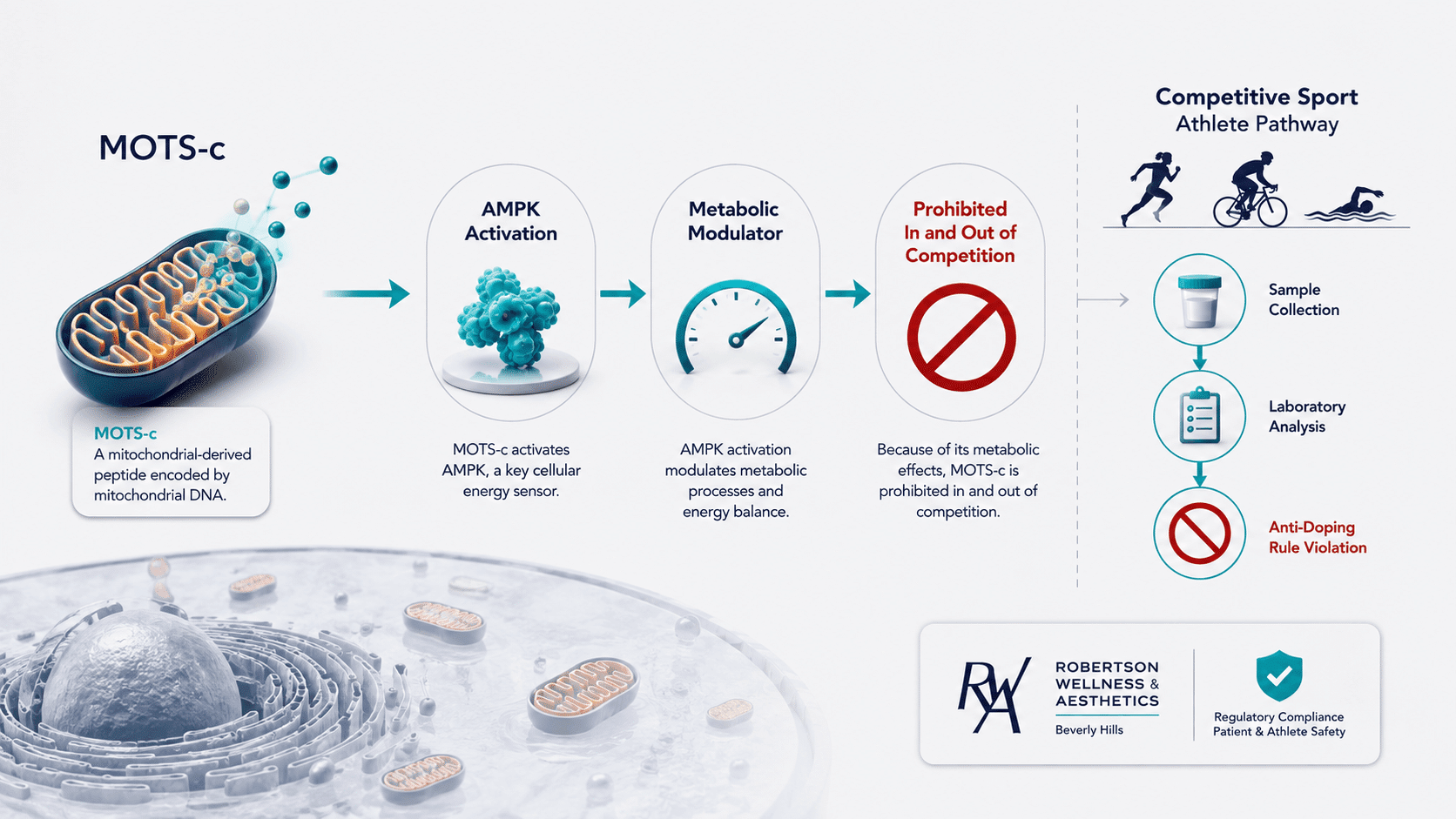
If you compete in any tested sport — professional, collegiate, masters, or age-group events under anti-doping rules — MOTS-c is not an option, regardless of how it is marketed or where it is obtained. “I didn’t know” is not a defense under strict-liability anti-doping rules. This is a case where a peptide may be discussed as a wellness compound in one context and constitute a doping violation in another, and anyone who competes should treat the prohibited-list status as the deciding factor.
MOTS-c dosage and protocols: what actually determines them
Dosing is among the most searched aspects of MOTS-c, so it is worth being precise about what can responsibly be said. There is no established, validated human dosing protocol for MOTS-c. It is not an approved medication, human trials have not settled dosing, and the protocols circulating online are extrapolations rather than clinical standards. Published ranges vary widely between sources, and none carry regulatory or trial backing.
What a clinician actually weighs, if MOTS-c is being considered at all:
- Route. MOTS-c is a peptide given by subcutaneous injection; it is not meaningfully absorbed orally, so oral products warrant skepticism.
- The goal. Metabolic support, body composition, and general longevity interest are different objectives with different reasonable expectations.
- Baseline metabolic status. Glucose, insulin, HbA1c, and body composition provide the context that makes any protocol interpretable — which is why comprehensive blood testing comes before, not after.
- Cycling versus continuous use. Many peptide protocols are structured in cycles rather than indefinite use; the rationale here is largely theoretical given the absence of long-term human data.
- Product quality and handling. Reconstitution, storage, and sterility matter, and are a genuine risk with unregulated material.
Because dosing has not been established in humans and the regulatory position is unsettled, any protocol should be set by a licensed provider who knows your history — never copied from a vendor label, a forum, or a social post.
MOTS-c side effects and safety
Reported side effects in available research and clinical use are generally mild, most commonly injection-site reactions such as redness, itching, or discomfort. Some users report transient fatigue, headache, or nausea. Because MOTS-c influences glucose metabolism, effects on blood sugar are plausible and warrant attention in anyone with diabetes, prediabetes, or on glucose-lowering medication.
The honest caveat is larger than the side-effect list: long-term human safety data does not exist. MOTS-c was discovered in 2015, human research remains limited, and no long-term studies have characterized what extended use does. Absence of reported harm in a small evidence base is not the same as demonstrated safety.
The other major variable is product quality. Because MOTS-c is not an approved medication and cannot be reliably obtained through regulated compounding channels, material sold online as “research grade” carries real risks around identity, purity, and sterility — a concern the anti-doping community has raised specifically. MOTS-c is not appropriate during pregnancy or breastfeeding, in anyone with active cancer, or in people who compete under anti-doping rules, and it requires evaluation in anyone with significant medical conditions or on other medications.
How MOTS-c differs from other peptides
MOTS-c is often lumped in with peptides that work quite differently. BPC-157 is studied for tissue repair — gut lining, tendon, ligament — not metabolism; the two are not interchangeable and address different goals. Growth-hormone peptides such as sermorelin, ipamorelin and CJC-1295 act on the pituitary and the GH/IGF-1 axis, whereas MOTS-c acts on cellular energy sensing through AMPK — a different system entirely (see our comparison of sermorelin vs ipamorelin vs CJC-1295). Tesamorelin targets visceral fat through growth hormone, a different route to a partially overlapping goal (tesamorelin benefits). And within longevity specifically, MOTS-c sits closest conceptually to NAD+ therapy, since both target mitochondrial function and cellular energy — though through distinct pathways.
Who might consider MOTS-c — and who should not
Interest in MOTS-c is generally strongest among adults focused on metabolic health, body composition, and longevity who understand they are considering an investigational compound with early evidence and an unsettled regulatory position, and who want physician oversight rather than self-experimentation.
It is clearly not appropriate for anyone competing in tested sport, during pregnancy or breastfeeding, for people with active cancer, or for anyone seeking a replacement for treatment of a diagnosed condition. It is also not a reasonable substitute for the interventions with far stronger evidence for the same goals — training, nutrition, sleep, and where indicated, established medical therapy. Candidacy is confirmed by our clinical team, with treatment available in-clinic or via concierge visits across Greater LA.
Medical Disclaimer
These statements have not been evaluated by the Food and Drug Administration. This article is for educational purposes only and is not intended to diagnose, treat, cure, or prevent any disease. MOTS-c is not an FDA-approved medication and is not currently on the FDA 503A bulks list; its regulatory status is subject to change. MOTS-c is prohibited at all times under the WADA Prohibited List and by USADA, and use may result in an anti-doping rule violation for athletes subject to testing. Information about routes of administration and dosing considerations is educational and is not a dosing recommendation. Long-term human safety data is not available. Peptide therapy must be prescribed and supervised by a licensed healthcare provider following an individual evaluation, is not appropriate for everyone, and should not replace treatment prescribed for a diagnosed medical condition. Individual results may vary. Always consult a qualified healthcare provider before beginning any new treatment.
Frequently asked questions
What are the benefits of taking MOTS-c peptide?
In research, MOTS-c has been studied for improved insulin sensitivity, glucose metabolism, metabolic homeostasis, and exercise capacity, along with a role in age-related metabolic decline. Most of this evidence is preclinical, with human data largely observational. It is best understood as an investigational metabolic and longevity peptide rather than a proven treatment.
What are the side effects of MOTS-c?
Reported effects are generally mild, most commonly injection-site reactions, with occasional fatigue, headache, or nausea. Because MOTS-c affects glucose metabolism, blood-sugar effects warrant monitoring in anyone with diabetes or prediabetes. The larger caveat is that long-term human safety data does not exist, and product quality is a significant risk with unregulated sources.
Does MOTS-c burn visceral fat?
In animal studies, MOTS-c reduced diet-induced weight gain and fat accumulation, and its AMPK-driven mechanism is plausibly relevant to fat metabolism. However, this has not been demonstrated in human trials, so it should not be presented as a fat-loss treatment. Peptides with more direct visceral-fat evidence, such as tesamorelin, work through an entirely different pathway.
Is MOTS-c the same as BPC-157?
No. They target different systems. MOTS-c is a mitochondrial-derived peptide that acts on cellular energy metabolism via AMPK. BPC-157 is studied primarily for tissue repair, including gut lining, tendon, and ligament. They are not substitutes for one another.
Is MOTS-c legal in 2026?
MOTS-c is not FDA-approved and is not on the FDA 503A bulks list. It was removed from Category 2 in April 2026, but that is not approval and does not by itself create a compounding pathway. Separately, MOTS-c is prohibited at all times under the WADA Prohibited List, so it is not an option for anyone subject to anti-doping testing.
Is MOTS-c banned in sports?
Yes. MOTS-c is listed by WADA as a prohibited metabolic modulator and AMPK activator, banned both in and out of competition, and USADA lists it among prohibited peptides. Anti-doping rules operate on strict liability, so athletes should treat this as disqualifying regardless of how a product is marketed.
How is MOTS-c administered?
MOTS-c is a peptide given by subcutaneous injection; it is not meaningfully absorbed when taken orally, so oral MOTS-c products warrant skepticism. There is no validated human dosing protocol, and any protocol should be determined by a licensed provider rather than copied from a label or online source.
How long does MOTS-c take to work?
There is no reliable human timeline, because the necessary trials have not been done. Metabolic changes of the kind studied in animal models would be expected to develop over weeks rather than days, and any effects should be assessed with objective measures such as labs and body composition rather than by feel alone.
Talk to a provider before considering MOTS-c
MOTS-c is one of the more scientifically interesting peptides in the longevity space — and one of the most frequently oversold. If metabolic health, body composition, or healthy aging brought you here, the most useful next step is a consultation and baseline labs that establish where you actually stand, along with an honest read on what is currently available and appropriate. Robertson Wellness and Aesthetics offers physician-supervised peptide therapy in Beverly Hills, with candid guidance on regulatory status and realistic expectations. Book a consultation to discuss whether MOTS-c — or a better-supported approach — fits your goals.
Medically reviewed by Biana Borchenko, FNP-BC — Family Nurse Practitioner, Board-Certified; A4M. Biana oversees peptide therapy and hormone optimization at Robertson Wellness and Aesthetics in Beverly Hills, where every peptide protocol begins with a full consultation, review of medical history, and a clear discussion of expected outcomes and limitations.