
NAD+ and NADH are two forms of the same coenzyme — nicotinamide adenine dinucleotide — and the difference comes down to electrons. NAD+ is the oxidized form that accepts electrons during metabolism; NADH is the reduced, electron-carrying form that delivers them to your mitochondria to make energy. The two constantly convert back and forth in a redox cycle, so neither is simply “better.” What matters for energy and healthy aging is having enough NAD+ and a healthy NAD+/NADH balance — which is exactly why anti-aging and wellness therapies target NAD+ specifically. Here is the difference explained simply, and what it means in practice.
NAD+ vs NADH at a glance
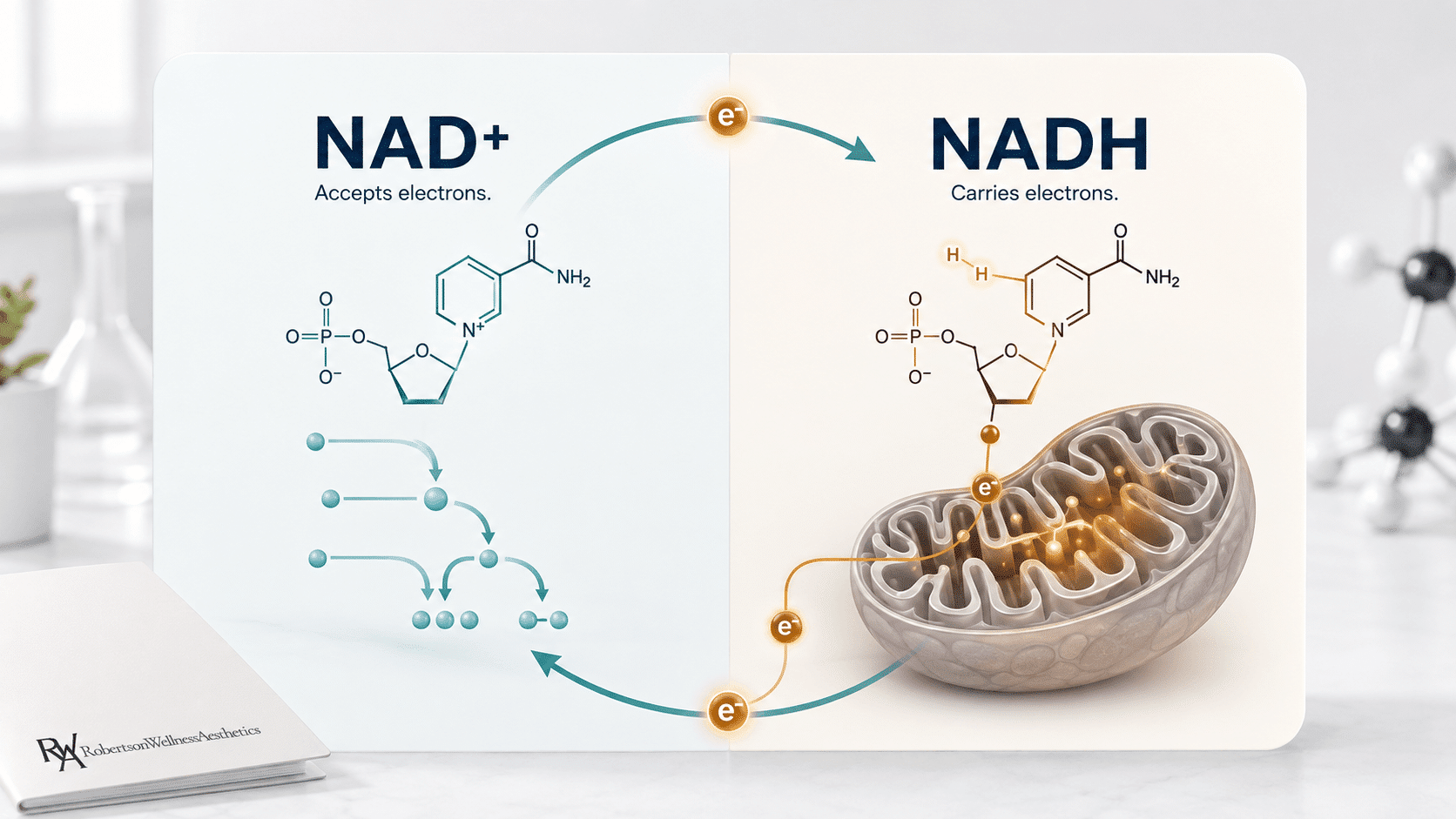
| NAD+ | NADH | |
|---|---|---|
| Form | Oxidized | Reduced (carries an extra electron pair) |
| Role in metabolism | Electron acceptor | Electron carrier / donor |
| Charge | Positive (the “+”) | Neutral, energy-rich |
| Where it acts | Glycolysis, Krebs cycle; also fuels sirtuins & PARPs (DNA repair, aging) | Delivers electrons to the mitochondrial electron transport chain |
| Declines with age? | Yes — NAD+ notably declines | The NAD+/NADH balance shifts |
| Targeted by therapies | Yes — NAD+ IV, injections, precursors (NR, NMN) | Sold as an oral NADH supplement |
What is NAD (and why there are two forms)?
NAD stands for nicotinamide adenine dinucleotide, a coenzyme found in every living cell and made from vitamin B3 (niacin). Its job is to shuttle electrons around your metabolism, and to do that it flips between two forms: an oxidized form, NAD+, and a reduced form, NADH. Think of NAD as a rechargeable battery — NAD+ is the “empty” state ready to pick up charge, and NADH is the “charged” state carrying energy to where it’s needed. According to the Cleveland Clinic, this coenzyme is central to converting the food you eat into usable cellular energy.
What is NAD+?
NAD+ is the oxidized, electron-hungry form. During glycolysis and the Krebs cycle, NAD+ accepts high-energy electrons (as a hydride ion) released when your cells break down glucose and fats, becoming NADH in the process. Beyond energy metabolism, NAD+ has a second, crucial job: it is a required fuel for enzymes called sirtuins and PARPs, which govern DNA repair and many aspects of cellular aging. Because these enzymes consume NAD+, and because NAD+ levels fall as we age, NAD+ is the form most associated with longevity science — and the one wellness therapies aim to replenish. This role in aging is detailed in reviews such as Covarrubias et al. (Nature Reviews Molecular Cell Biology, 2021).
What is NADH?
NADH is the reduced, energy-carrying form. Once NAD+ has picked up electrons, the resulting NADH ferries them to the electron transport chain inside your mitochondria, where it donates them to drive the production of ATP — your cells’ main energy currency — and in doing so is converted back into NAD+. In plain terms, NADH is the delivery truck that carries energy to the power plant, then returns empty (as NAD+) to be reloaded. NADH is also sold as an oral supplement, often marketed for fatigue and energy.
How NAD+ and NADH convert: the redox cycle
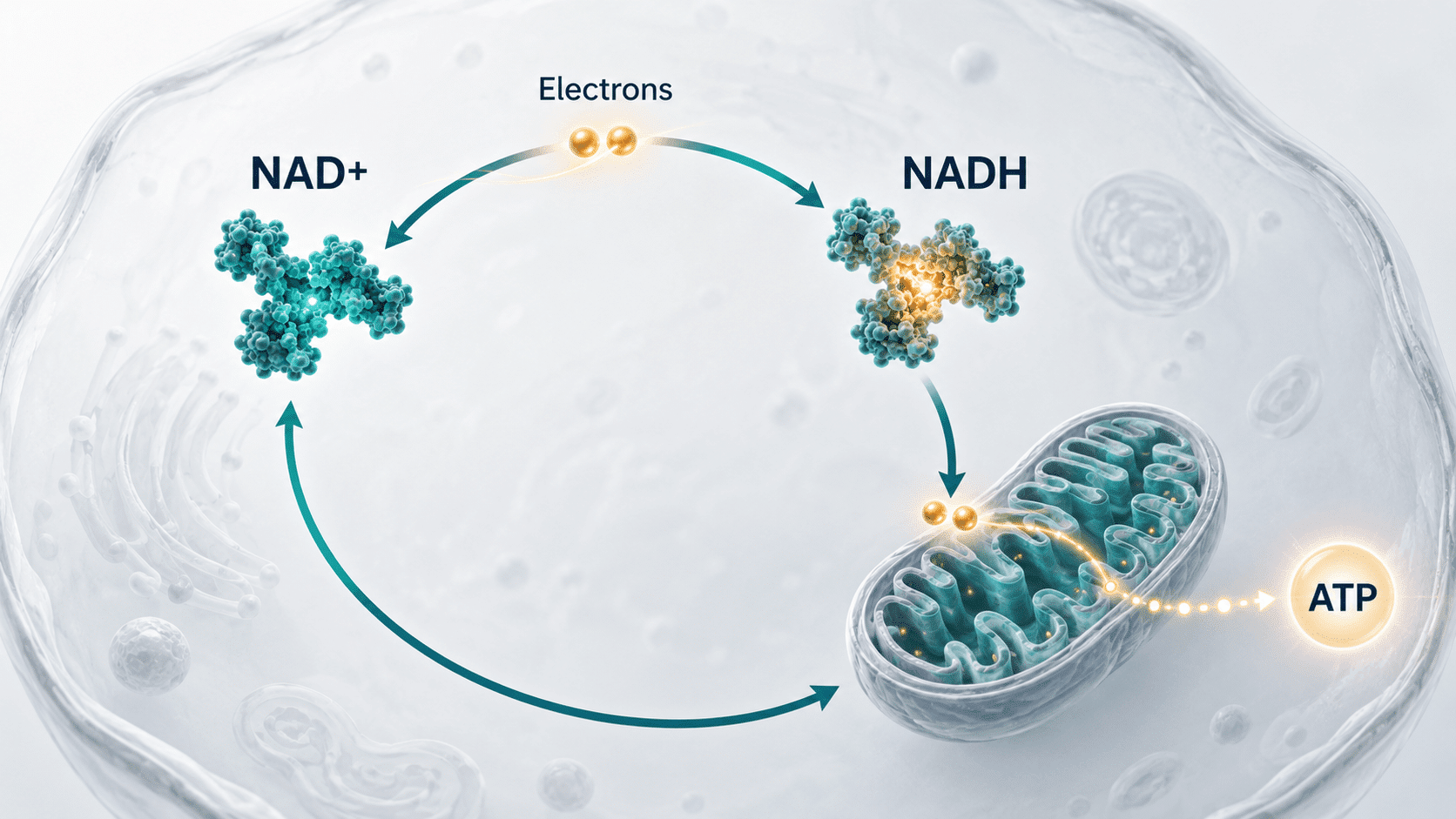
The key idea is that NAD+ and NADH are not rivals — they are two ends of one continuous loop. NAD+ picks up electrons and becomes NADH; NADH drops those electrons off to make ATP and becomes NAD+ again. This constant recycling is called a redox (reduction-oxidation) reaction, and it happens billions of times a second across your cells. A healthy NAD+/NADH ratio keeps this loop running efficiently. When the ratio tilts — often with age, metabolic stress, or illness — energy production and cellular repair can suffer, which is the rationale behind supporting NAD+ levels.
Which is “better,” and which do supplements and clinics use?
Because they are two states of the same molecule, asking whether NAD+ or NADH is “better” is a bit like asking whether inhaling or exhaling is better — you need both. That said, there is a practical distinction that matters for anyone shopping for a supplement or therapy:
- NADH is available as an oral supplement. Oral delivery faces the usual hurdles of digestion and absorption, and the evidence for oral NADH is more limited.
- NAD+ is the form targeted by IV therapy, injections, and precursors (like NR and NMN). This is because NAD+ is the form that declines with age and that sirtuins and PARPs actually consume. Delivering NAD+ intravenously bypasses the digestive system so it reaches the bloodstream directly.
For patients focused on cellular energy and healthy aging, that is why clinics emphasize raising NAD+ rather than taking NADH by mouth. At Robertson Wellness and Aesthetics, NAD+ IV therapy delivers NAD+ directly into the bloodstream under physician supervision. If you want to go deeper, our NAD+ dosage guide explains how providers determine a protocol, and NAD+ injections: benefits, types, and what to expect compares IV and shot delivery.
Curious about raising your NAD+ levels?
NAD+ is the form your cells use for energy and repair — and the one that declines with age. OurBeverly Hills clinic offers physician-supervised NAD+ IV infusions and injections, dosed to your goalsand monitored throughout, with concierge visits available across Greater LA.
Pricing from $159; final protocol confirmed with your provider. These statements have not been evaluatedby the FDA. NAD+ therapy is a wellness treatment administered by a licensed provider, is not intended todiagnose, treat, cure, or prevent any disease, and is not appropriate for everyone. Individual results vary.
NAD+ therapy at RWA: how the science translates to care
Understanding the NAD+/NADH cycle explains why NAD+ therapy is delivered the way it is. Because NAD+ is the depleted, actively-consumed form, NAD+ IV therapy supplies it directly to the bloodstream, bypassing digestion, in a session that typically runs a couple of hours under the supervision of a licensed clinician. Many patients pursue it for cellular energy, mental clarity, and longevity support as part of a broader anti-aging approach that can include biological age testing and, for cognitive goals, peptides and NAD+ for brain fog. For a clinic-specific overview and current pricing, see NAD therapy in Beverly Hills and our NAD+ cost guide.
Medical Disclaimer
These statements have not been evaluated by the Food and Drug Administration. This article is for educational purposes only and is not intended to diagnose, treat, cure, or prevent any disease. NAD+ therapy is a wellness treatment that should be administered by a licensed healthcare provider, is not a substitute for medical care, and is not appropriate for everyone. Supplement claims for NADH and NAD+ precursors vary in the strength of their supporting evidence. Individual results may vary. Always consult a qualified healthcare provider before beginning any new supplement or treatment.
Frequently asked questions
Is NAD just vitamin B3?
Not exactly. NAD is made from vitamin B3 (niacin and related forms), but it is a distinct coenzyme that your body builds from those precursors. B3 is the raw material; NAD is the finished, functional molecule your cells use for energy and repair.
Is NADH higher energy than NAD+?
Yes, in a sense. NADH is the reduced form that carries an extra pair of high-energy electrons, so it holds the energy that NAD+ has picked up. NADH then releases that energy in the mitochondria to help make ATP, converting back to NAD+. They are two states of one recycling molecule rather than two different energy levels you choose between.
Which is better to take, NAD+ or NADH?
Neither is universally “better” because your body needs both and constantly converts one into the other. Practically, wellness and anti-aging therapies target NAD+ — the form that declines with age and that repair enzymes consume — usually via IV, injection, or precursors, while NADH is sold as an oral supplement with more limited evidence. The right choice depends on your goals and a provider’s guidance.
Who shouldn’t take NADH or NAD+ supplements?
People who are pregnant or breastfeeding, those with significant medical conditions, and anyone taking multiple medications should consult a healthcare provider before starting NAD+ or NADH, as with any supplement or infusion. A clinical evaluation helps confirm it is appropriate and safe for you.
Does raising NAD+ actually do anything?
NAD+ is genuinely essential for energy metabolism and DNA repair, and its decline with age is well documented. Research into raising NAD+ for energy, cognition, and longevity is active and promising but still evolving, so reputable clinics describe NAD+ therapy as wellness support rather than a proven treatment for any specific disease.
Talk to a provider about NAD+
If the NAD+/NADH distinction has you curious about supporting your own levels, the best next step is a consultation. Robertson Wellness and Aesthetics offers physician-supervised NAD+ IV therapy in Beverly Hills, with in-clinic and concierge options. Book a consultation to discuss whether NAD+ therapy fits your energy and longevity goals.